
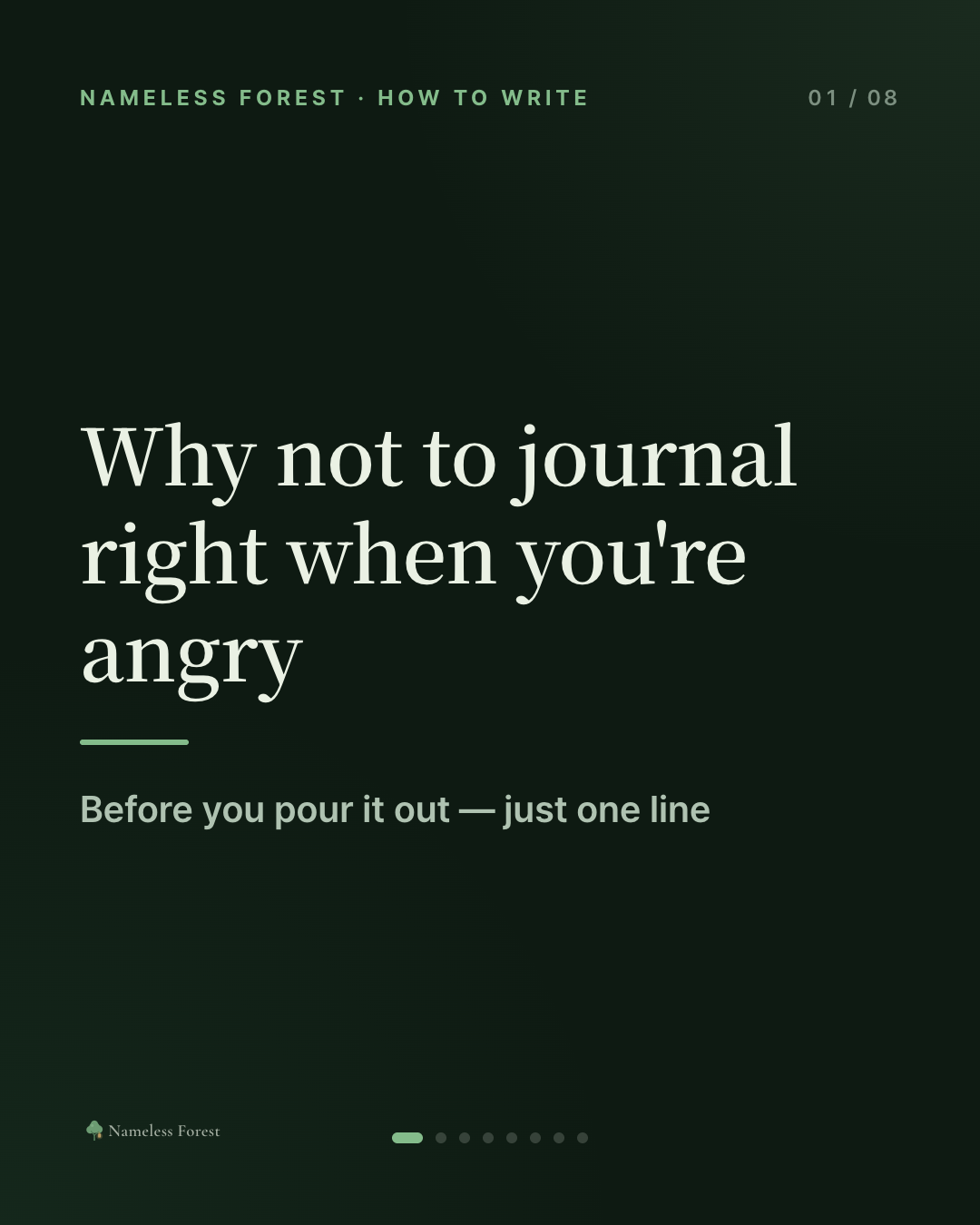
Ever hammered out a furious note the second something set you off?
What they said, the whole scene, how unfair it was — you type faster than your fingers can keep up. And then you finish, and something's off.
You're not calmer. You're angrier.
"Just vent it out" is only half true
A lot of journaling advice says: when you're angry, pour it all out and you'll feel better. Half true. Getting it out beats bottling it up.
But writing at the peak of anger often makes the anger bigger, not smaller. That's not because you're too sensitive. It's just how the mind works.
Why writing it raw feeds the anger
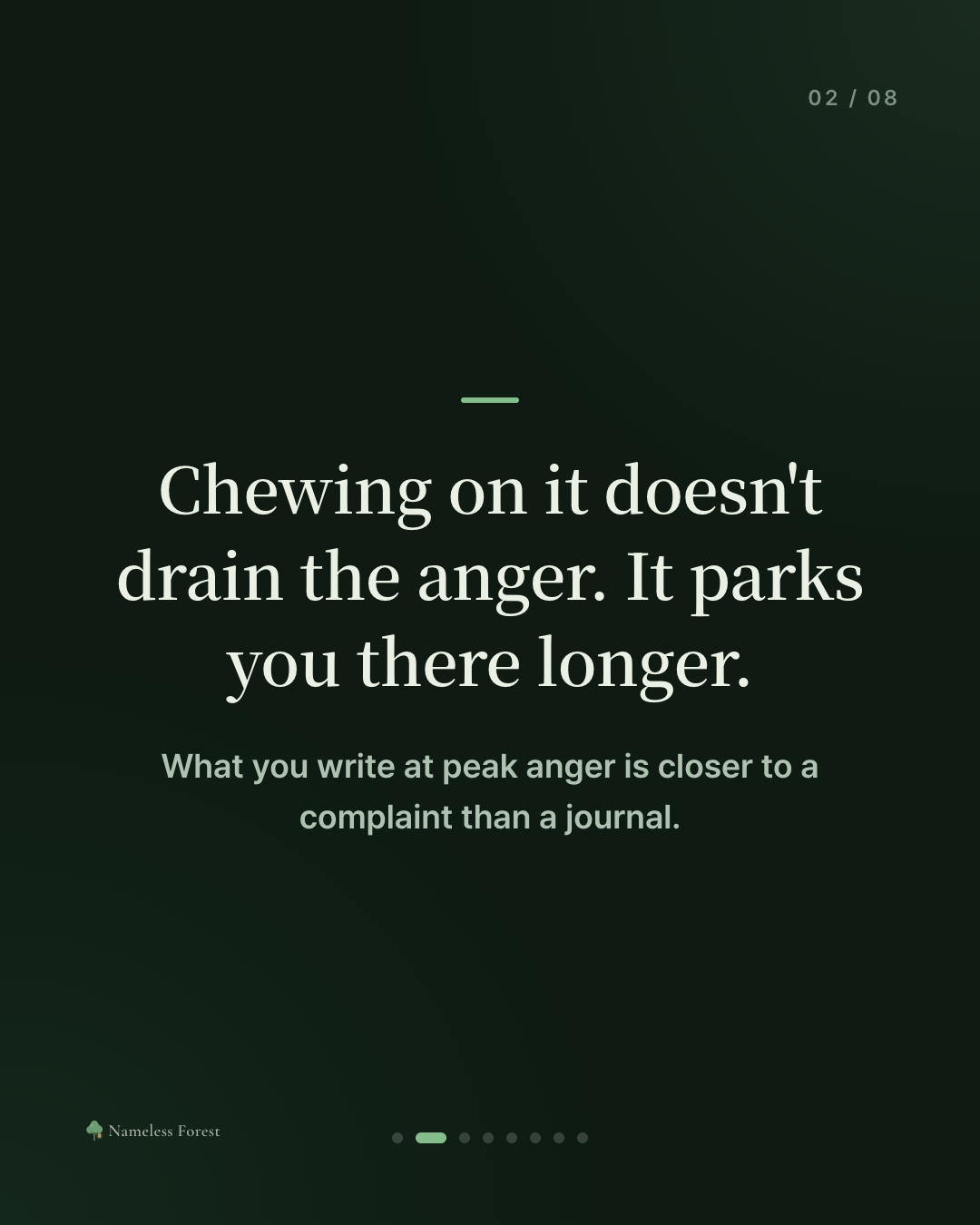
What you write at the height of anger isn't really a journal — it's closer to a legal complaint.
You write down what they did wrong, why you're right, how unfair it all was. And as you write, you replay the scene — and every replay relights the feeling. Psychologists call this rumination. Chewing on it doesn't drain it; it keeps you parked there longer.
So you end up asking, "I let it all out — why am I angrier?" Because you didn't let it out. You rehearsed the anger one more time.
So how should you write when you're angry?
Not writing isn't the answer. You just change how you write.
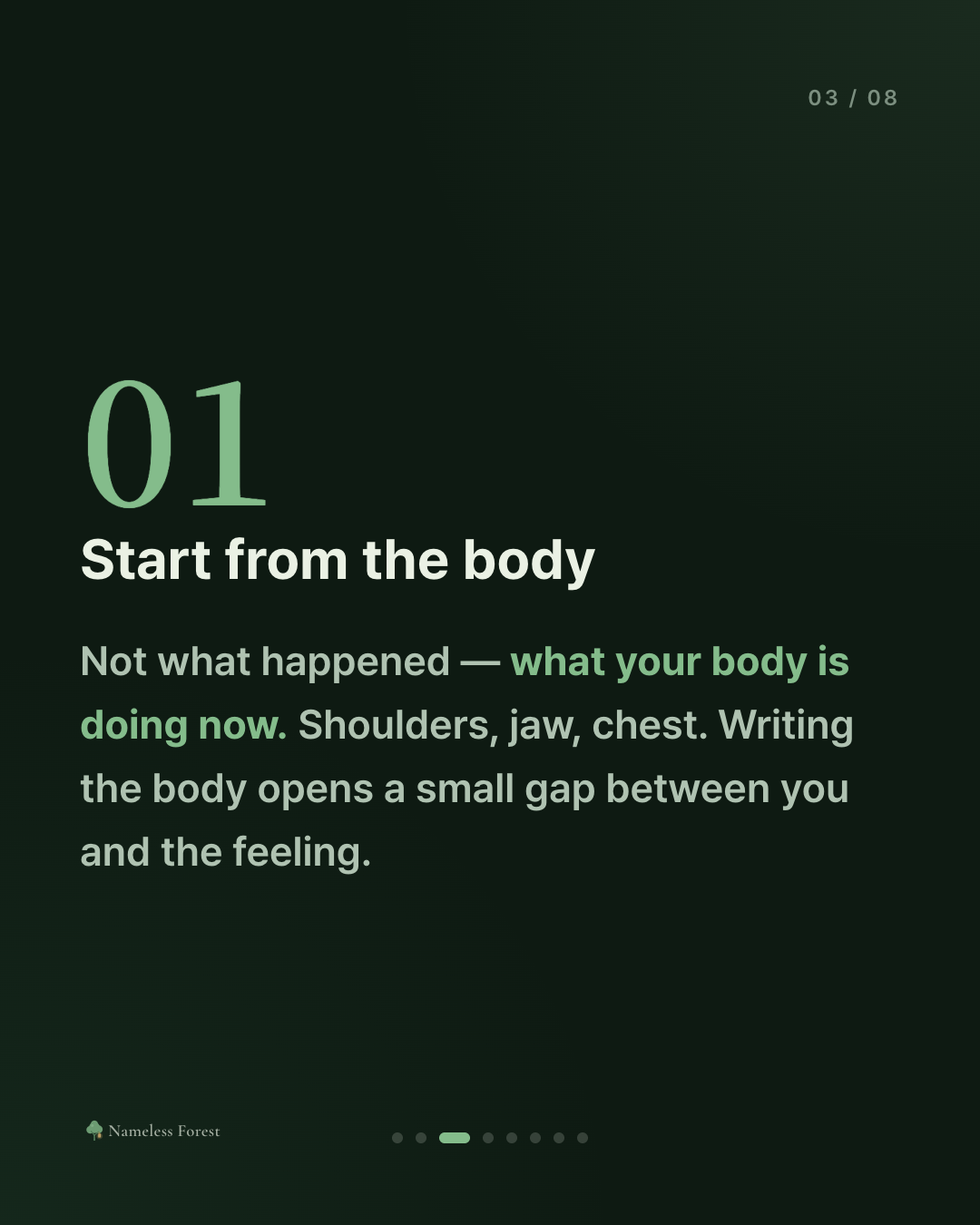
1. Start from the body. Not what happened — what your body is doing right now. Are your shoulders up, is your jaw clenched, is your chest hot? The moment you write the body, a small gap opens between you and the feeling.
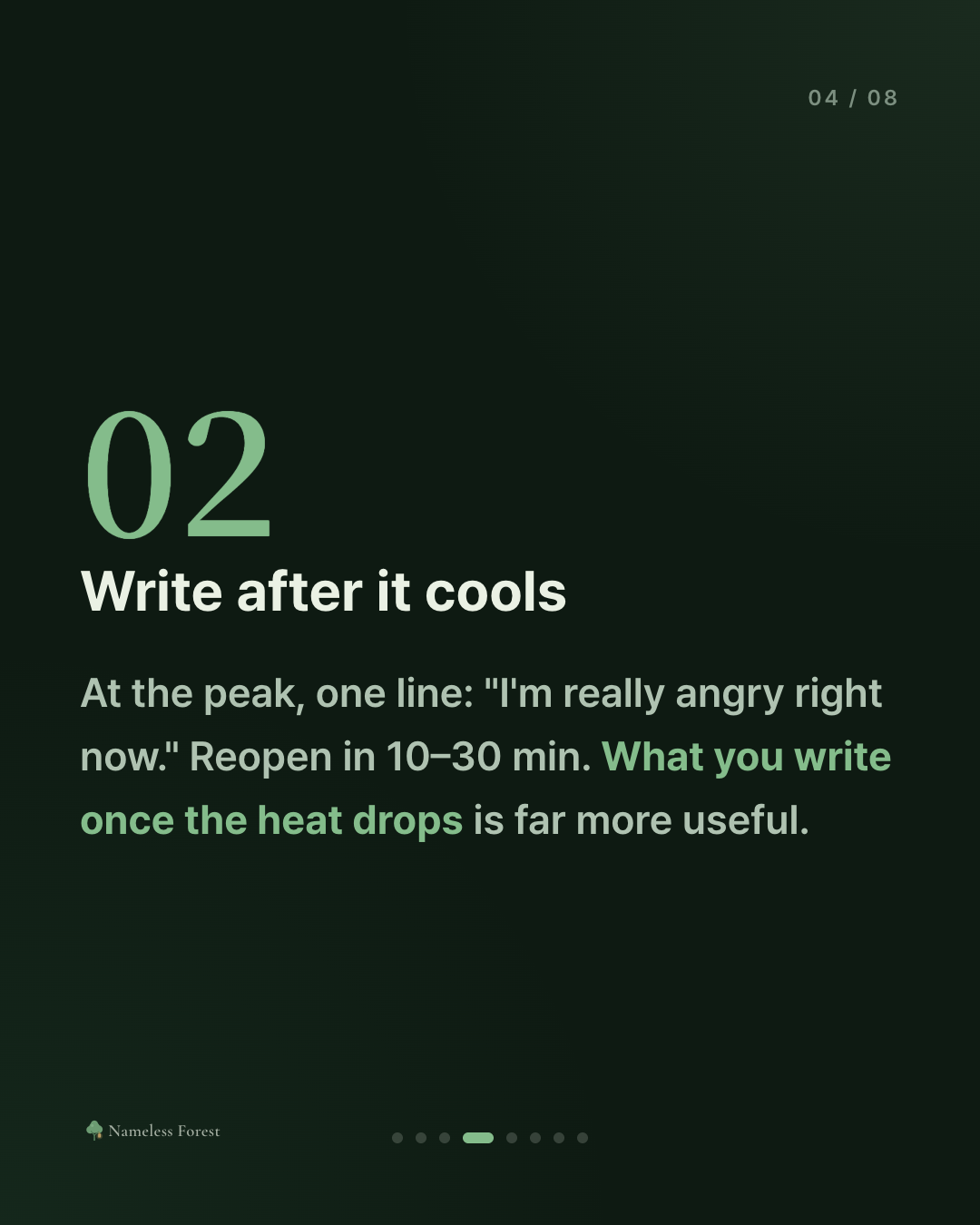
2. Write after it cools a little. At the peak, just one line: "I'm really angry right now." Then reopen it in ten, thirty minutes. What you write once the heat drops is far more useful to you.
3. Name your feeling, not the other person. Not "they're awful" but "I felt dismissed." Write the other person and it's a complaint; write your feeling and it finally becomes a journal.
4. Separate fact from interpretation. Put what actually happened (they cut me off) and the meaning you added (they think I'm a joke) on different lines. Split apart, you'll see how much of the anger came not from the fact but from the interpretation.
In short
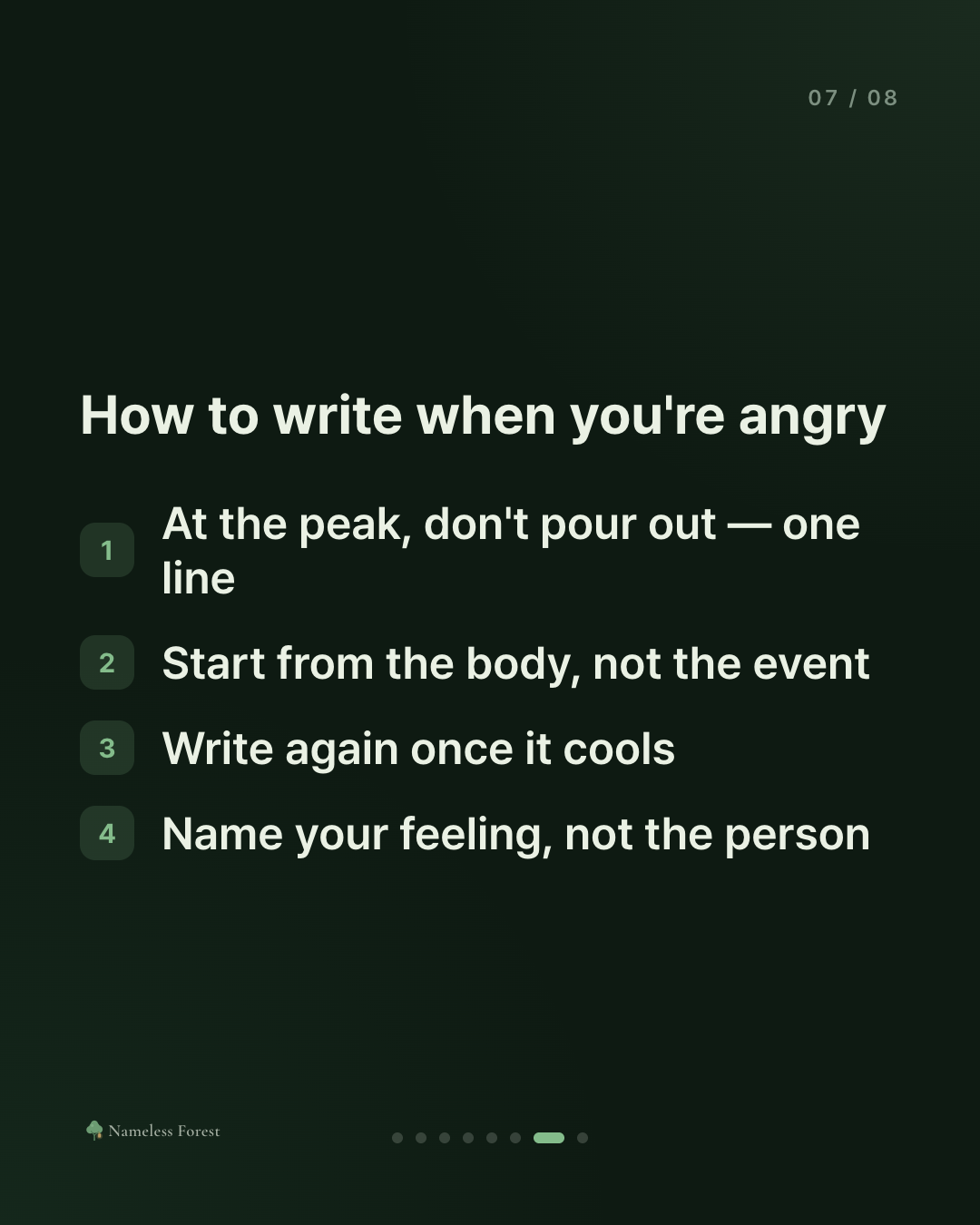
- At the peak, don't pour it out — one line. Rumination rehearses the anger
- Start from the body to put distance between you and the feeling
- Write again once it cools
- Name your feeling, not the person — that turns a complaint into a journal
Anger isn't something to erase. It's something to let pass through cleanly. Not writing it right away is one way to protect yourself, too.
But sometimes this isn't enough
- If you can't sleep, or can't stop sleeping
- If eating has become hard
- If basic things — washing, cleaning — feel impossible
- If you've thought about hurting yourself
Please don't try to solve this with writing. That's when seeing a professional is the right call. A record is a tool for sorting your mind, not a treatment. (US: 988 Suicide & Crisis Lifeline.)
I'm not a mental-health professional. Just someone who's had no one to talk to.
🌲 I'm building Nameless Forest — an anonymous space to write things down.
No comments, no ratings. Just a place to set it down.
https://nameless-forest.com/en?utm_source=blognf&utm_campaign=writing-when-angry

Comments 0
Be the first to comment.