
You're clearly tired, but the moment you close your eyes, the thinking starts.
Today's events, tomorrow's to-dos, a mistake from years ago. One passes and the next arrives. You check the clock and it's already two.
The harder you try to stop the thoughts, the sharper they get — has that happened to you?
Try to stop, and it won't stop
Too many thoughts at night isn't weak will. And vowing to "stop thinking" actually backfires.
Like being told "don't think of a white bear" and thinking only of white bears — a thought gets stronger the more you push it away.
So today, instead of stopping, let's go the other way: get it out of your head.
Why at night, of all times
In the day there's too much to handle, so you keep pushing thoughts to later. Then night comes and goes quiet, and everything you postponed rises at once. It's not that night makes more thoughts — it's that at night, you can finally hear them.
On top of that, the brain keeps surfacing what isn't finished. "You still haven't done that." "I shouldn't have said it like that." Left only in your head, the same thought won't erase and keeps circling. The brain is holding it, afraid you'll forget.
So the method is simple. Take what's in your head, and put it outside your head.
So I tried this
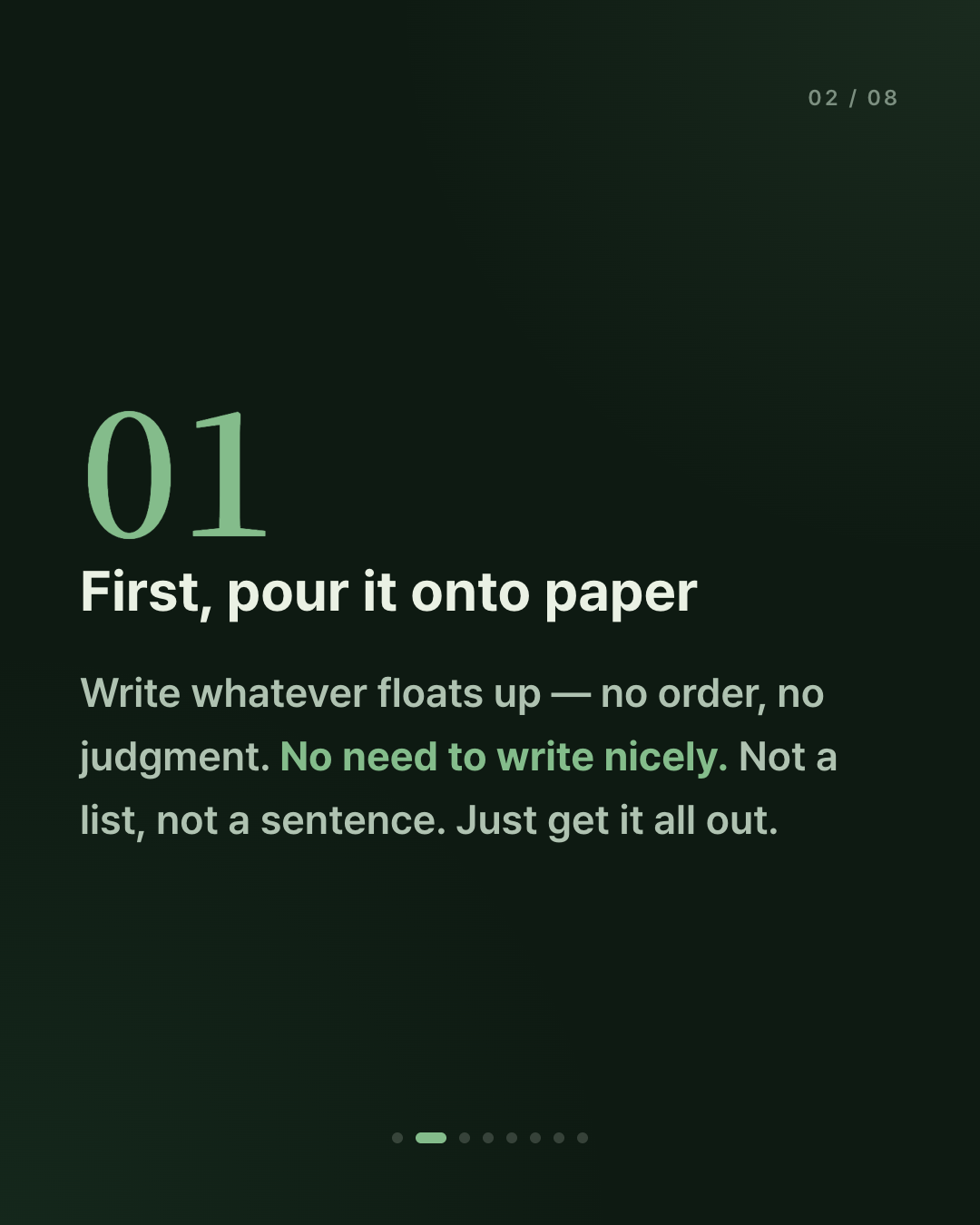
1. First, pour it onto paper
Write down whatever's floating around — no order, no judgment. "Tomorrow's meeting deck." "That thing I said earlier, probably a mistake." "Call Mom." No need to write nicely. It doesn't have to be a list or a sentence. Getting it all out is what comes first.
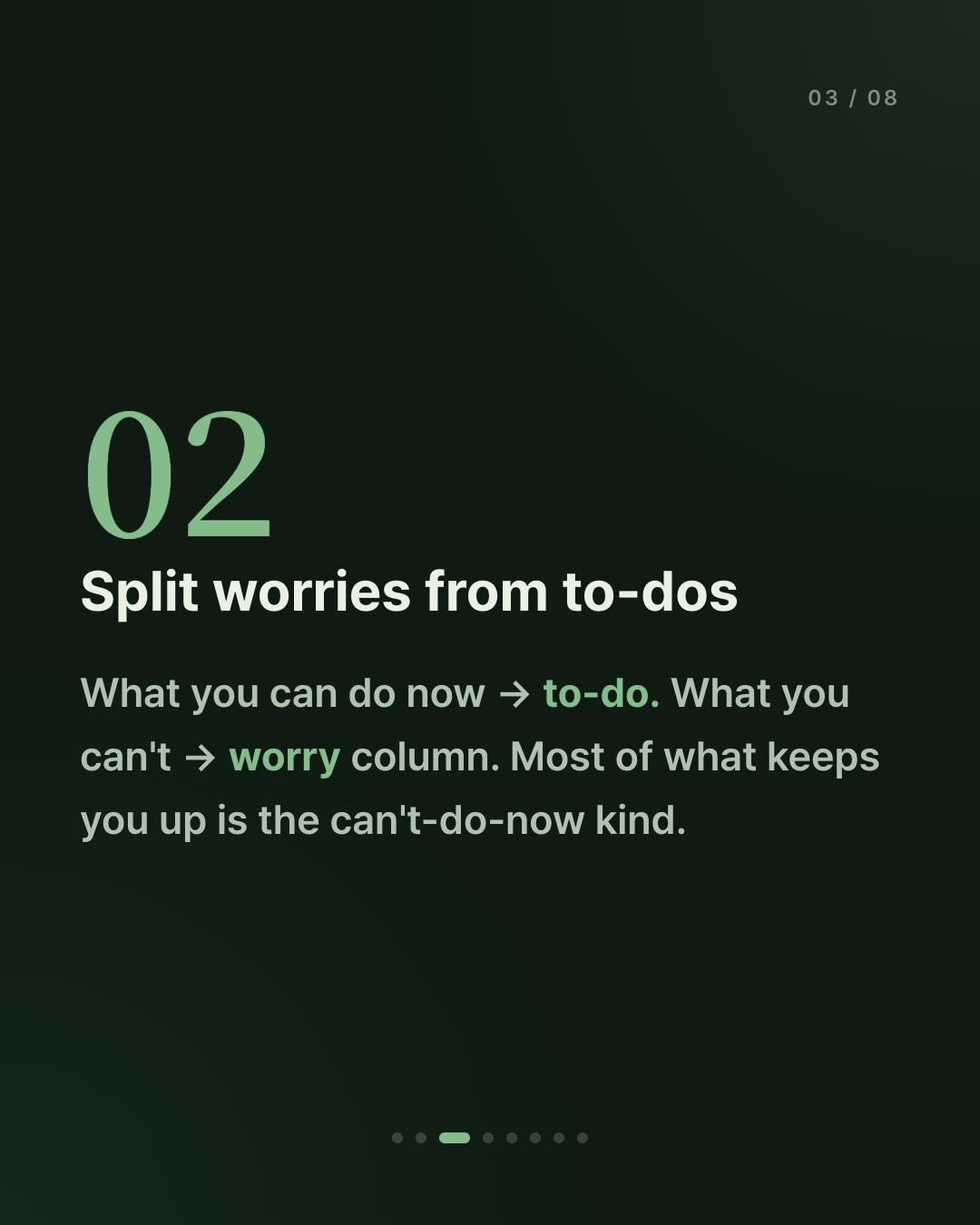
2. Split "worries" from "to-dos"
Divide what you poured out into two columns. What you can do something about now (to-do), and what you can't (worry). Move the to-dos to tomorrow's list; leave the worries in the worry column.
Do it and you'll see: most of what keeps you up is on the worry side — things you can't do anything about right now.
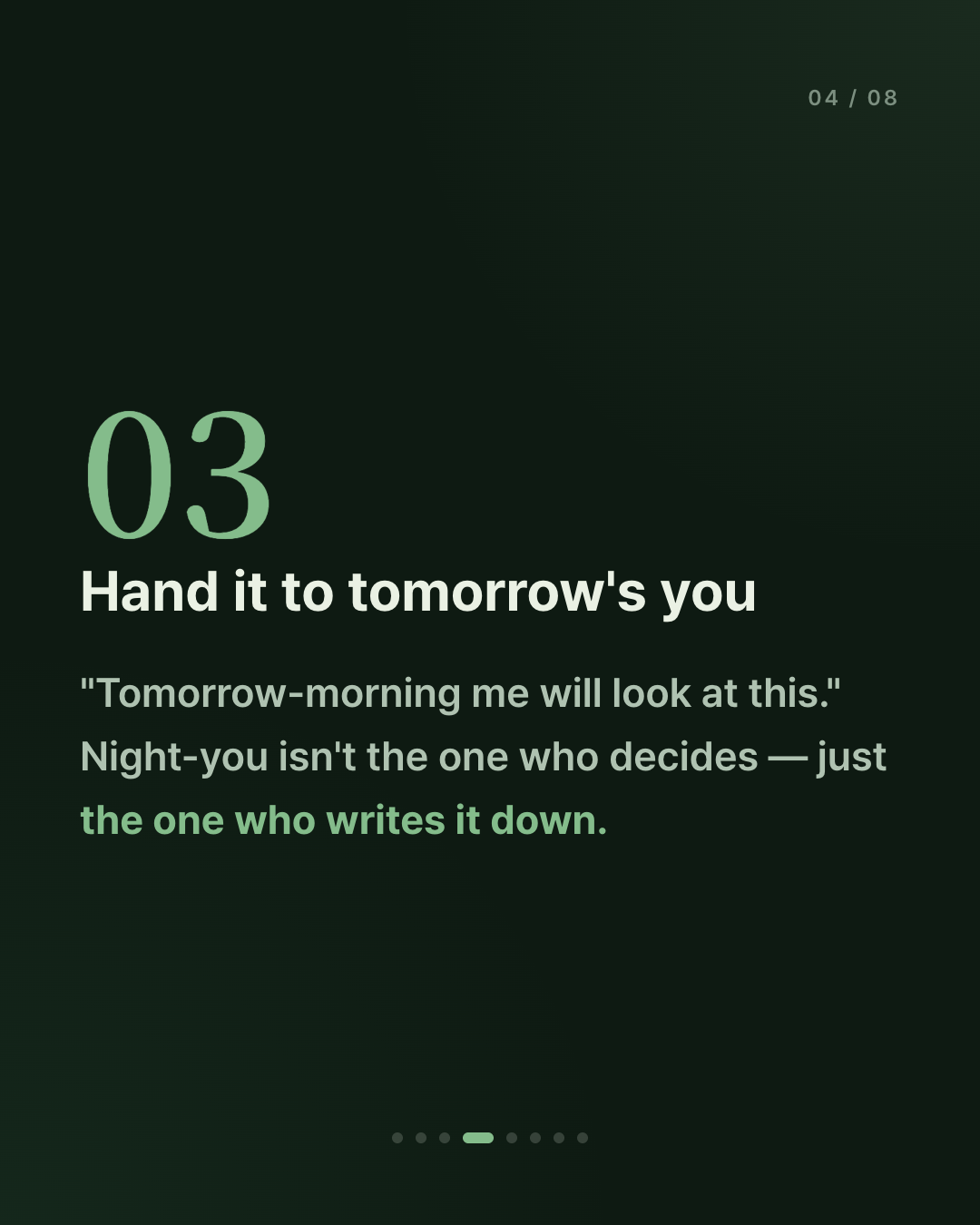
3. Hand it to tomorrow's you
Next to the to-dos, write this: "Tomorrow-morning me will look at this."
Right now you're too worn out to judge. Night-you doesn't have to be the one who decides — just the one who writes it down. Leave the deciding to the you who's slept.
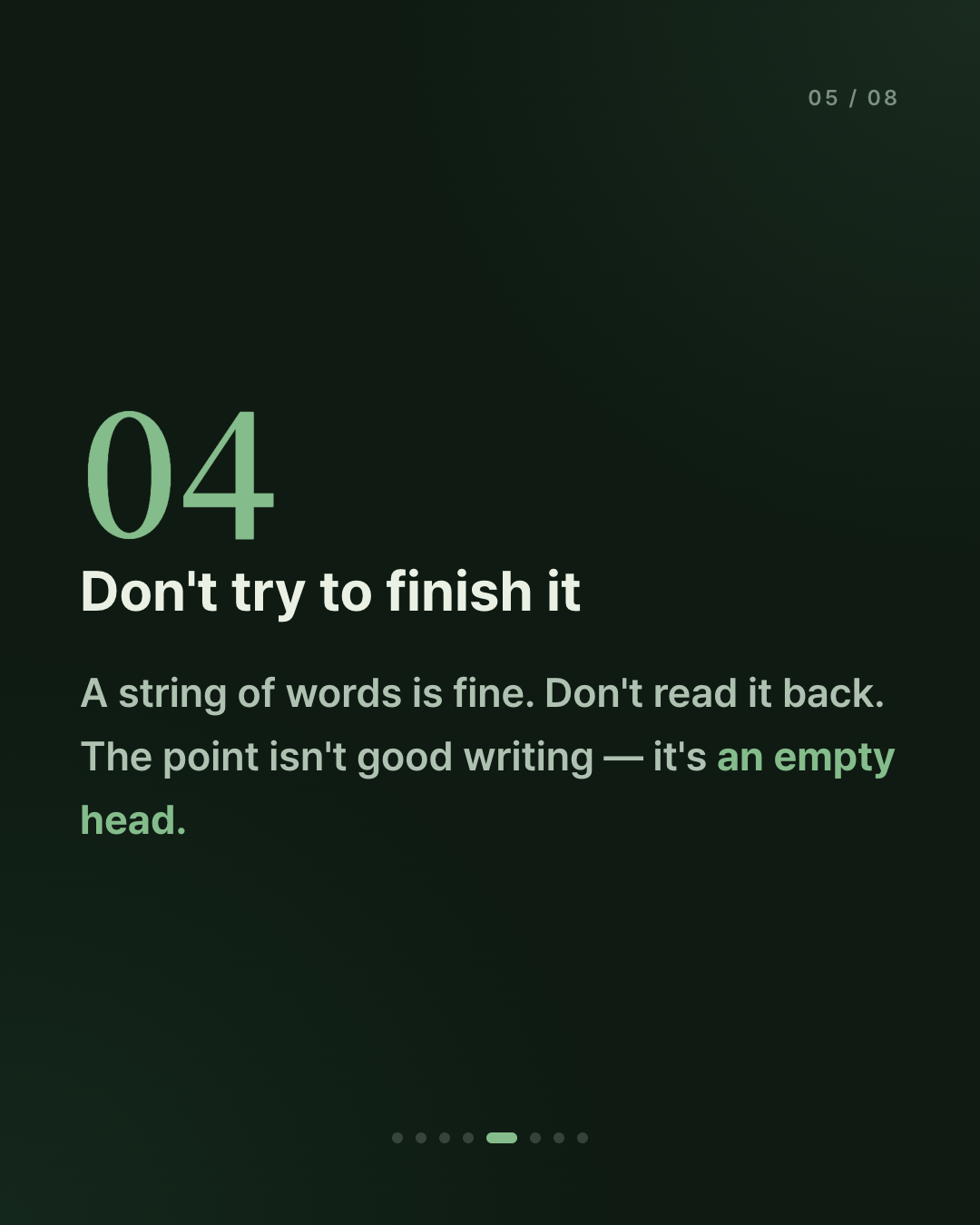
4. Don't try to finish it
It doesn't have to form a sentence — a string of words is fine. Spelling and order don't matter. You don't have to read it back.
The point isn't good writing; it's an empty head. The moment you try to write it well, your head gets crowded again.
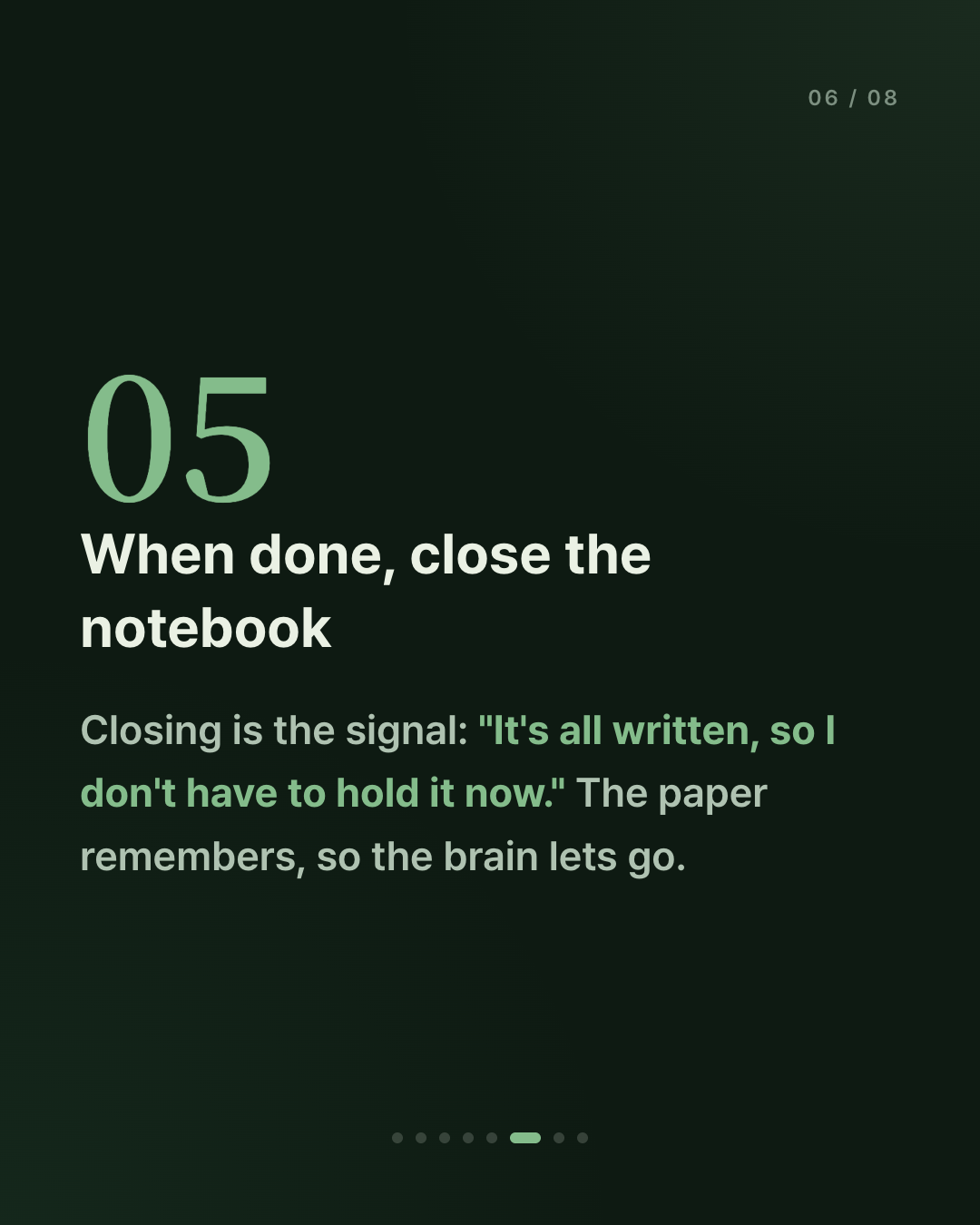
5. When you're done, close the notebook
The ending matters. Once you've poured it all out, close the notebook.
The act of closing sends you a signal: "It's all written here, so I don't have to hold it right now." The paper remembers for you, so the brain has no reason to keep holding on.
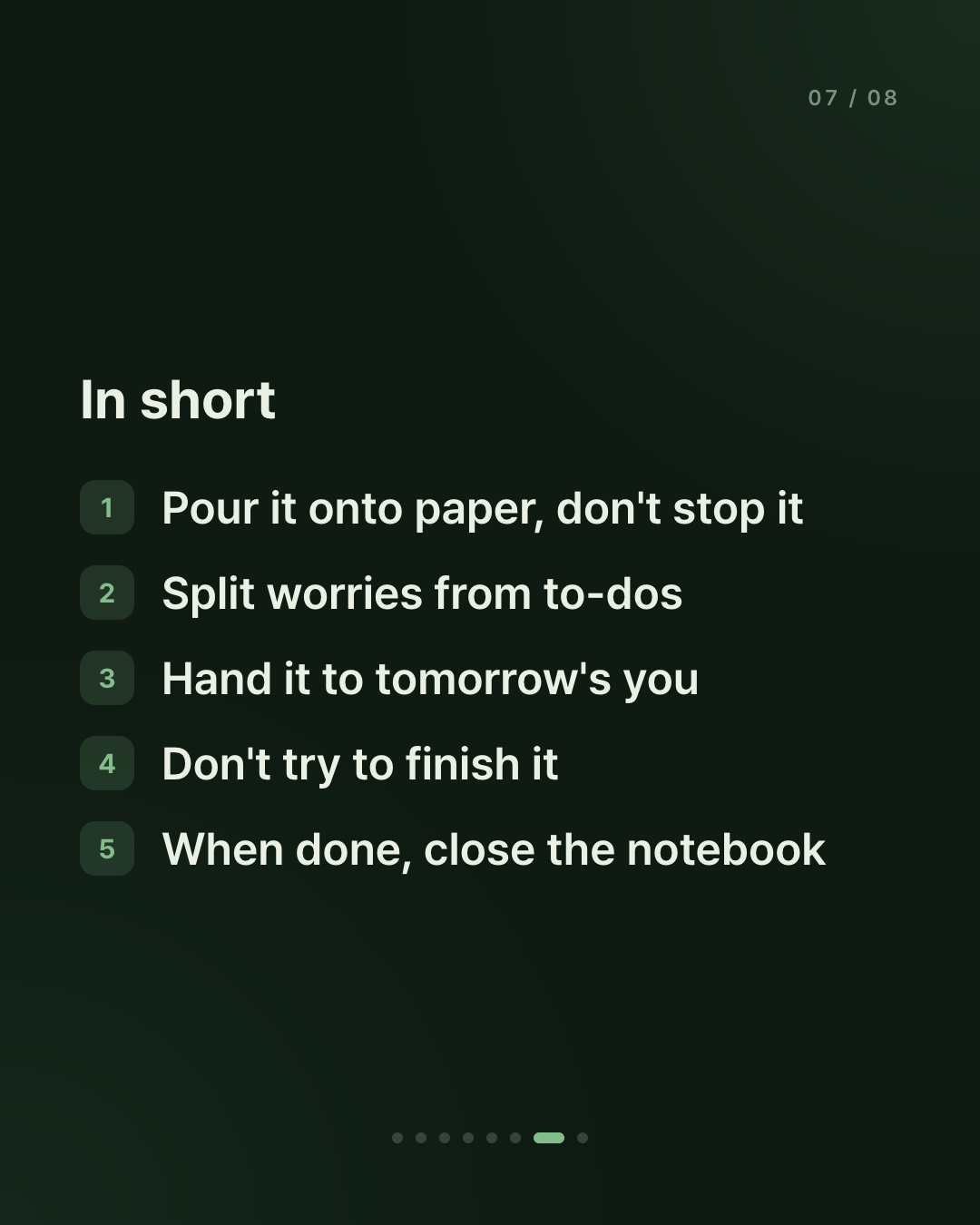
In short
- Don't try to stop — push it away and it sharpens
- Pour it onto paper — no order, no judgment
- Split worries from to-dos — most of it you can't fix right now
- Hand it to tomorrow's you — night-you just writes it down
- Don't try to finish it — the point is an empty head, not good writing
- When you're done, close the notebook — the paper remembers for you
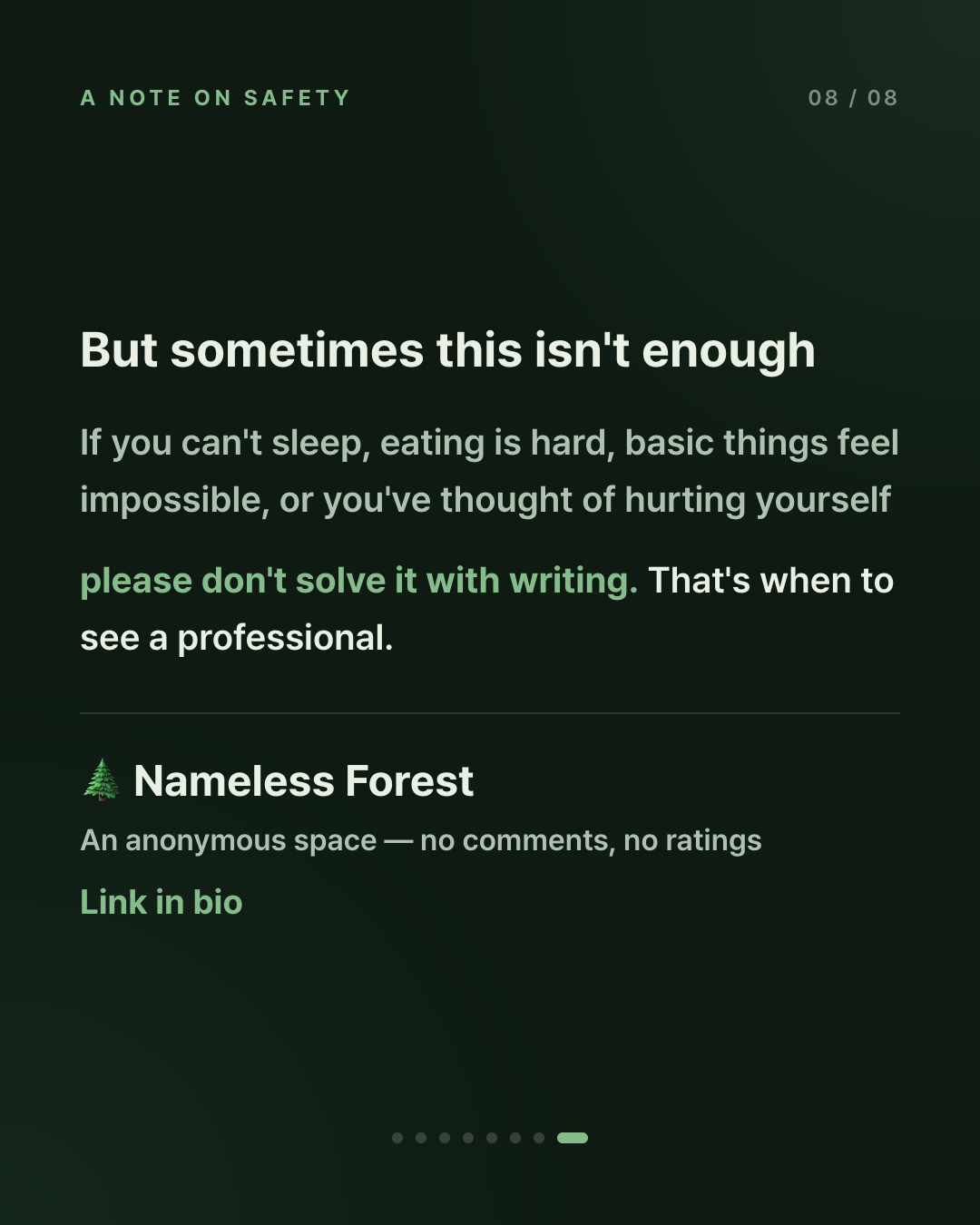
But sometimes this isn't enough
- If you can't sleep, or can't stop sleeping
- If eating has become hard
- If basic things — washing, cleaning — feel impossible
- If you've thought about hurting yourself
Please don't try to solve this with writing. That's when seeing a professional is right. A record is a tool for sorting your mind, not a treatment. (US: 988 Suicide & Crisis Lifeline.)
I'm not a mental-health professional. Just someone who's had no one to talk to.
🌲 I'm building Nameless Forest — an anonymous space to write things down.
No comments, no ratings. A good place to set your head down on a sleepless night.
https://nameless-forest.com/en?utm_source=blognf&utm_campaign=too-many-thoughts

Comments 0
Be the first to comment.