
When something hard happens, do you tell your family?
I don't. I'll tell a friend, but not my family. The people closest to me.
For a long time I thought that was strange about me. Maybe I'm cold. But looking closely, there are conditions attached only to family.
The worry comes back to you

Here's the first one. Tell a friend you're struggling and your friend worries. And then it ends there.
Tell your family and the worry comes back to you.
- Your mother stops sleeping from that day
- Your father calls for days on end
- They talk about you when you're not in the room
A friend's worry is processed inside the friend. A family's worry gets billed to you. That's the decisive difference.
So the load doubles
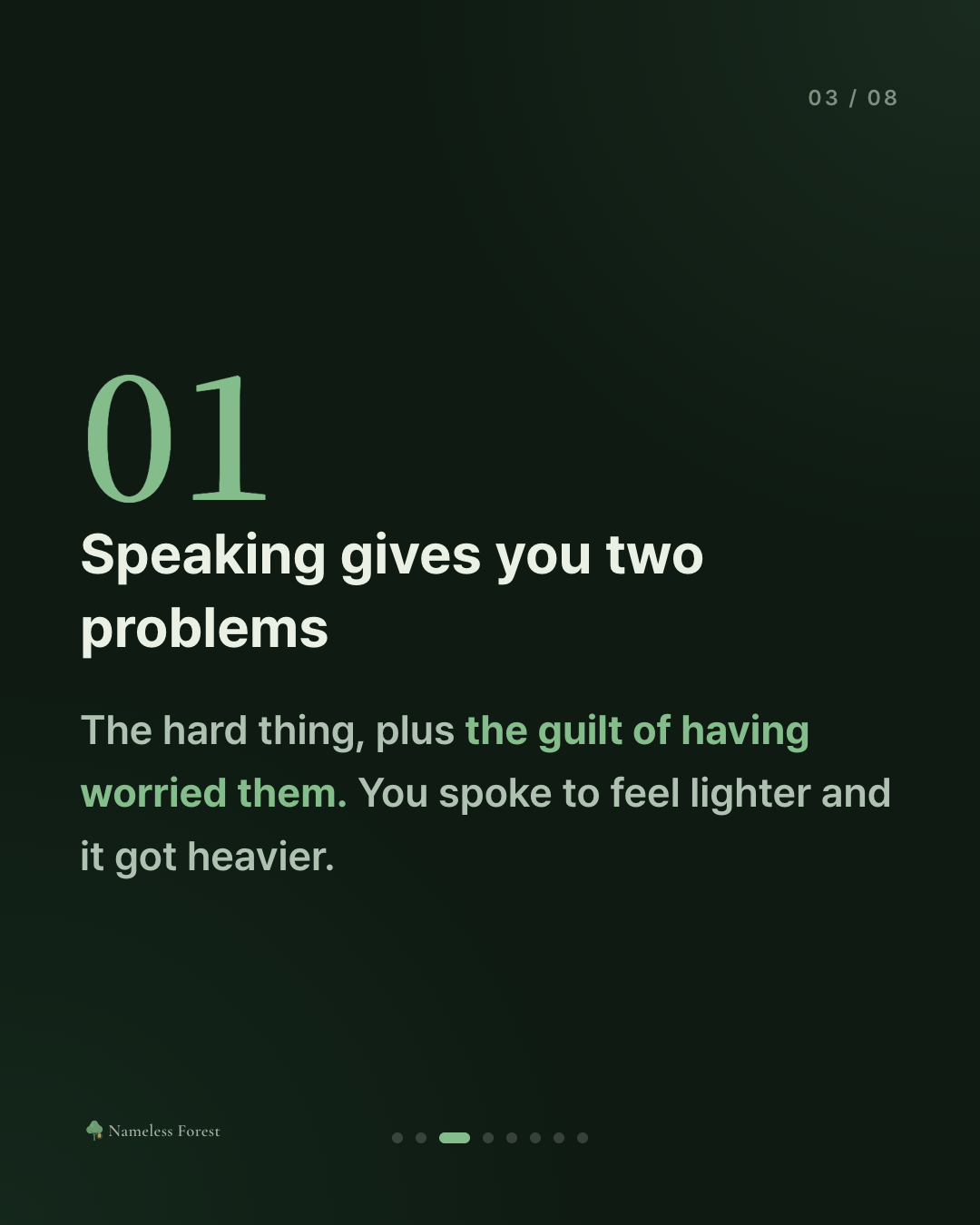
Which means that before you spoke, you had one problem. After you spoke, you have two.
The hard thing itself, plus the guilt of having worried them.
Opening up is supposed to make things lighter, and instead it gets heavier. So after going through that once, you stop doing it. You learned it from experience. Not from being cold.
And this isn't a complaint about family. They react that way because they love you. But that's exactly the awkward part of this structure: the more love there is, the more comes back.
The role is already set
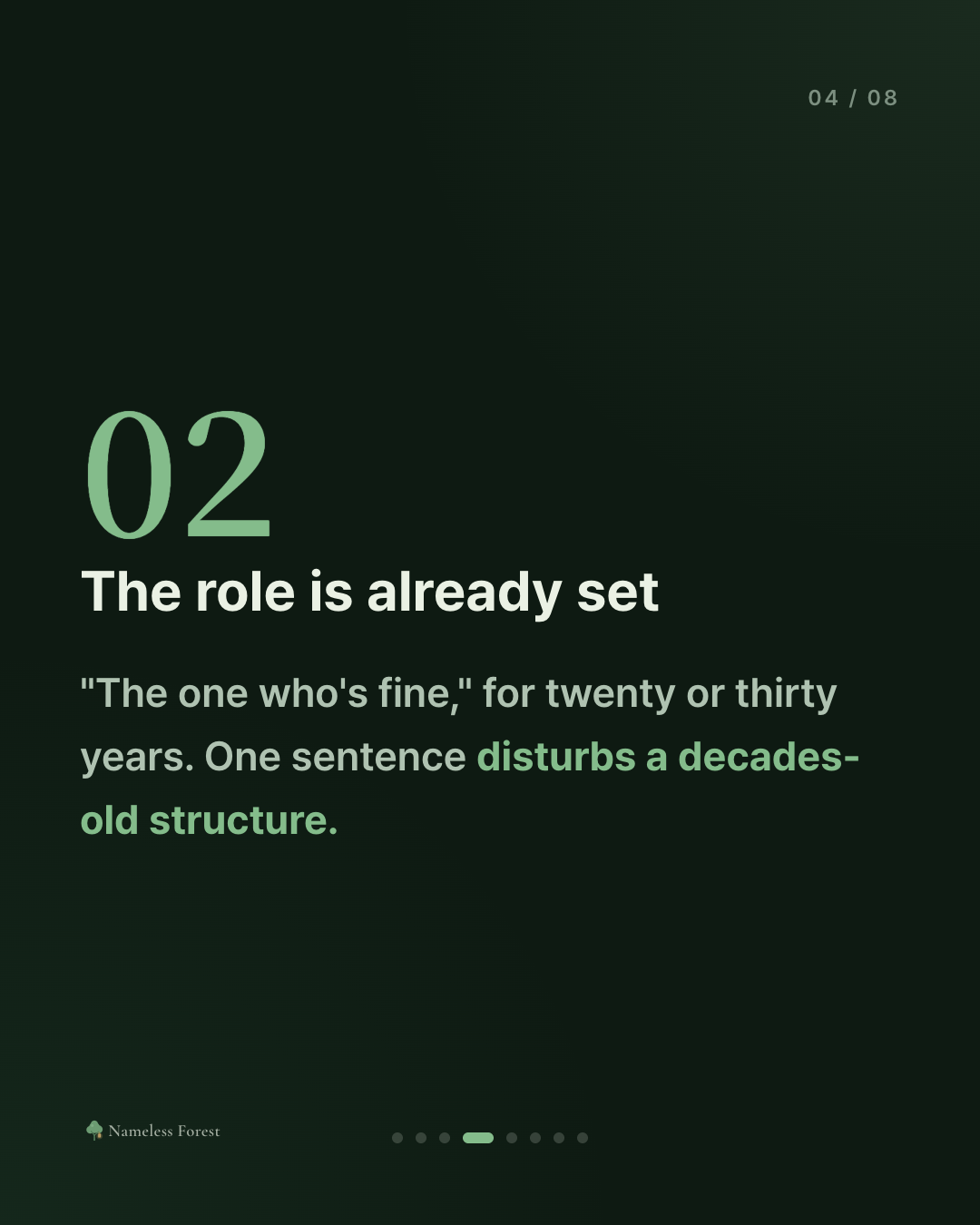
The second condition is your role.
Inside a family, your place was assigned long ago. The one who's fine. The one who handles things. The one who doesn't cause worry. That's twenty, thirty years of accumulation.
So saying "I'm struggling" isn't just a sentence. It disturbs a structure that's been holding for decades.
Friendships run a few years, so your image keeps getting updated inside them. Family doesn't update well. You can be past thirty and still be carrying your fifteen-year-old self in their eyes. That makes new material much harder to introduce.
And you can't walk away
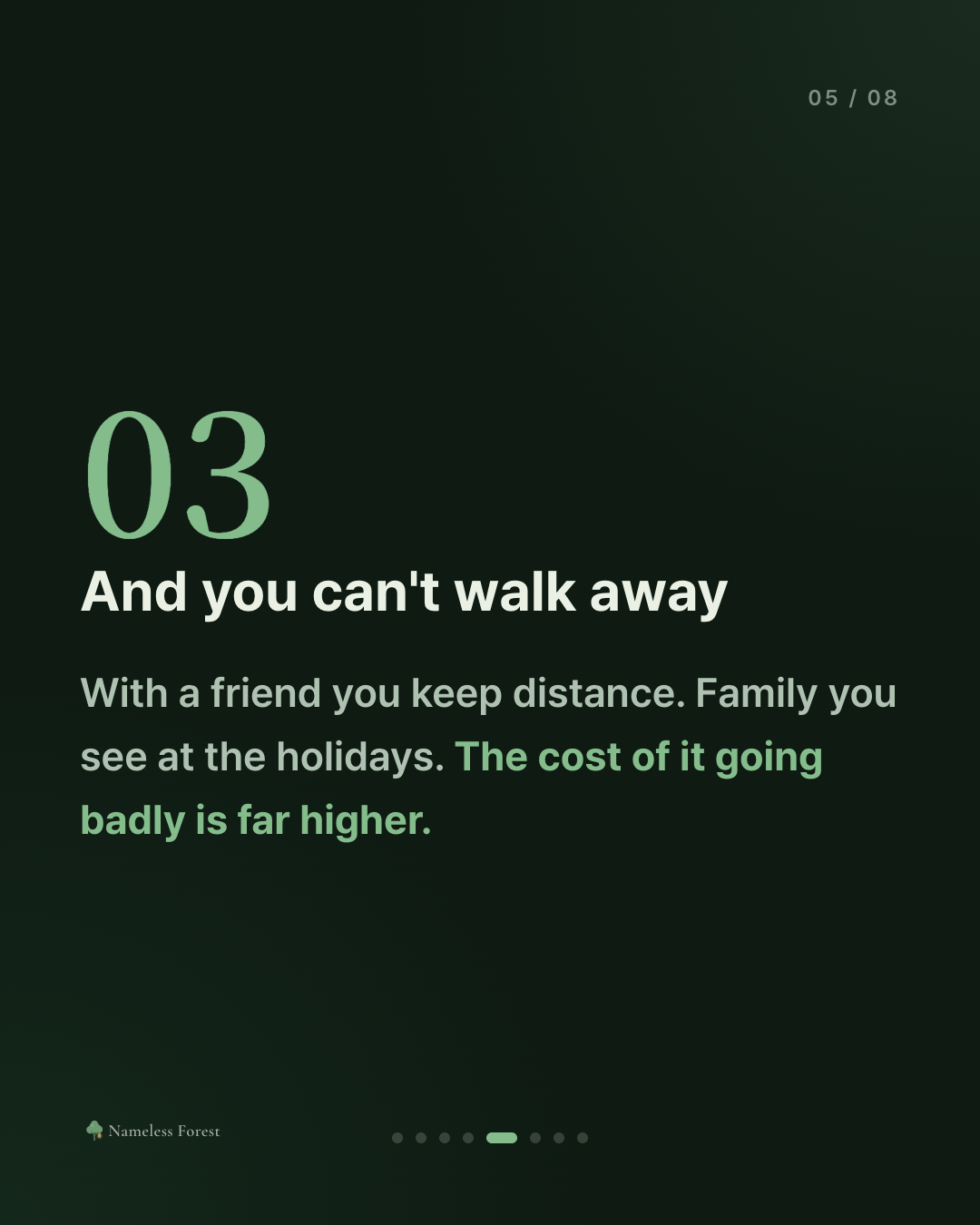
The third is the biggest. With family, there's an assumption that the relationship can't be ended.
Tell a friend and have it turn awkward, and you can keep some distance. Time thins it out.
With family, you can't. Awkward or not, you'll see them at the holidays, and it runs for life. Words can't be taken back, and the relationship continues anyway.
So of course it's hard. The cost of it going badly is far higher. This was never a question of courage. It was a calculation.
So what do you do
Three things.
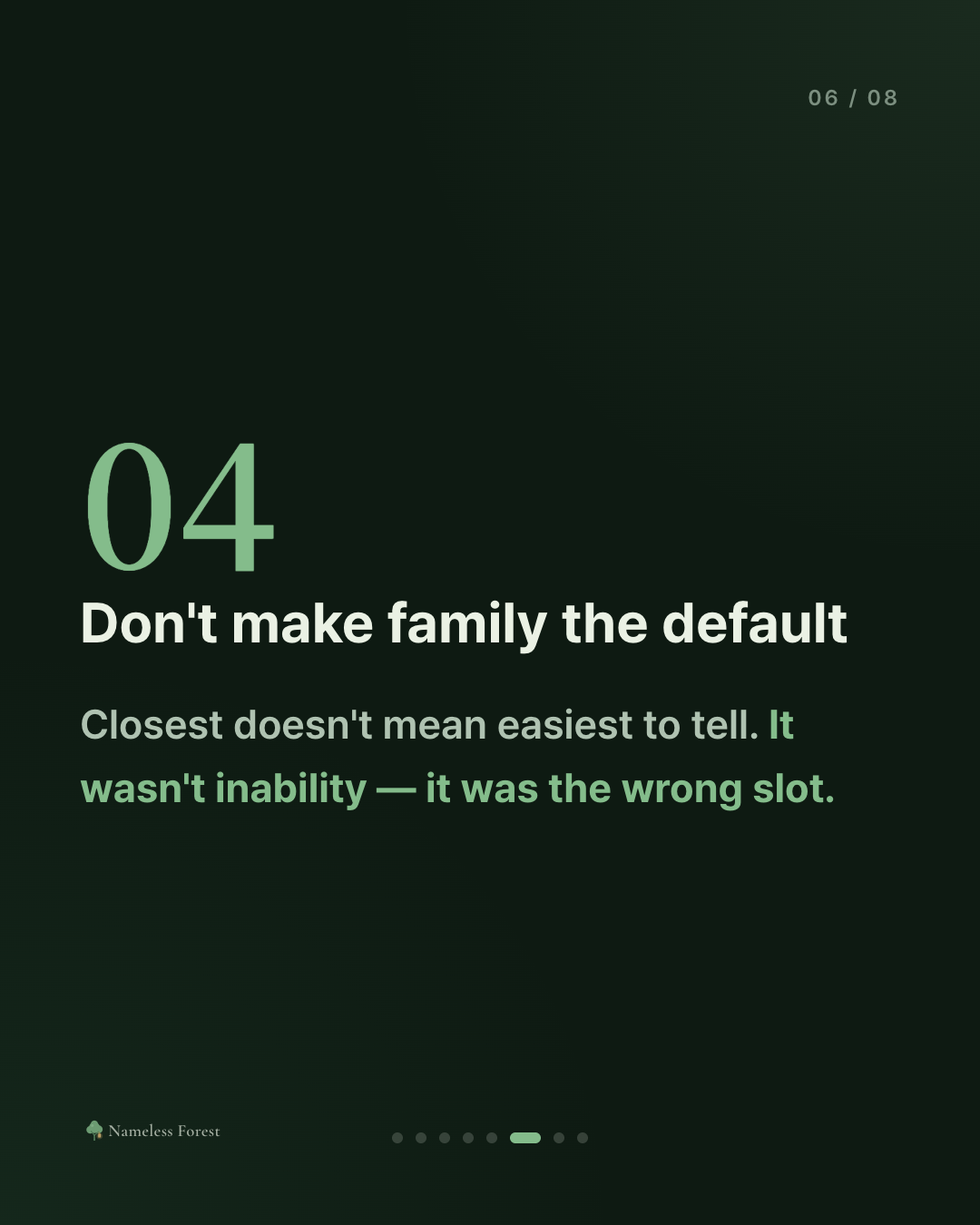
One. Don't make family the default. We're taught that when things are hard, you tell your family. But given the conditions above, family is actually the hardest place to do it. Not being able to isn't the failure. You were forcing it into a slot that doesn't fit.
Two. If you tell them, tell them after it's resolved. Speak while it's ongoing and the worry keeps coming back — the phone rings every day. But "actually, this happened a while back" is far easier. There's nothing left for them to worry about.
Three. Put the brake on before you speak. "I don't need advice, I just want you to know." One line, up front. Family will usually try to *do* something, and that's where the returning worry starts. Block it in advance and the whole thing gets easier.
And if right now there's nowhere you can say it, that's fine too. Writing it somewhere nameless beats not putting it anywhere.
In short
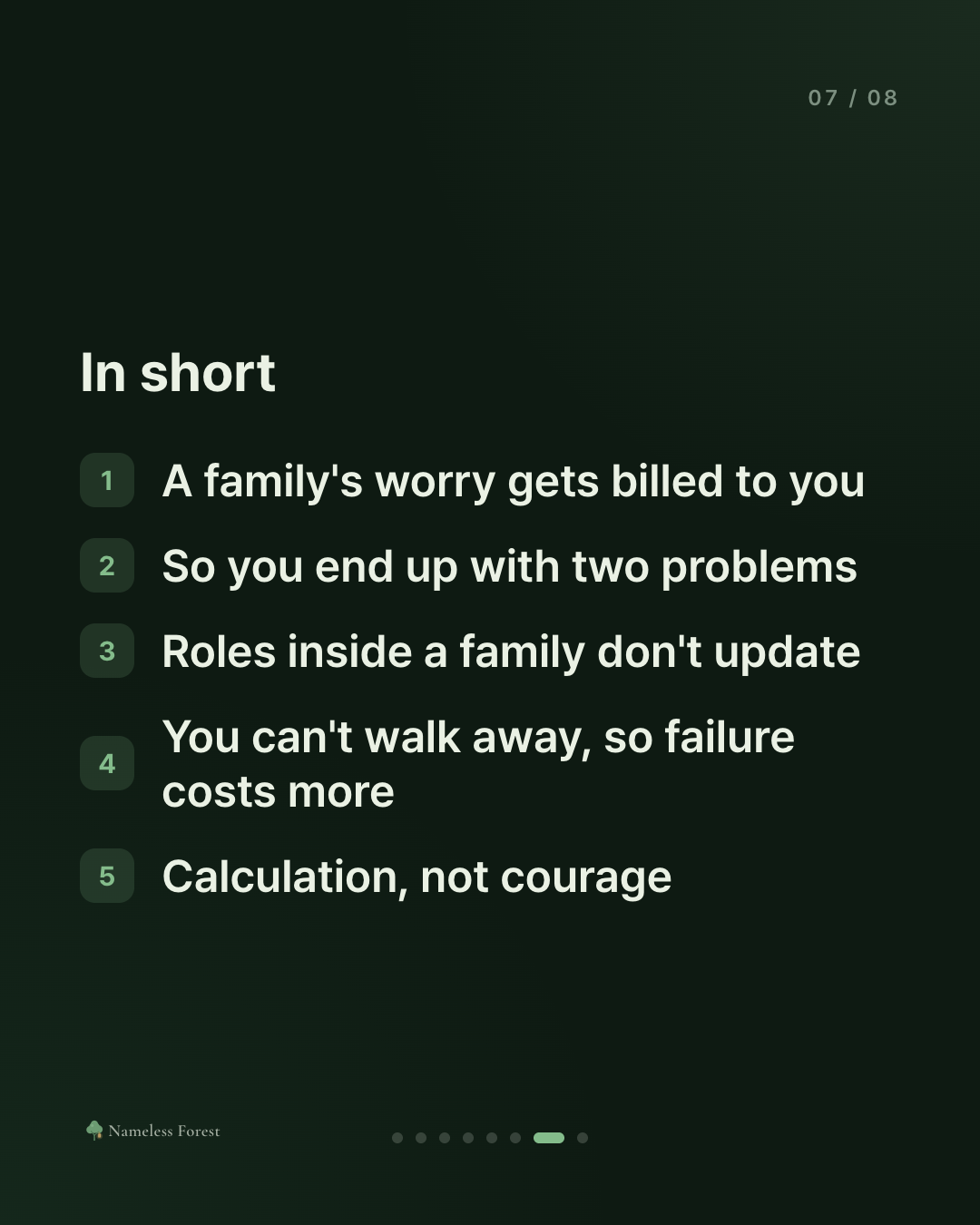
- A friend's worry ends with them. A family's worry gets billed to you
- So speaking doesn't lighten it — you end up with two problems
- Roles inside a family don't update. One sentence disturbs a decades-old structure
- You can't walk away, so the cost of failure is high. Calculation, not courage
- Don't make family the default. Closest doesn't mean easiest to tell
- If you tell them, do it after it's resolved, and lead with "I don't need advice"
That said, sometimes this isn't enough
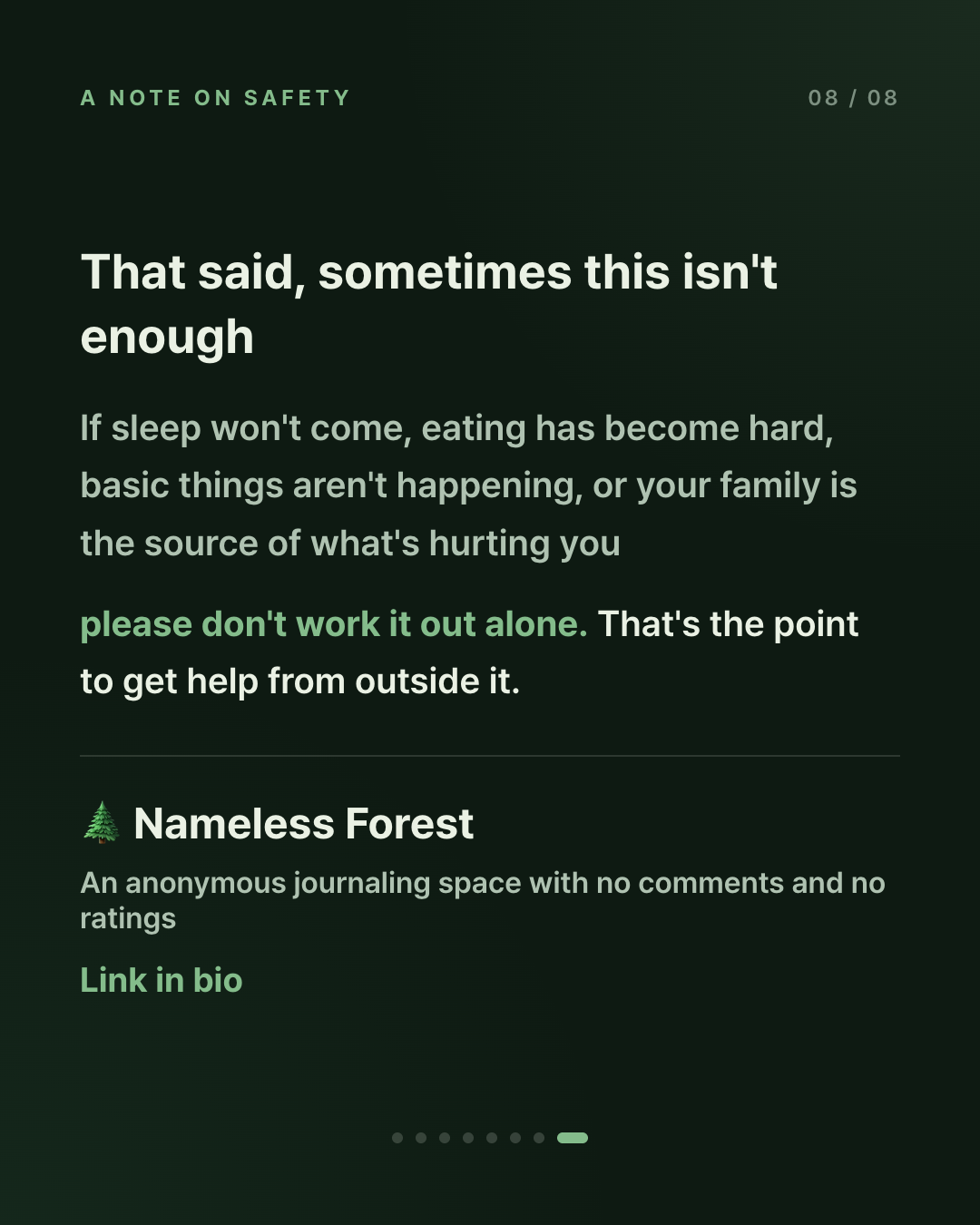
- Sleep won't come, or won't stop
- Eating has become hard
- Basic things like washing or cleaning aren't happening
- You've had thoughts of hurting yourself
If that's where you are, please don't try to solve it by writing. That's the point where seeing a professional is the right call. Writing is a tool for sorting your mind. It isn't treatment.
And if your family is the source of what's hurting you, none of the advice above applies. Not telling them may well be correct, and distance is a legitimate option. In that situation, please don't work it out alone — get help from outside it.
I'm not a mental health professional. I'm just someone who has had nowhere to say things.
🌲 I'm building an anonymous journaling space called Nameless Forest.
No comments, no ratings — just a place to write things down.
A place where nobody worries about you.
https://nameless-forest.com/en?utm_source=blognf&utm_campaign=hardest-to-tell-family

Comments 0
Be the first to comment.