
When someone asks you for something, does "sure" come out first?
It does for me. I know it won't work, and my mouth says yes anyway. Then I hang up and think how am I going to do this.
But this isn't generosity. Refusing is a calculation that doesn't come out right for me.
One refusal gets priced as the whole relationship
The first reason is measuring at the wrong scale.
This escalation happens automatically in your head:
I turn down this request → they'll think worse of me → the relationship gets damaged
What actually happens is one favor going undone. But it feels like the whole relationship is on the table.
So of course refusing is hard. You're holding one request and calculating whether you'll lose a person. The weight you put on the scale was wrong to begin with.
Only refusal requires a reason
The second part is the strange one. Saying yes needs no reason. Saying no does.
Say "sure" and nobody asks why. Say "I don't think I can" and the next question usually arrives. Why?
So refusing means manufacturing a persuasive justification. A prior commitment, feeling unwell, something.
The problem is when there's no plausible one. When you just don't want to, or just don't have it in you. That doesn't feel like it counts, so you end up saying yes.
As long as that asymmetry holds, refusing stays hard. You have to invent an excuse every single time.
Refusal costs now; agreement costs later
The third is the decisive one. The two choices deliver their costs at different times.
- Refuse → the awkwardness of that moment arrives immediately
- Agree → right now is comfortable, and the cost arrives on the weekend
We react far more strongly to what's in front of us. So it tips toward yes every time. Not from weak willpower. The scale itself is tilted.
And repeated, this deletes your weekends one by one — each traded for avoiding one moment of awkwardness.
Saying yes to everything doesn't make you close
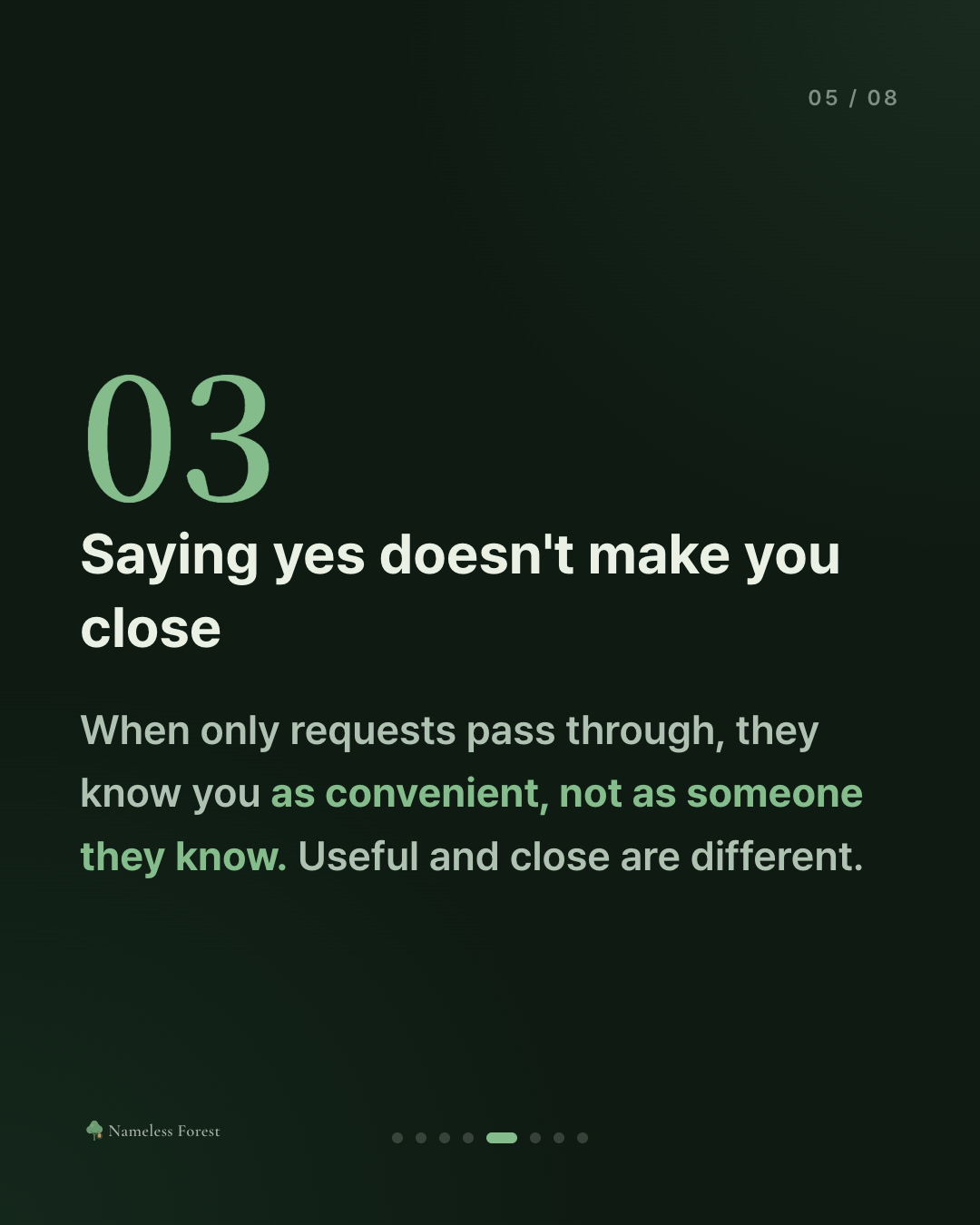
Here's the part I most want to say. Saying yes to everything gets you thanked. It doesn't get you closeness.
A relationship built on favors is lopsided. You're always the giver, they're always the receiver. Which means they know you as someone convenient, not as someone they know.
What's been hard for you lately, what you've been thinking about — there's no slot for that in a relationship like this. Only requests and agreements pass through it.
So people who say yes to everything are surrounded by people and have nowhere to talk. Being useful and being close are different things.
So what do you do
Two things.
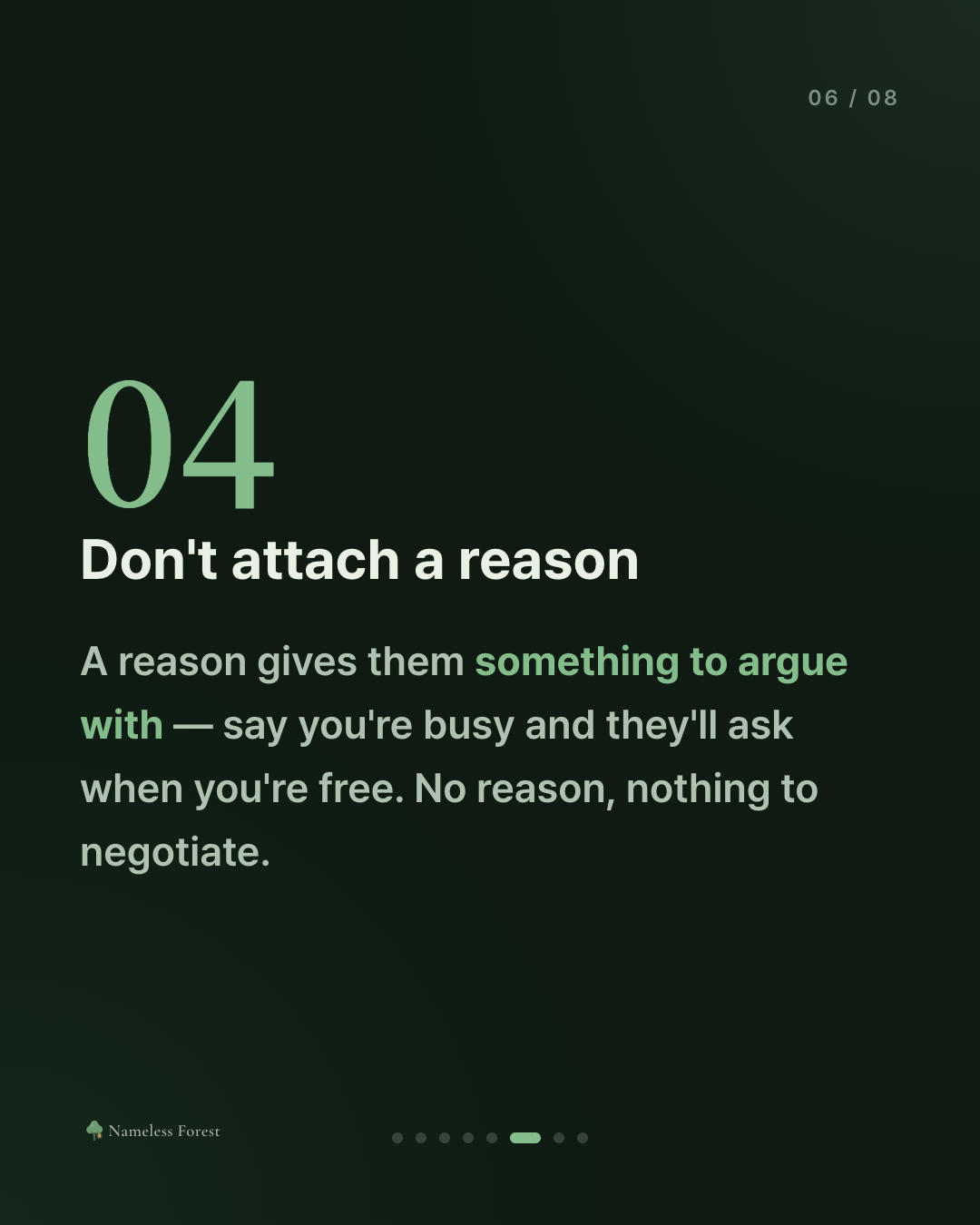
One. Don't attach a reason to your refusal.
"I don't think I can this time." Full stop.
Attach a reason and you've given them something to argue with. Say you're busy and they'll ask when you're free. Say you have plans and they'll ask if you can move them. A reason is negotiating material. With no reason, there's nothing to negotiate.
Two. Don't answer immediately.
"Let me think about it and get back to you." That's the whole sentence.
Demanding an immediate answer is usually pressure aimed at extracting a yes. But delay it one day and the timing gap I described collapses — by then you can see the weekend disappearing.
And a one-day delay doesn't damage the relationship. That's another thing you learn by trying it.
In short
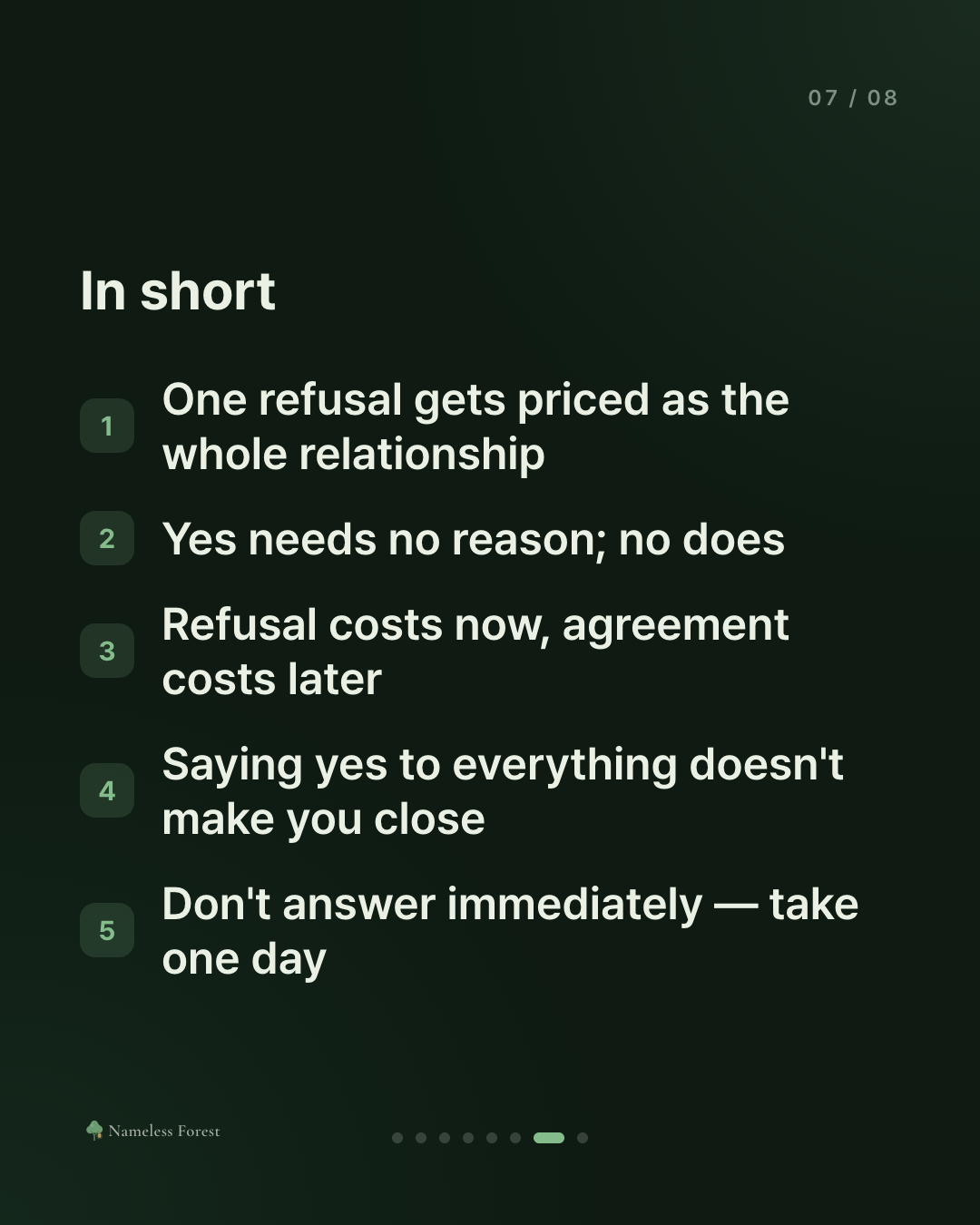
- One refusal gets priced as the entire relationship. The weight on the scale is wrong
- Yes needs no reason; no does. That asymmetry means inventing an excuse every time
- Refusal costs now, agreement costs later. So it tips toward yes every time
- Saying yes to everything doesn't make you close. Useful and close are different
- Don't attach a reason. A reason is negotiating material
- Don't answer immediately. One day is enough to see the later cost
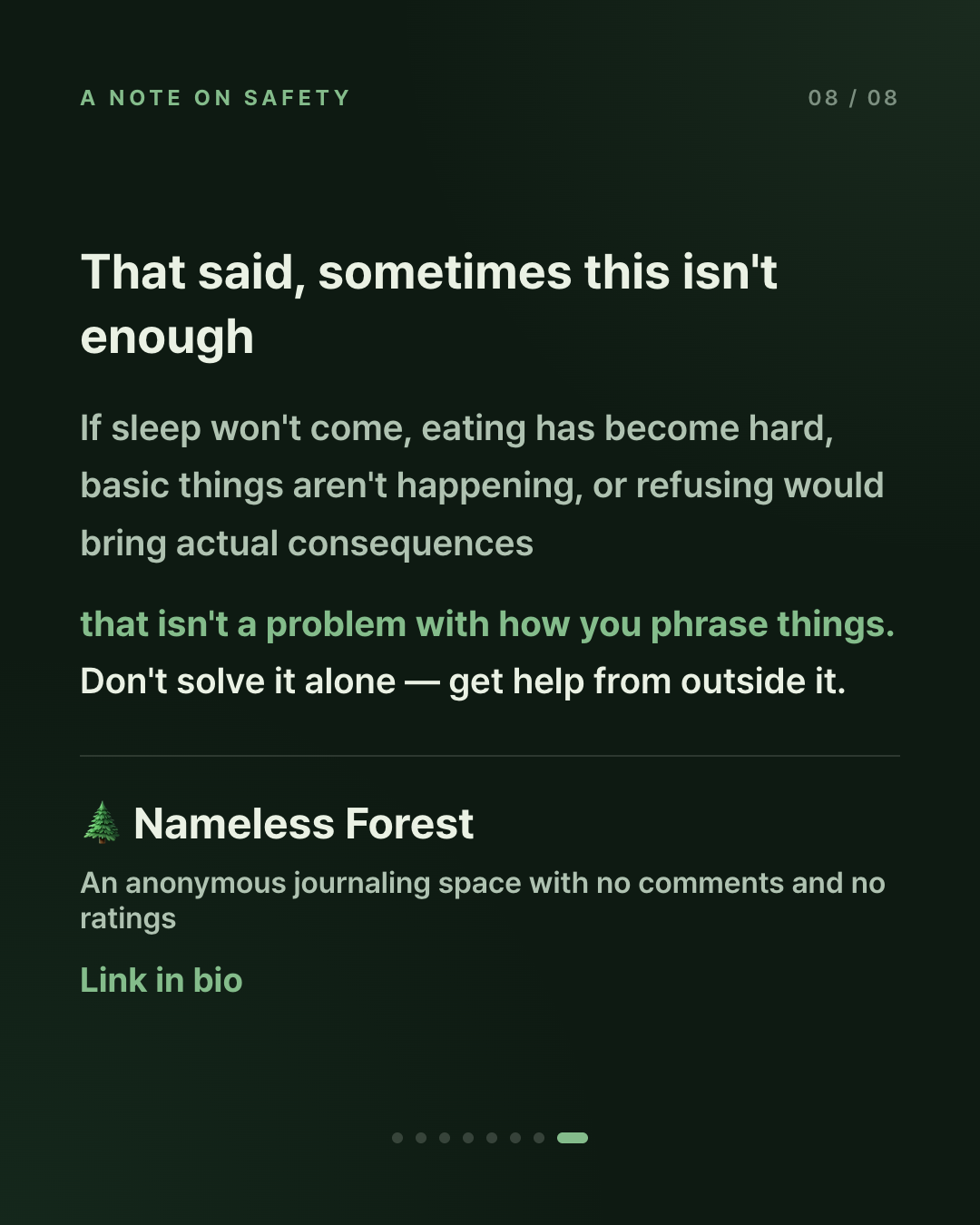
That said, sometimes this isn't enough
- Sleep won't come, or won't stop
- Eating has become hard
- Basic things like washing or cleaning aren't happening
- You've had thoughts of hurting yourself
If that's where you are, please don't try to solve it by writing. That's the point where seeing a professional is the right call. Writing is a tool for sorting your mind. It isn't treatment.
And if refusing would bring actual consequences, none of this applies as written. A power imbalance at work, or a situation where saying no threatens your safety, is not a problem with how you phrase things. Please don't try to solve that one alone — get help from outside it.
I'm not a mental health professional. I'm just someone who has had nowhere to say things.
🌲 I'm building an anonymous journaling space called Nameless Forest.
No comments, no ratings — just a place to write things down.
A place that asks nothing of you.
https://nameless-forest.com/en?utm_source=blognf&utm_campaign=cant-say-no

Comments 0
Be the first to comment.