
When you're about to cry, is there something you do before crying?
I run a check. Is this really worth crying over. Am I too old for this. Everyone goes through this.
And most of the time, I end up not crying. But I wasn't not crying. I was postponing it.
We put crying through an eligibility review
When we were kids, tears just came. You fell down, you cried. Something was unfair, you cried.
Then at some point a review gets attached before the crying.
- Isn't crying over this a bit much
- Isn't this a strange age to be crying
- Plenty of people have it worse than me
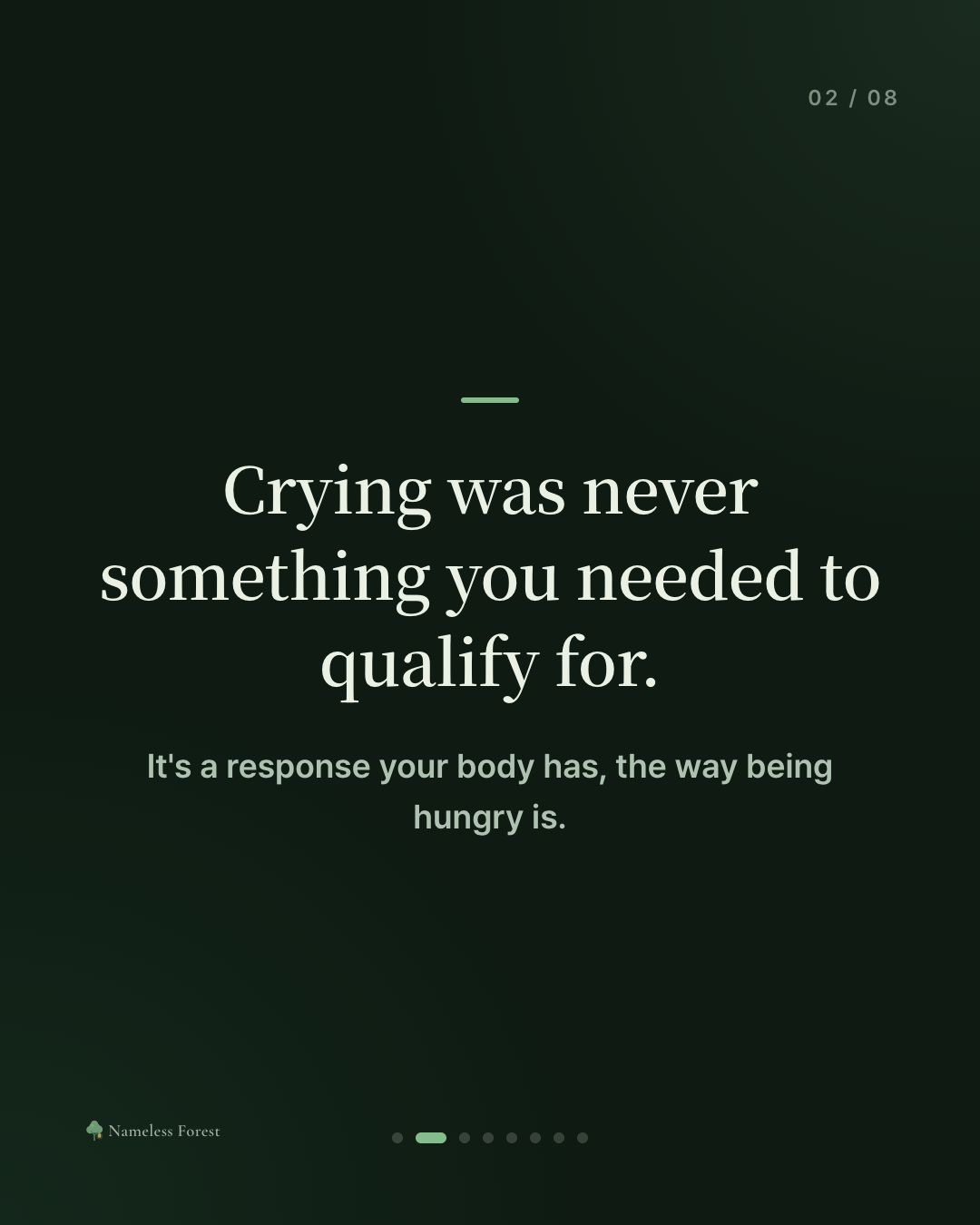
Crying was never something you needed to qualify for. It's a response your body has, the way being hungry is. And yet we've installed a review desk in front of it.
Because we measure crying against the size of the event
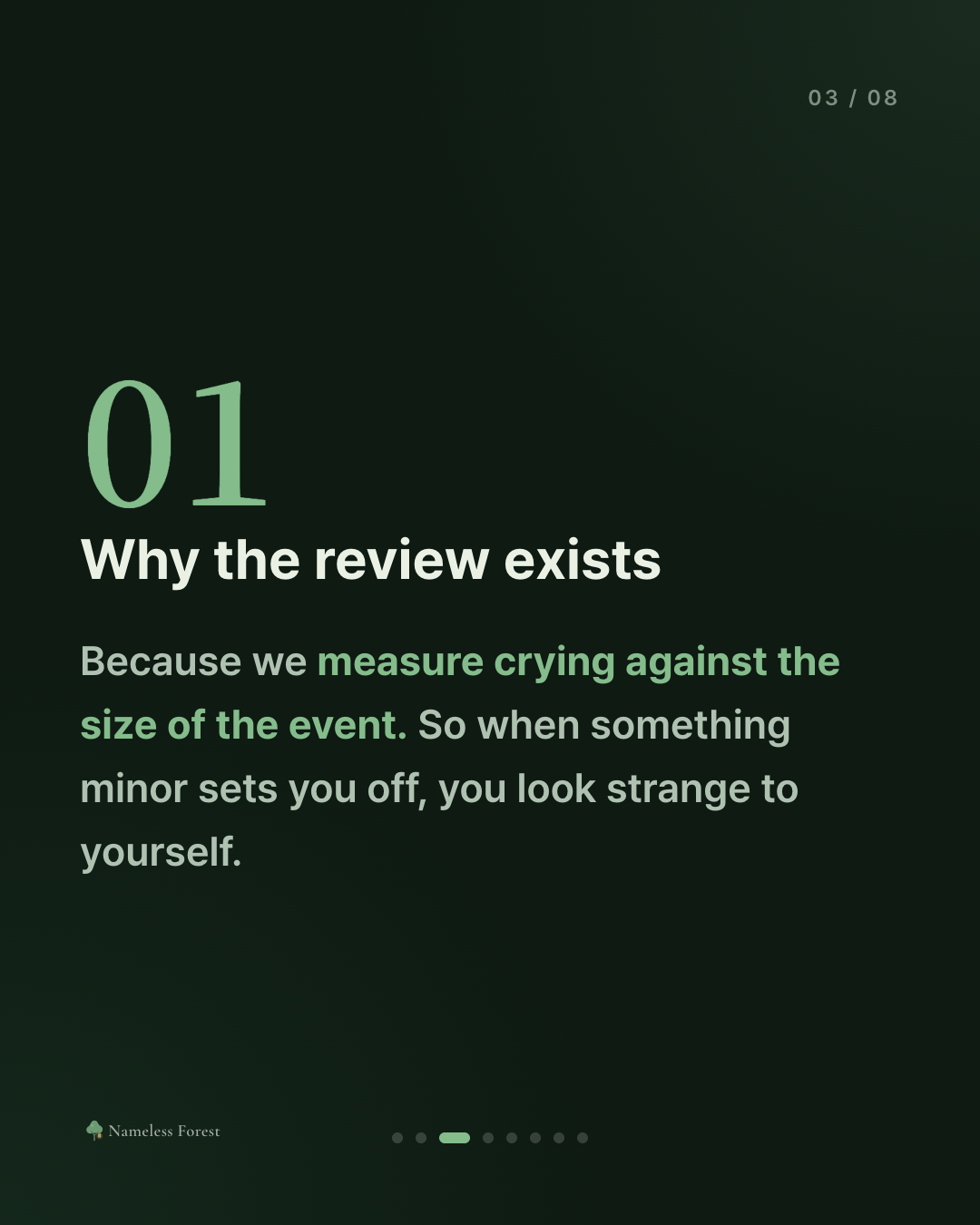
The review gets attached because we measure the size of the crying against the size of the event.
Big things earn tears, small things don't. So when something minor makes you tear up, you look strange to yourself.
- You tripped on the street and your eyes welled up
- Your card was declined at a shop and you nearly cried
- One scene in a show suddenly set you off
And you think: what's wrong with me lately. Have I gotten oversensitive.
But crying is a response to accumulation
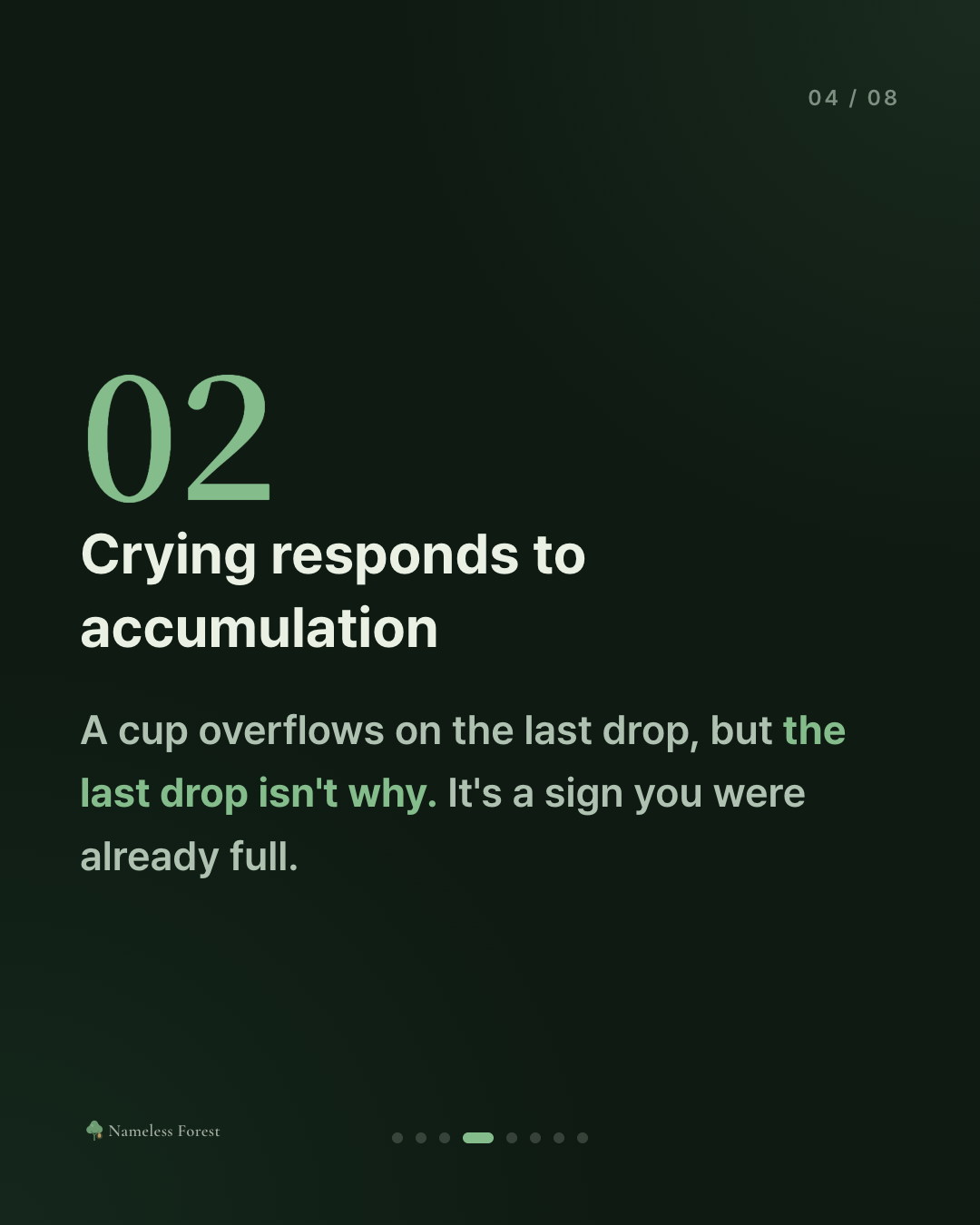
Here's the part that matters. Crying isn't a response to that one event. It's a response to everything that's been stacking up.
Keep pouring water into a cup and it overflows on the last drop. But the last drop isn't why it overflowed. The water already in there is why.
So tears over something minor aren't a sign that the thing was sad. They're a sign that you were already full. The size doesn't mismatch — you were never measuring that one event to begin with.
Once you see that, the review can't run. Crying over this makes me strange doesn't hold, because it was measuring the wrong thing.
What's actually frightening isn't the crying
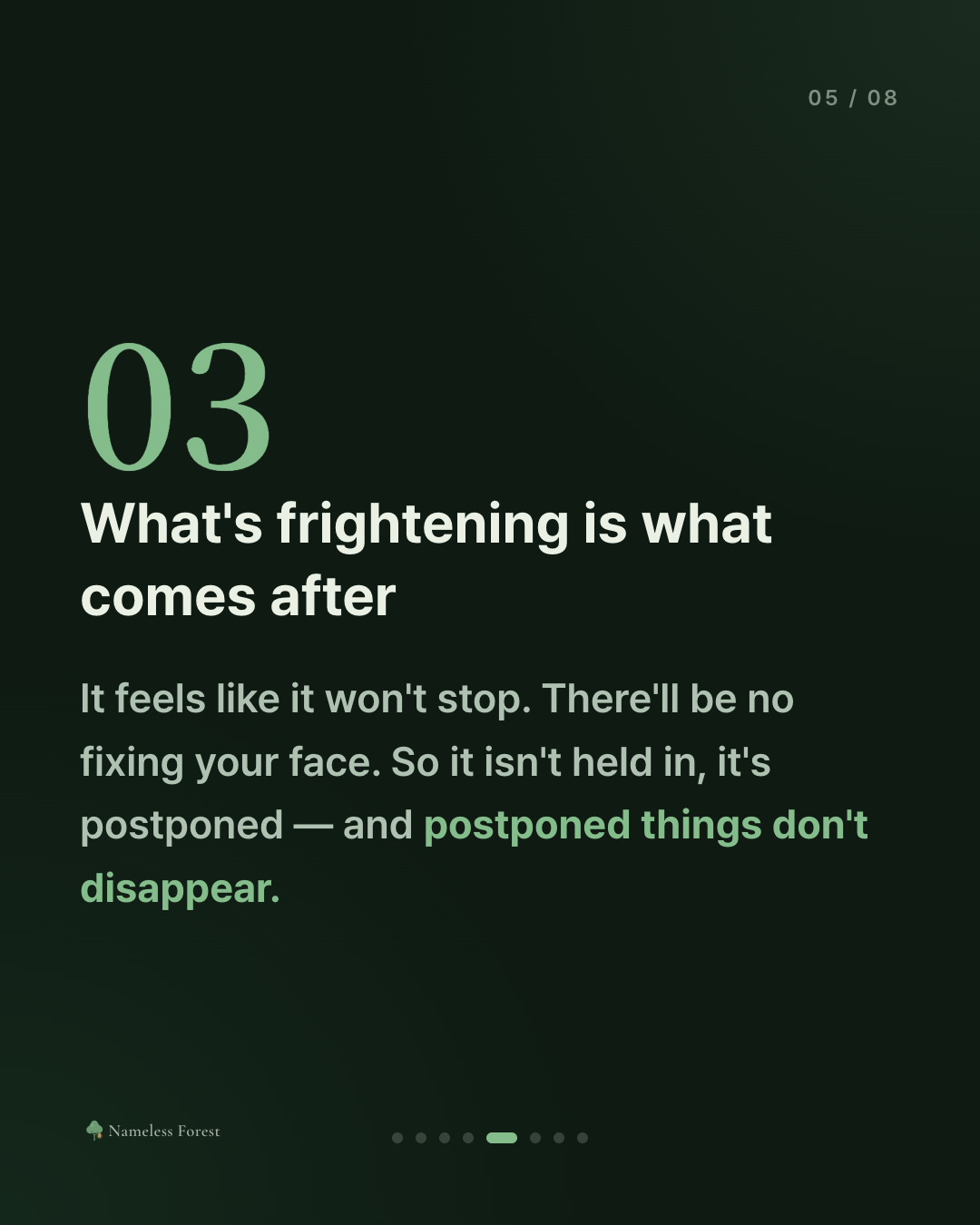
What's actually frightening isn't the crying — it's what comes after. That's the real reason we hold it in.
- It feels like it won't stop once it starts
- Your eyes will be swollen and there's no fixing that
- You'll look like a weak person
- If someone asks why, you won't be able to explain
Especially when you have to go to work, or see someone. So it isn't held in so much as postponed, and the problem is that postponed things don't disappear. They're still in the cup.
So decide where it ends before you start
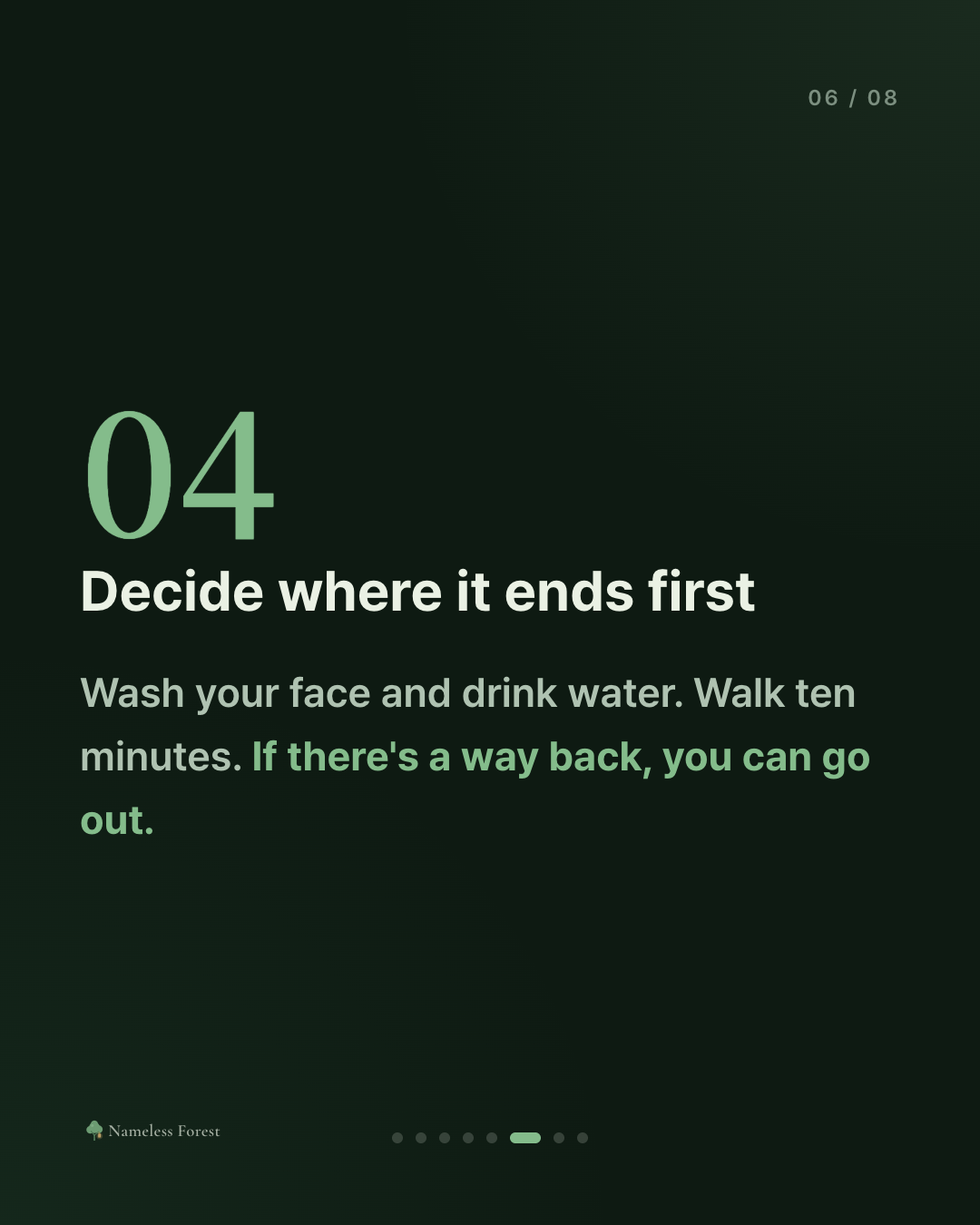
So what I'd suggest isn't to cry your heart out. It's to decide where it ends before you start.
Crying is frightening because there's no visible end to it. But if what comes next is already decided, you can begin.
- After crying, wash your face and drink a glass of water
- After crying, walk for ten minutes
- After crying, straighten the bed and sleep
It sounds mundane, but it works as a brake. If there's a way back, you can go out.
And one more thing. Afterward, don't ask why you cried. That question makes you point at one event, and if it's minor you look strange to yourself again. Ask this instead: what's been stacking up lately. That's the right question.
In short
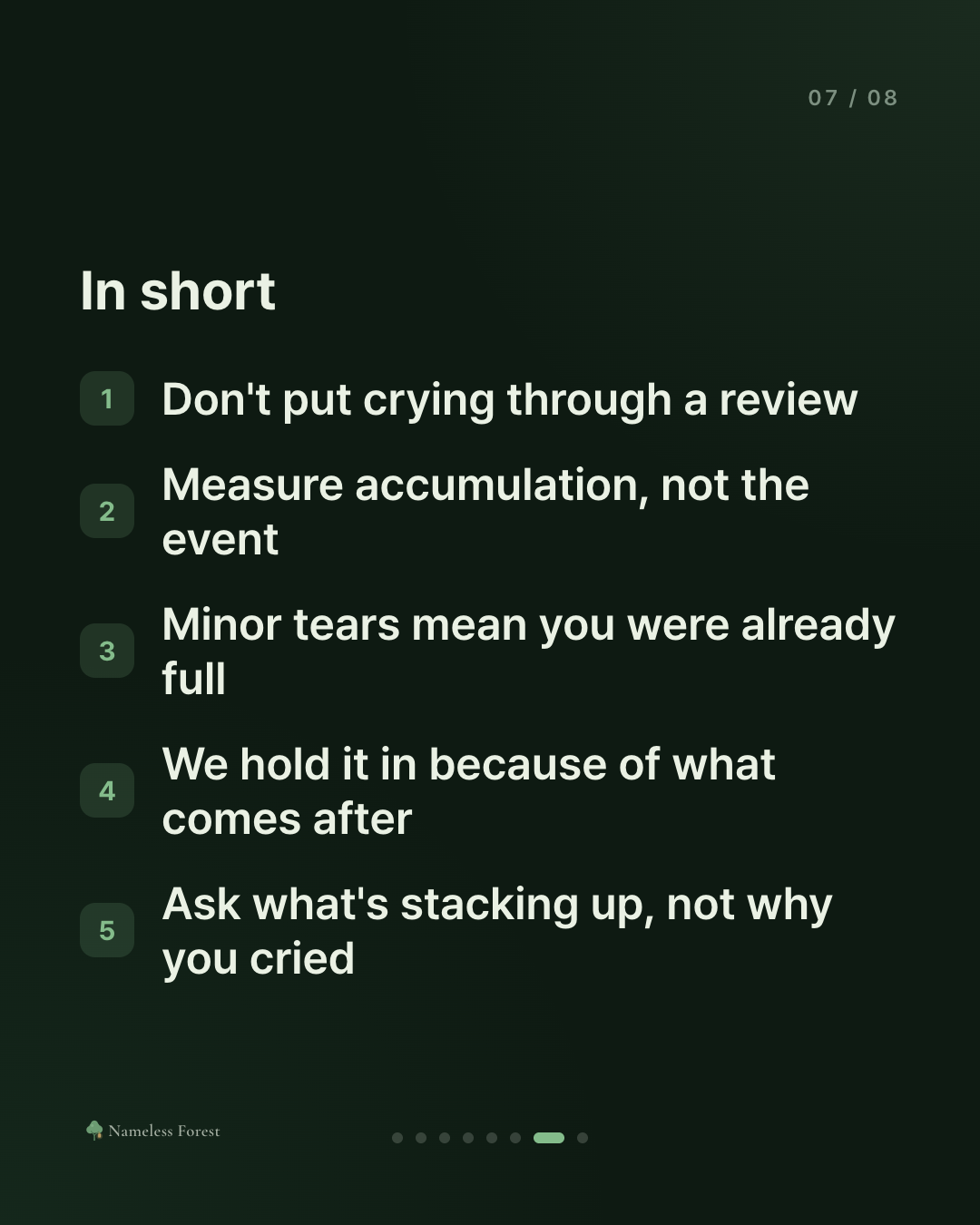
- We put crying through an eligibility review — over this, at my age
- The review exists because we measure crying against the size of the event
- But crying responds to accumulation, not one event. It's just the last drop
- We hold it in because what comes after is frightening, so it gets postponed
- Deciding where it ends lets you begin
- Afterward, ask what's been stacking up, not why you cried
That said, sometimes this isn't enough
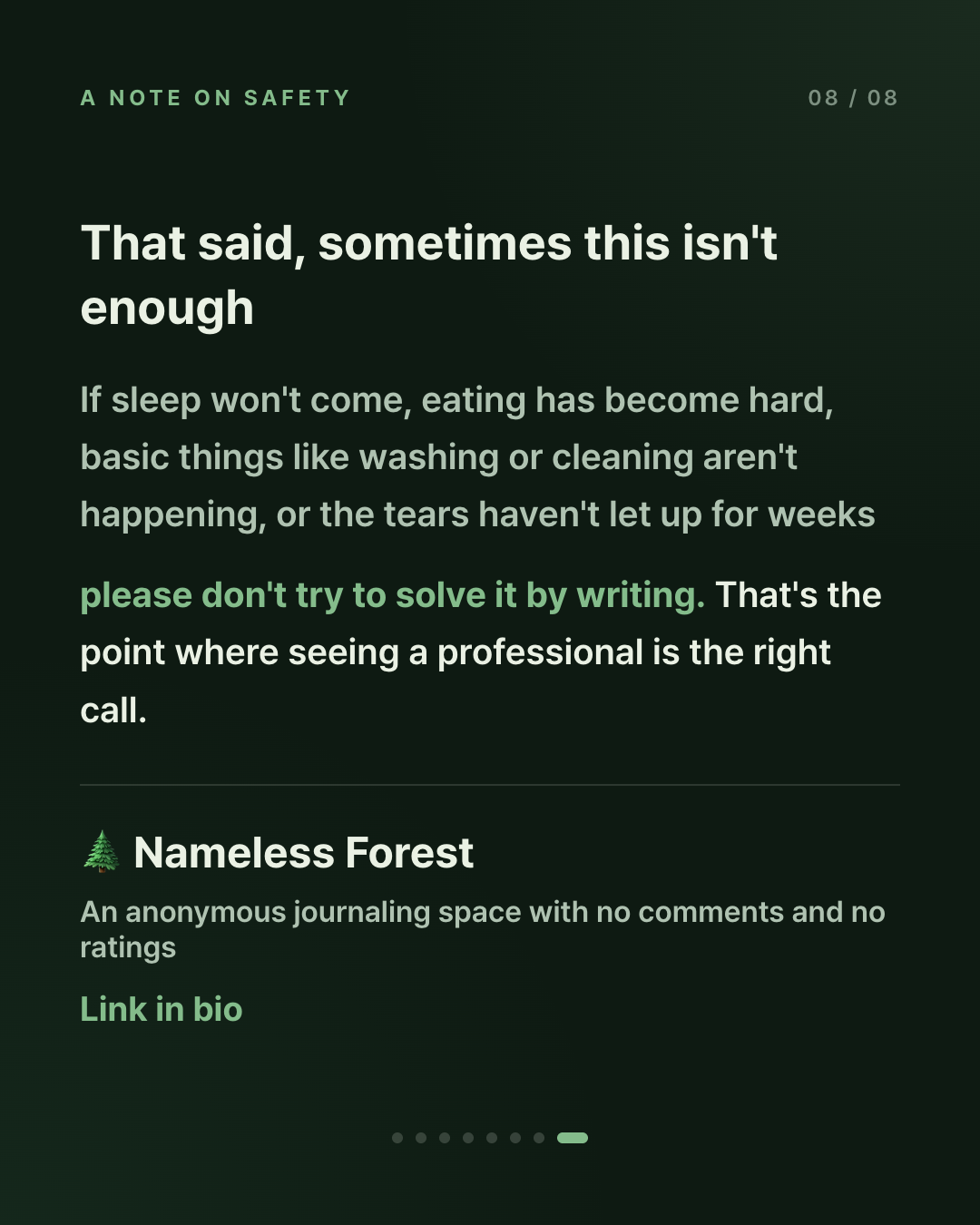
- Sleep won't come, or won't stop
- Eating has become hard
- Basic things like washing or cleaning aren't happening
- You've had thoughts of hurting yourself
If that's where you are, please don't try to solve it by writing. That's the point where seeing a professional is the right call. Writing is a tool for sorting your mind. It isn't treatment.
And if the tears come several times a day and haven't let up for weeks, that's a signal to get help too. Not a signal to hold them in — a signal that this isn't a size you carry alone.
I'm not a mental health professional. I'm just someone who has had nowhere to say things.
🌲 I'm building an anonymous journaling space called Nameless Forest.
No comments, no ratings — just a place to write things down.
A place where nobody asks whether you're allowed.
https://nameless-forest.com/en?utm_source=blognf&utm_campaign=allowed-to-cry

Comments 0
Be the first to comment.