

Have you ever finally brought up something hard and gotten "well, have you tried…" in return?
It isn't wrong. Usually it's good advice. And yet after hearing it, you somehow feel emptier than before you said anything.
Today I want to talk about where that emptiness comes from, and what to do differently next time.
Advice leaves you lonely twice
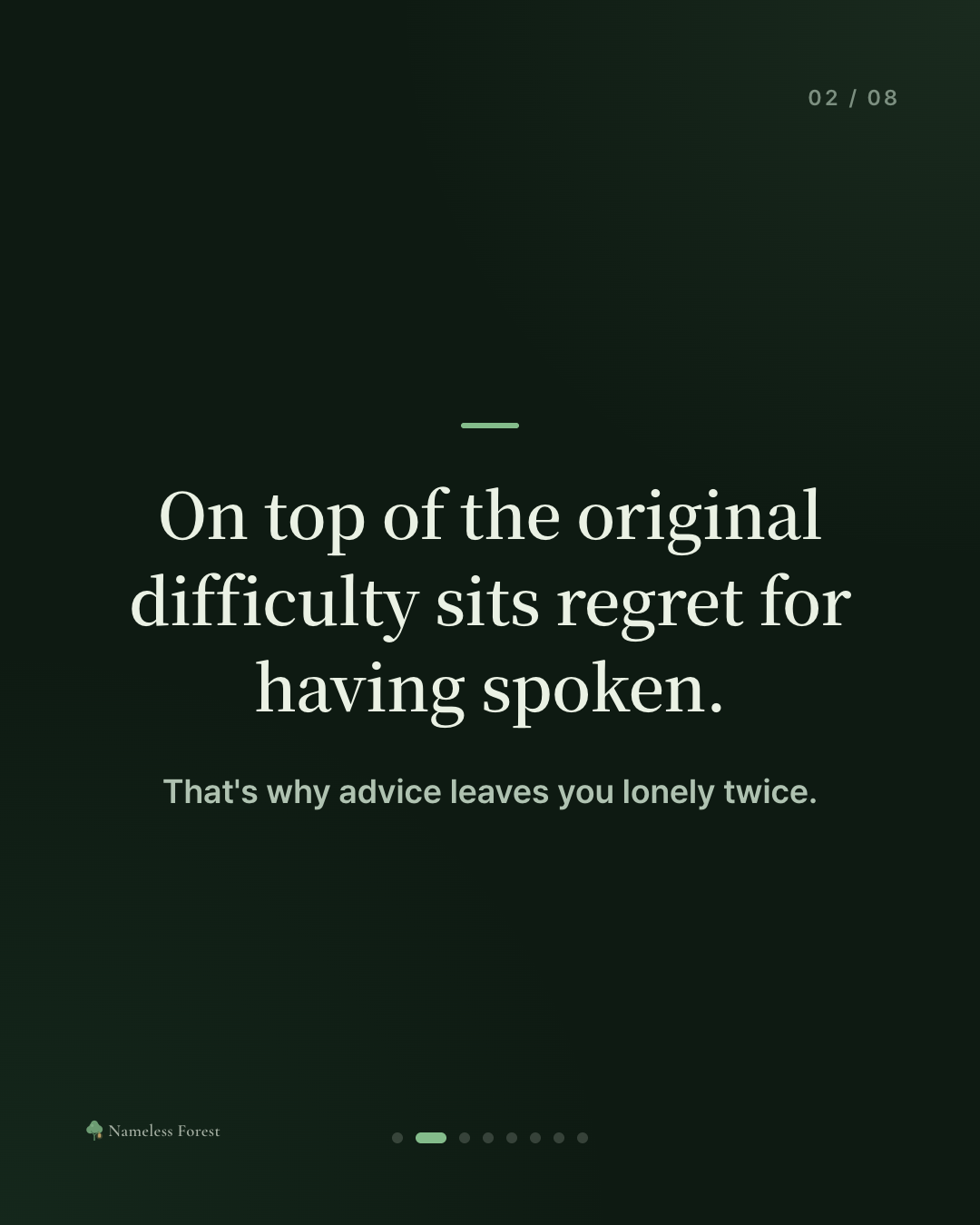
Before you said it, you were just struggling. After you said it and got advice, something gets added. The sense of: so this is how this person receives what I say.
Then your mind quietly draws a conclusion. That wasn't worth bringing up. Maybe I made it too heavy.
On top of the original difficulty sits regret for having spoken. That's the second loneliness.
But the other person isn't the villain
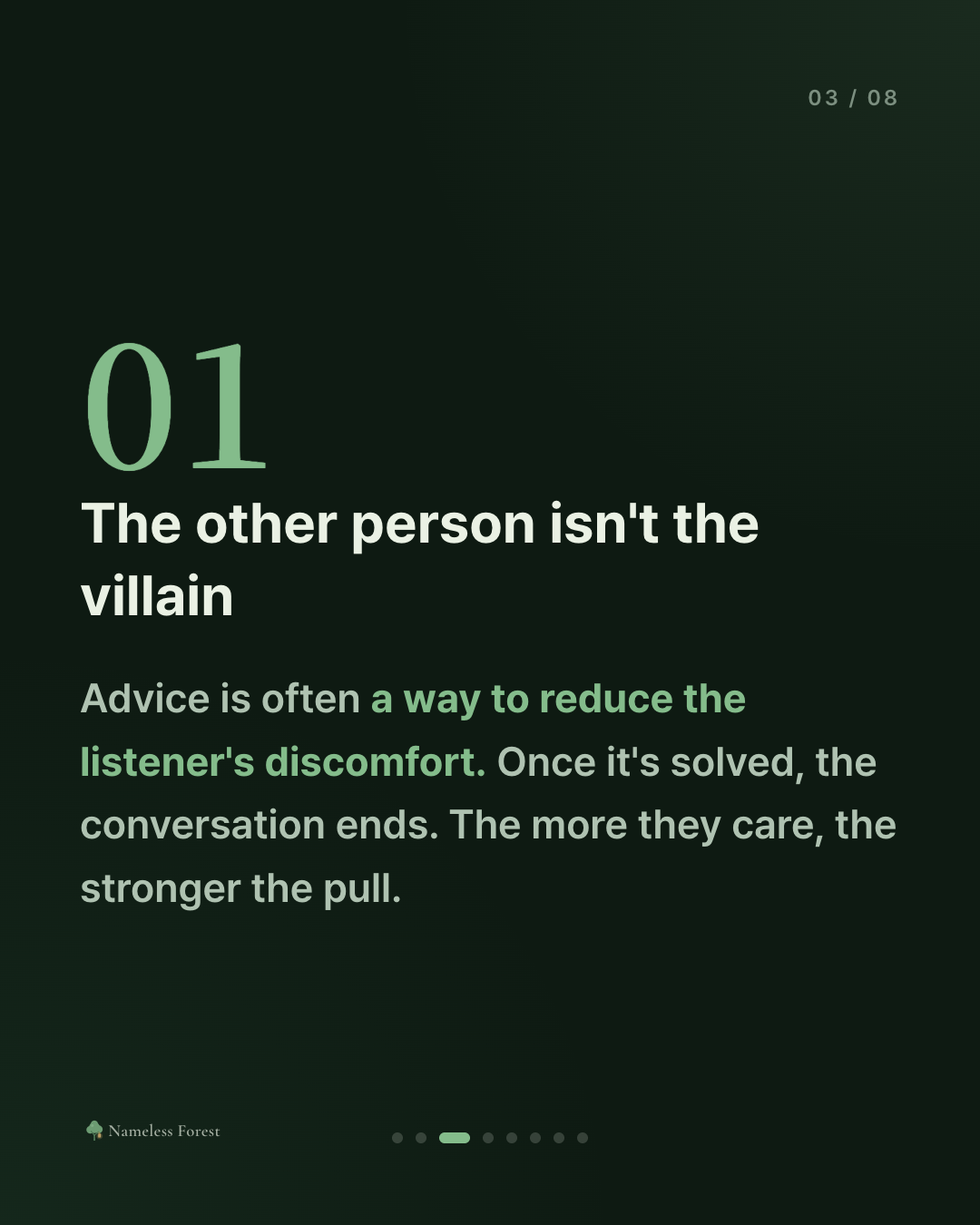
It's easy to blame them here. I've come to see it a little differently.
Advice is often a way to reduce the listener's own discomfort. When someone close to you says they're struggling, it becomes uncomfortable for them too. The fastest way to end that discomfort is to solve the problem — because once it's solved, the conversation ends.
So advice arriving quickly may not mean your story was trivial. It may mean it was more than they could hold. That's especially true of people who care about you. Sitting quietly and just listening can feel to them like neglect.
The real damage comes later
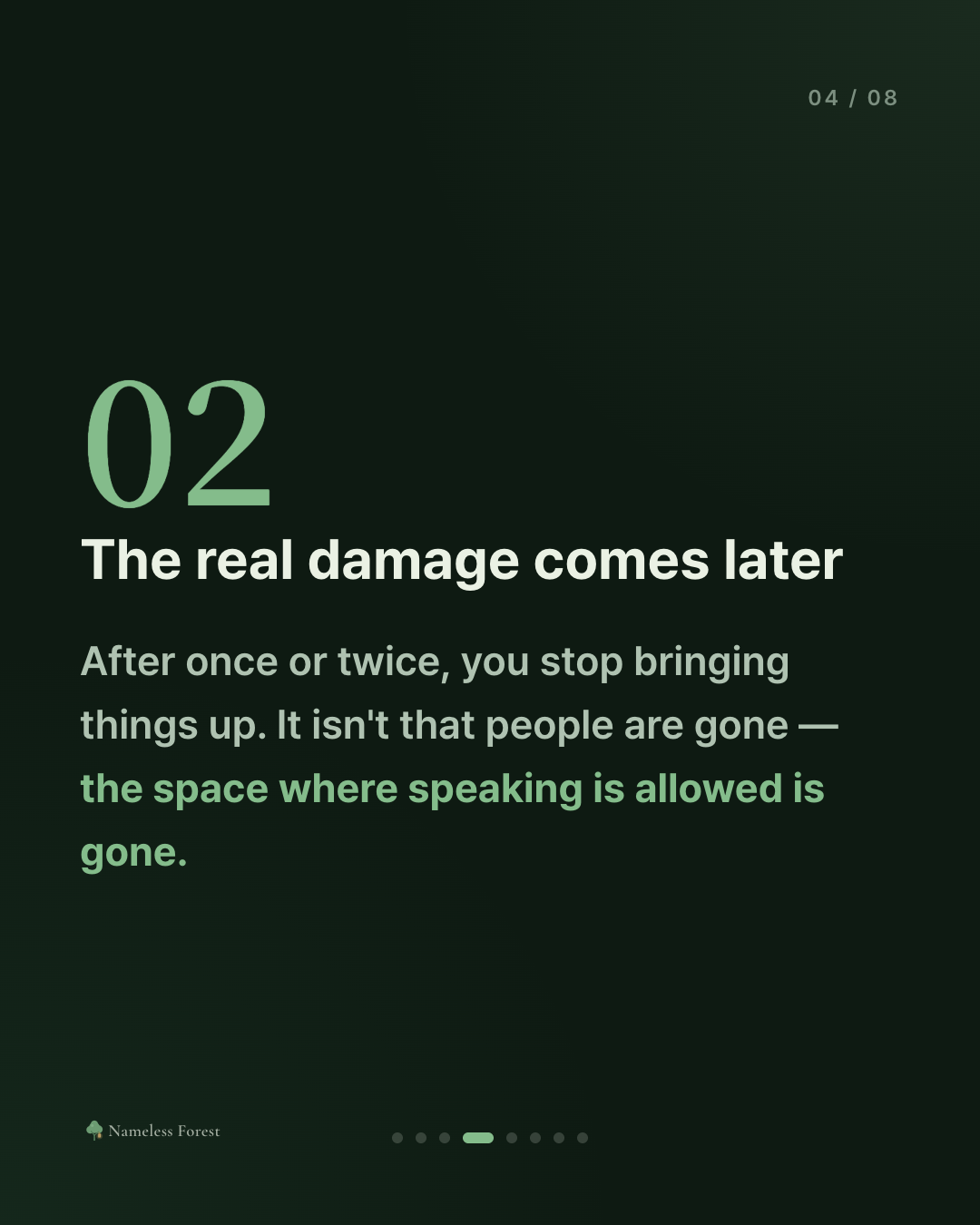
After this happens once or twice, people learn. You stop bringing things up.
It isn't even a conscious decision. The words just don't make it out. "How've you been?" gets an automatic "same as always."
And one by one, the places you can talk disappear. It isn't that the people are gone — it's that the space where speaking is allowed is gone. That's a lonelier kind of loneliness.
Say what you want before you start
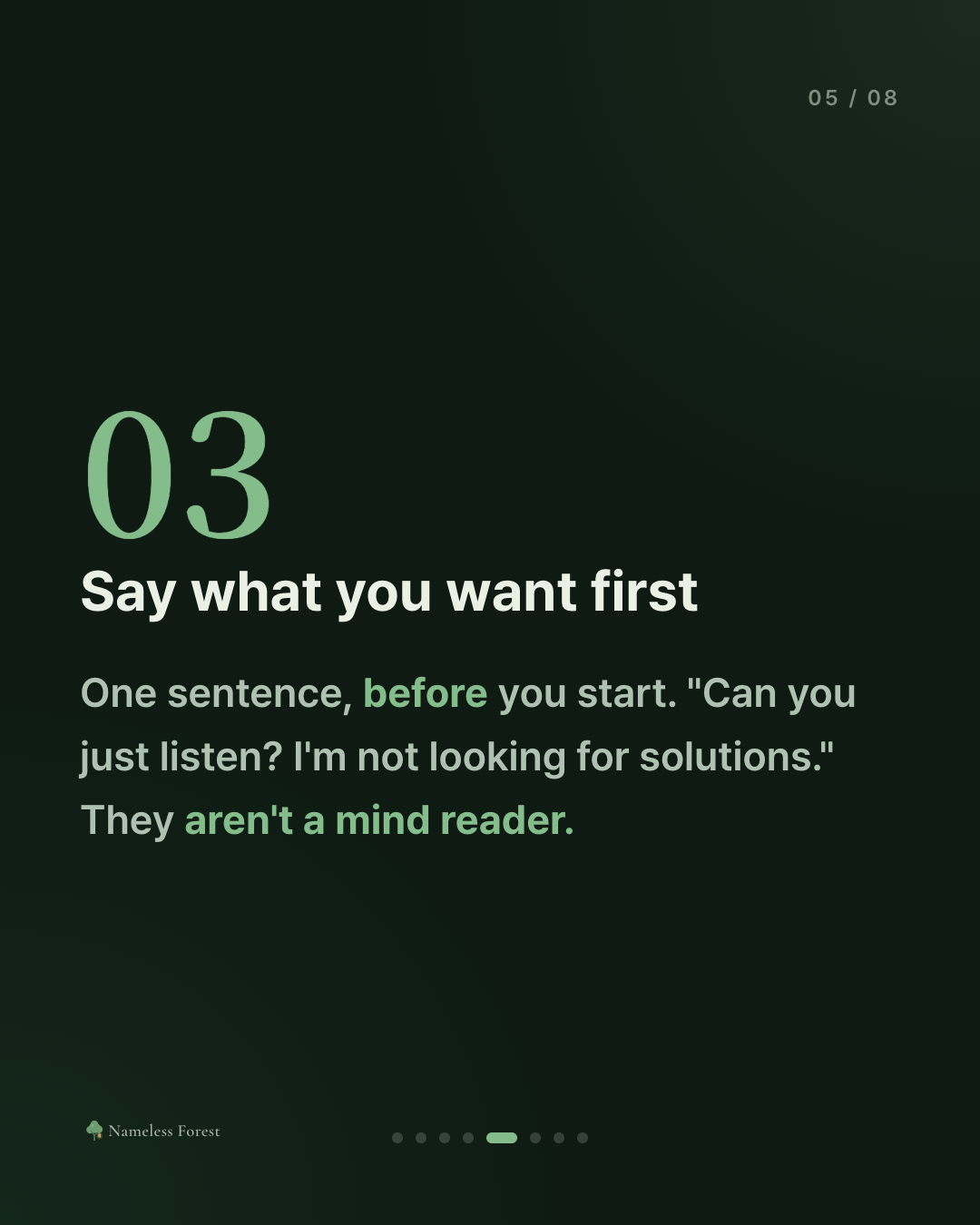
So here's the one thing I'd suggest. Before you open the topic, say this.
"Can you just listen? I'm not looking for solutions."
It's awkward. I couldn't do it at first either. But think about it: the other person isn't a mind reader. They have no way of knowing whether you want comfort or an answer. Not saying it and then being hurt that they didn't guess is a little unfair.
And this sentence has no downside. Most people say "sure" and listen. They reached for advice because they didn't know what to do — telling them what to do makes it easier for them, not harder.
If even that sentence is too much
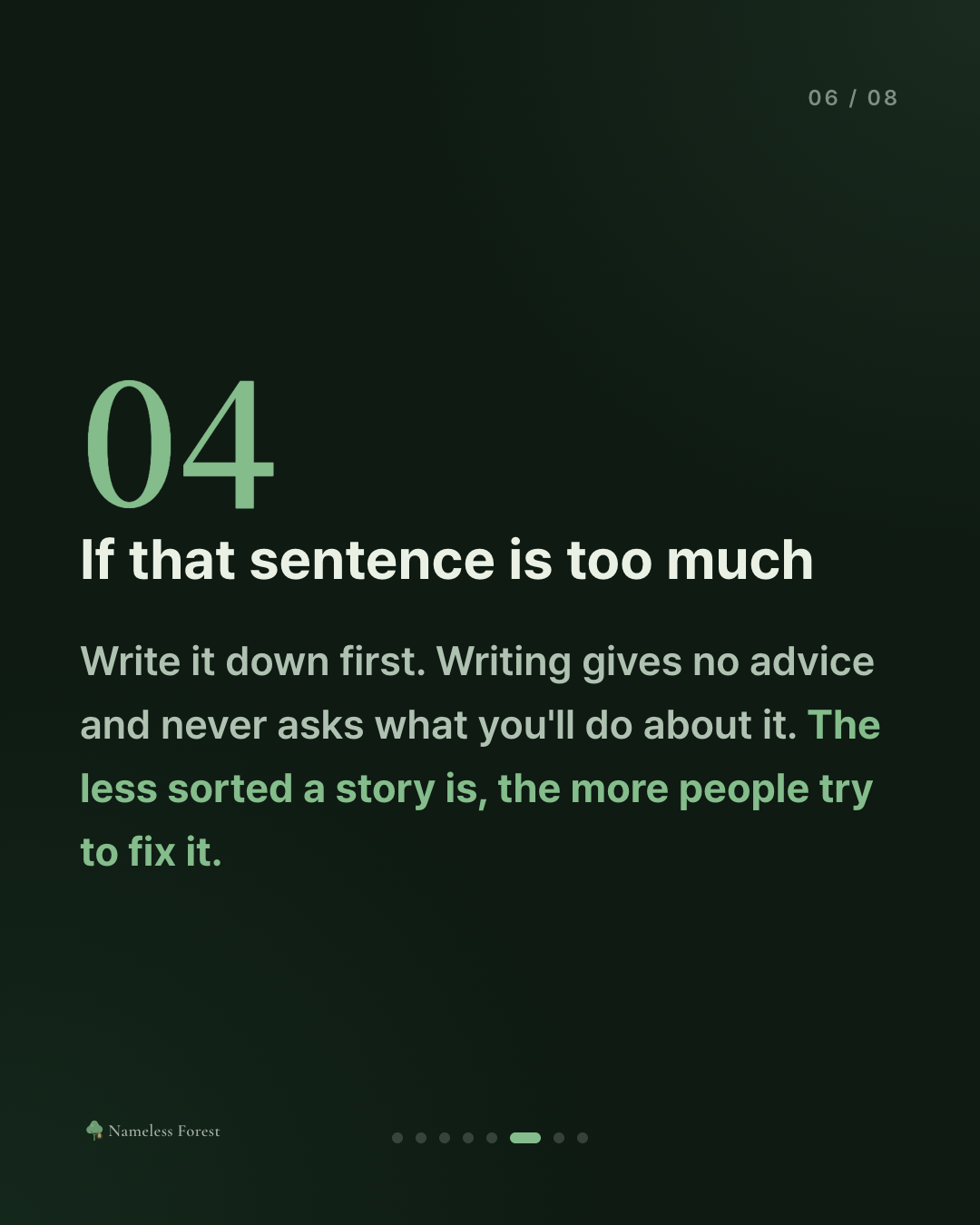
Sometimes even that one sentence feels impossible. It seems like an imposition, and you wonder whether it's really worth that much.
Then change the order. Write it down somewhere first.
Writing doesn't give advice. It doesn't ask what you're going to do about it. It just receives. And once you've gotten it out once, you can say it to a person far more briefly and precisely. The less sorted a story is, the more people try to fix it.
In short
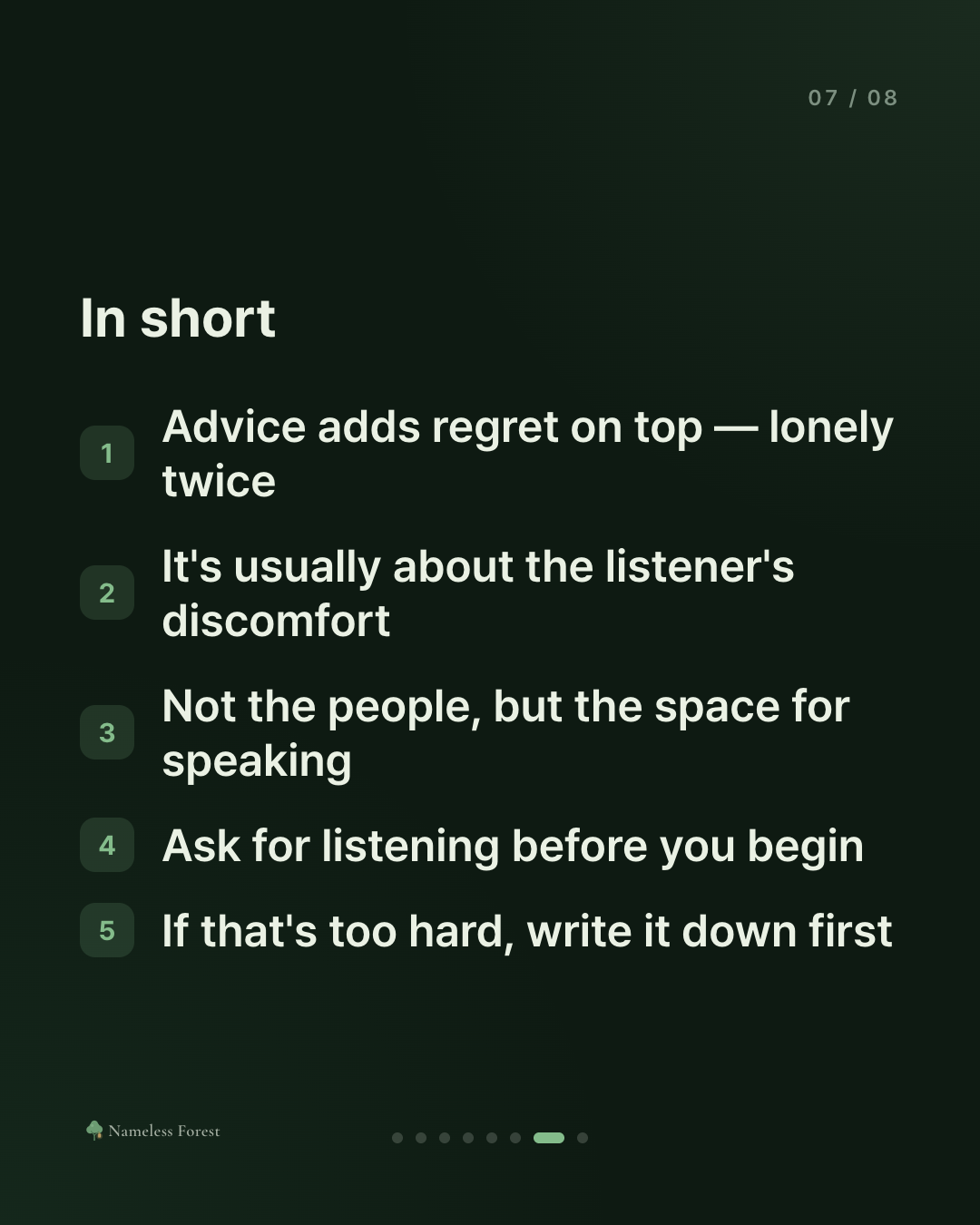
- Advice leaves you lonely twice: the original difficulty plus regret for having spoken
- Advice usually isn't unkindness — it's a way to reduce the listener's discomfort. The more they care, the stronger the pull
- The real damage comes later: not that people disappear, but that the space for speaking does
- Before you start, try "can you just listen?" The other person isn't a mind reader
- If that's too hard, write it down first. Writing gives no advice, and a sorted story is harder to "solve"
That said, sometimes this isn't enough
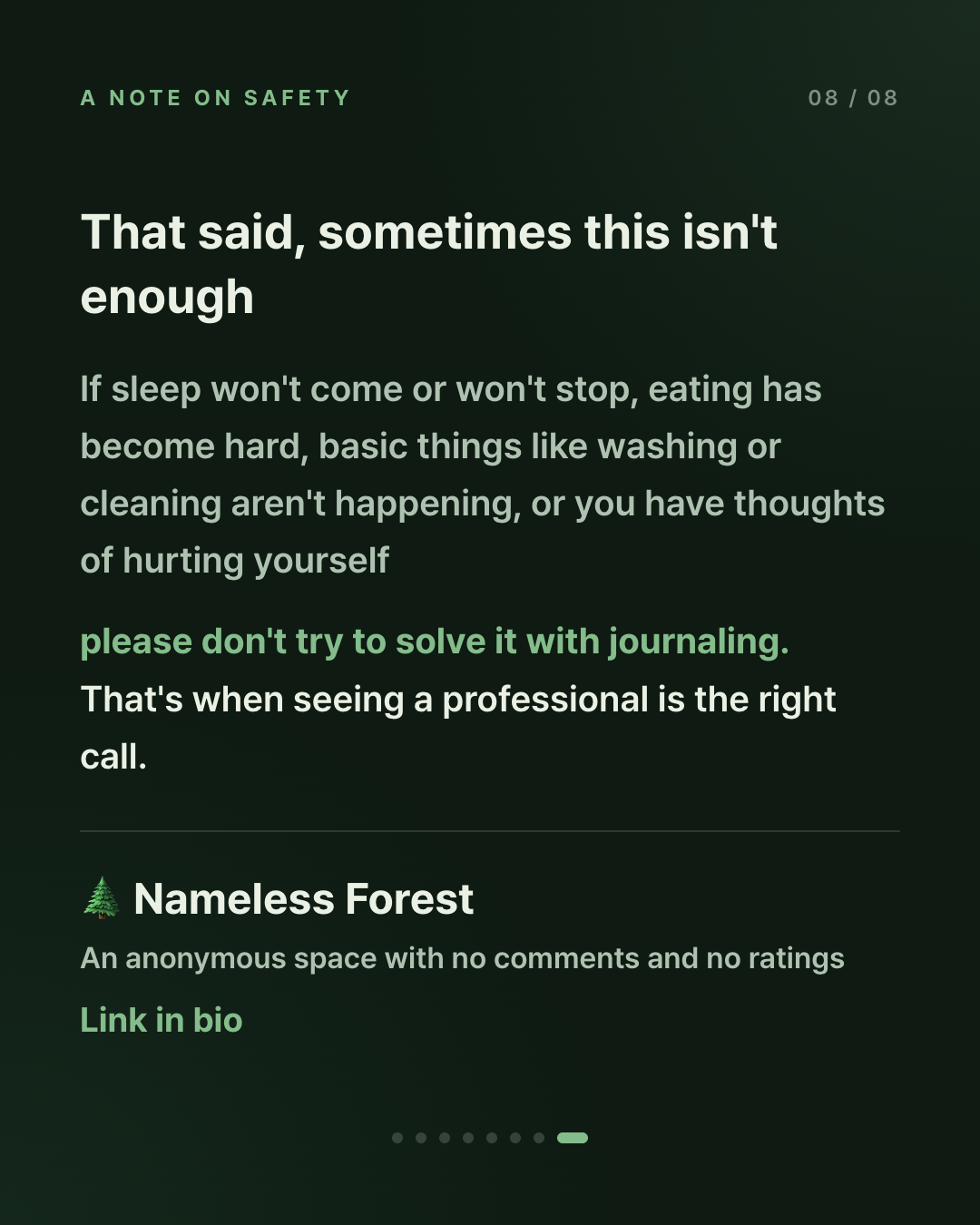
- Sleep won't come, or won't stop
- Eating has become hard
- Basic things like washing or cleaning aren't happening
- You have thoughts of hurting yourself
If you're in that state, please don't try to solve it with journaling. That's when seeing a professional is the right call. Writing is a tool for sorting your mind, not a treatment.
I'm not a mental health professional. I'm just someone who has had no one to tell.
🌲 I'm building an anonymous journaling space called Nameless Forest.
No comments, no ratings — just a place to write things down.
A place where nothing tries to fix you.
https://nameless-forest.com/en?utm_source=blognf&utm_campaign=wanted-comfort-got-advice

Comments 0
Be the first to comment.