
Do you know the moment where everyone seems to already know, and you're the only one who doesn't?
Everyone nodding along in a meeting while you have no idea what's being discussed. A new place where nobody explained anything and yet everyone is just doing it. The point where asking feels like it's already too late.
Every time that happened, I assumed I was slow, or missing something other people had. It took a while to understand what was actually going on.
They didn't all learn it — they each worked it out quietly
Every organization has rules nobody ever says out loud. When to report something. Where your job ends. How you're supposed to talk to that particular person.
None of it is written down. So there's nobody whose job it is to tell you. Everyone figured it out on their own — by reading the room, by getting it wrong, by bumping into it a few times.
So those people didn't learn it together. They each worked it out quietly. What you're struggling with right now isn't uniquely yours. It's a place everyone passed through. You just can't see it, because nobody narrates that part.
The window for asking is shorter than you'd think
Here's where it gets difficult. There's a window where you can ask about something you don't know, and that window is short.
For the first few days, not knowing is expected. People are usually glad you asked. But a week in, a month in, it becomes the thing that's awkward to ask about now.
From that point you start covering the gap by acting like you know. And the more you cover, the harder asking gets. Eventually the fact that you don't know becomes its own secret. The problem stops being not knowing, and becomes having missed the moment to say so.
Why saying "I don't know" is so hard
The reason is simple. Saying you don't know feels like inviting doubt about whether you're capable.
It's strongest somewhere new. Before you've proven anything, admitting a gap feels like it will stick to you as an assessment.
But in practice it runs the other way. People who ask a lot early on settle in much faster. What actually stands out is someone who didn't ask, went the wrong direction alone, and had to be corrected later at scale. Hiding what you don't know costs far more than asking does.
Keep a list instead
Still, I know asking in the moment is hard. There's the mood in the room, and there's timing.
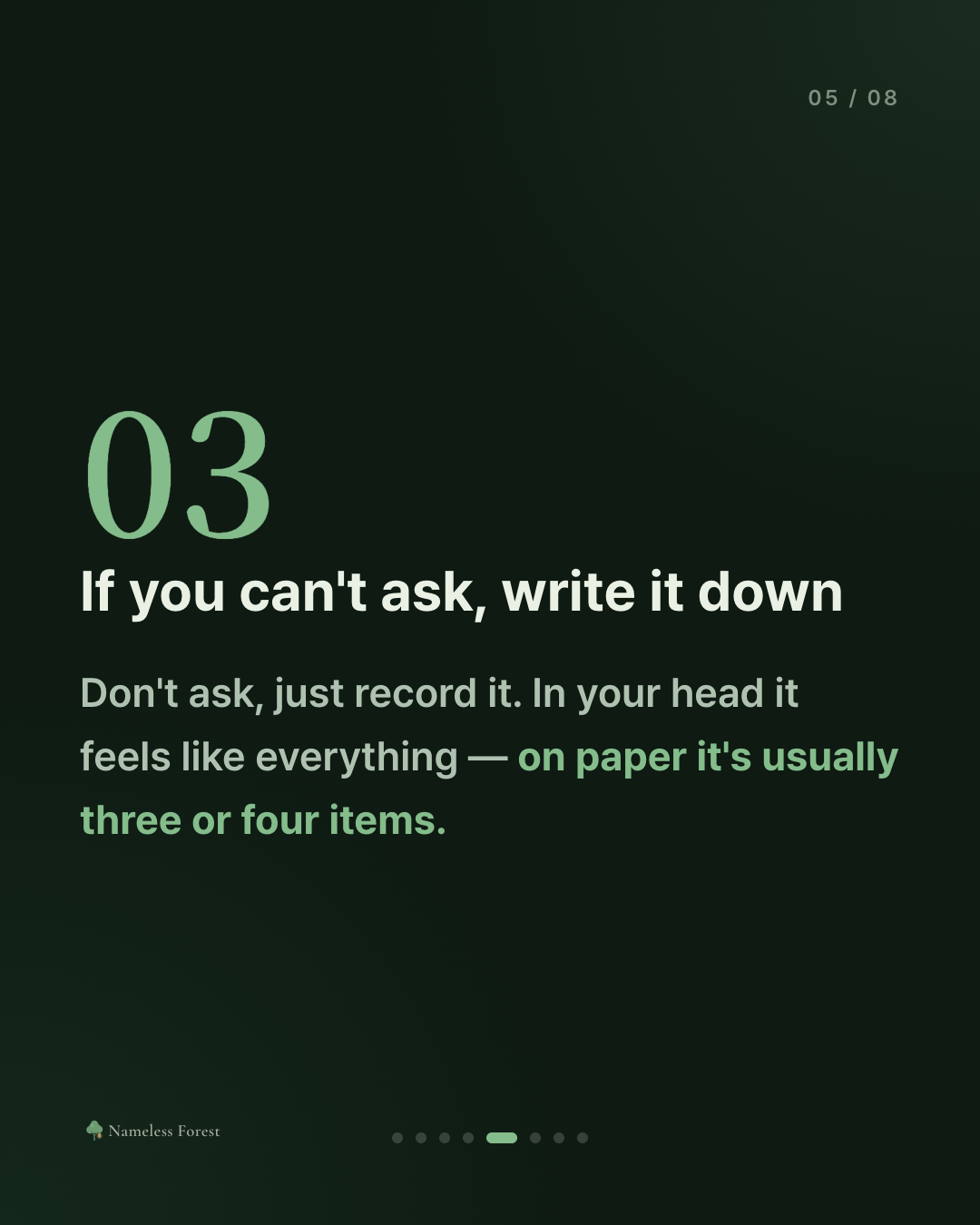
So here's what I'd suggest. Every time something you don't know comes up, don't ask — just write it down.
- That term that came up in the meeting
- Who actually signs off on this document
- Why the schedule was set this way
Writing it down does two things. It keeps you from forgetting. And it makes the number of things you don't know visible. Inside your head it feels like everything. On paper it's usually three or four items. Fewer than it felt.
Then when a person or a moment shows up, you bring the whole list at once. One conversation clears several of them.
Changing how you ask makes it much easier
One more thing. The same question is much easier or harder depending on how you frame it.
"How is this normally done?" is hard to get out, because it's an admission that you know nothing.
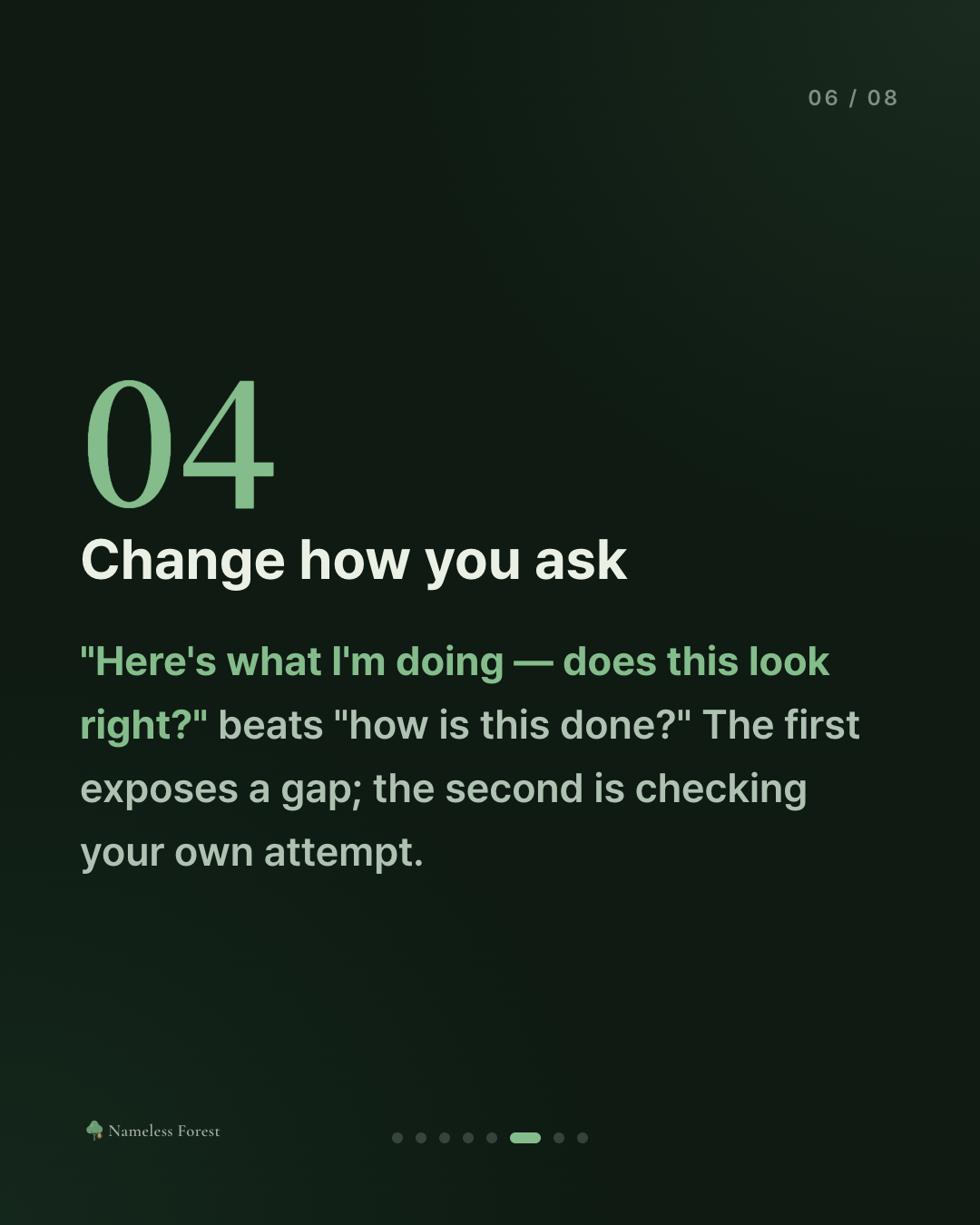
Try this instead. "Here's how I've been doing it — does this look like the right direction?"
You're asking the same thing, but it lands completely differently. The first exposes a gap. The second is checking something you've already attempted. If it's wrong, they correct you. If it's right, you've confirmed it. Either way you don't lose.
In short
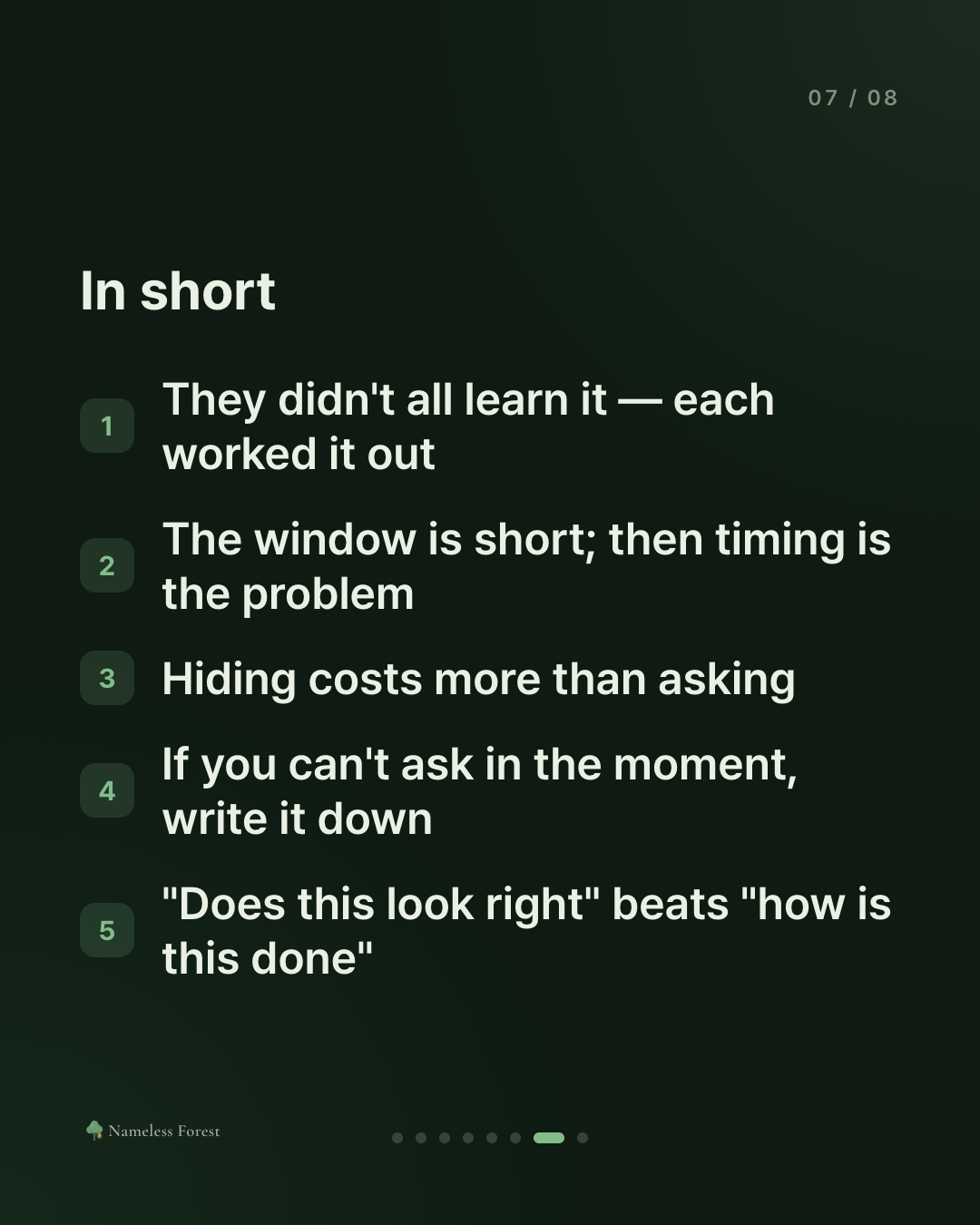
- They didn't all learn it, they each worked it out quietly. Nobody narrates that part, so you can't see it
- The window for asking is short. After it, the problem becomes the missed moment, not the gap itself
- Hiding what you don't know costs more than asking
- If you can't ask in the moment, just write it down. On paper it's usually three or four things
- "How is this done" is harder than "here's what I'm doing, does this look right?"
That said, sometimes this isn't enough
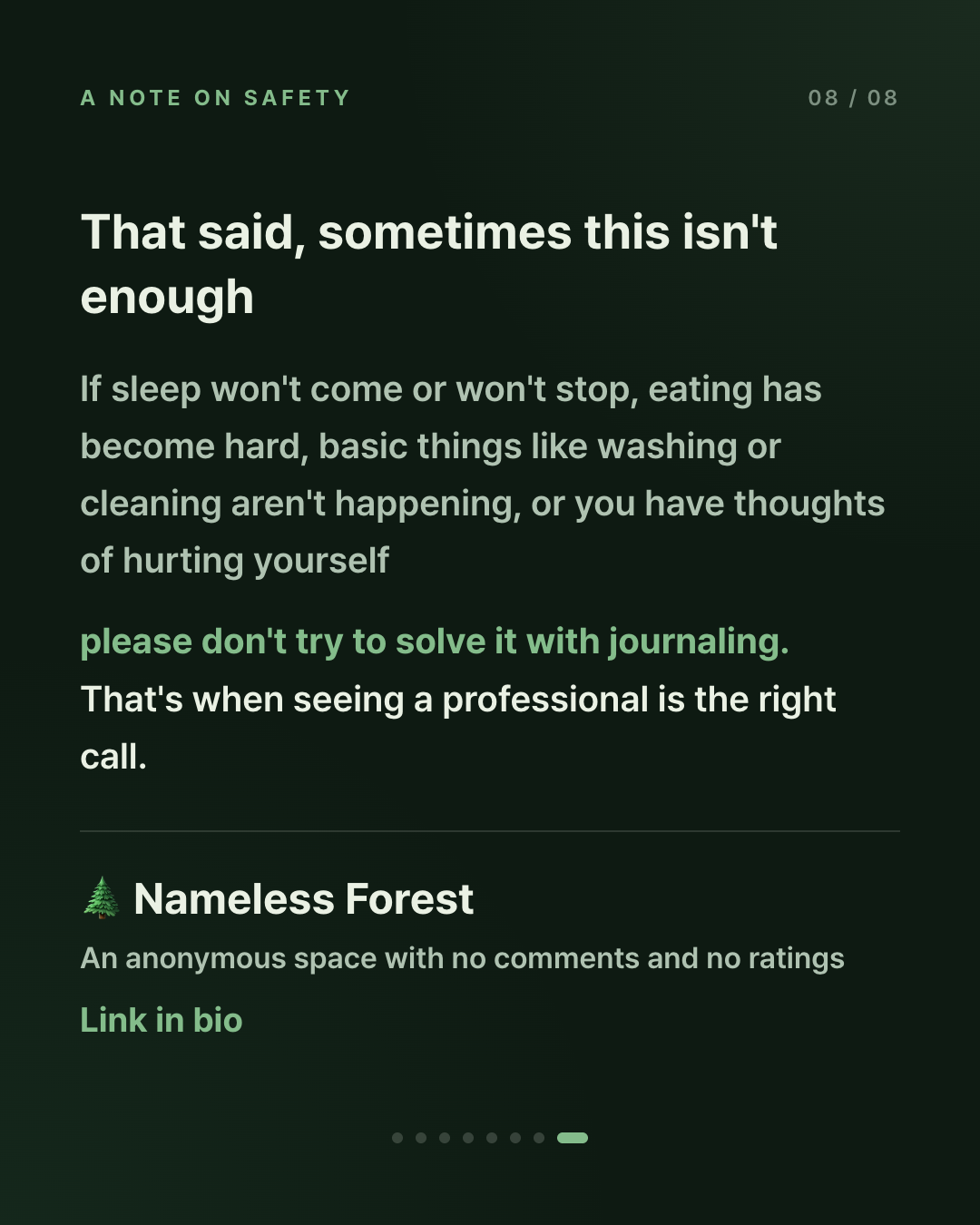
- Sleep won't come, or won't stop
- Eating has become hard
- Basic things like washing or cleaning aren't happening
- You have thoughts of hurting yourself
If you're in that state, please don't try to solve it with journaling. That's when seeing a professional is the right call. Writing is a tool for sorting your mind, not a treatment.
I'm not a mental health professional. I'm just someone who has had no one to tell.
🌲 I'm building an anonymous journaling space called Nameless Forest.
No comments, no ratings — just a place to write things down.
A place where writing "I don't know" is seen by nobody.
https://nameless-forest.com/en?utm_source=blognf&utm_campaign=everyone-but-me

Comments 0
Be the first to comment.