
Do you remember when you started acting fine?
I don't. At some point it had simply become the default. My face doesn't change when things are hard. My voice doesn't waver when I'm thrown.
People call me steady. Good under pressure. And yet I genuinely can't tell whether I'm okay right now.
It started as a tool
Let me say this first. Acting fine is a tool you built because you needed one.
Showing feeling in a meeting costs you. Falling apart in front of family makes it harder for everyone. Wobbling somewhere you haven't earned trust yet becomes an assessment that sticks.
So this isn't a habit born of weakness. It's closer to a function you engineered well in order to survive those rooms. And it worked. There are things you got through because of it.
But used long enough, the tool becomes the default
The problem is that using a tool long enough means you forget how to switch it off.
It started in specific rooms. Now it's on everywhere. In front of people who never required it. Even when you're alone.
That's what separates this from acting. An actor comes off stage when the show ends. A habit like this has no stage to come off. It runs all day, and eventually it looks like your actual face.
The worst part is that you fool yourself too
Fooling other people involves intent. Fooling yourself happens automatically.
Once the act gets good, the sense that checks your own state goes dull. You stop verifying whether you're struggling, because verifying it might show.
Which produces things like this:
- Someone genuinely worries about you and it makes you uncomfortable
- You're in a situation that calls for tears and none come
- And then you cry at a scene in a show that has nothing to do with you
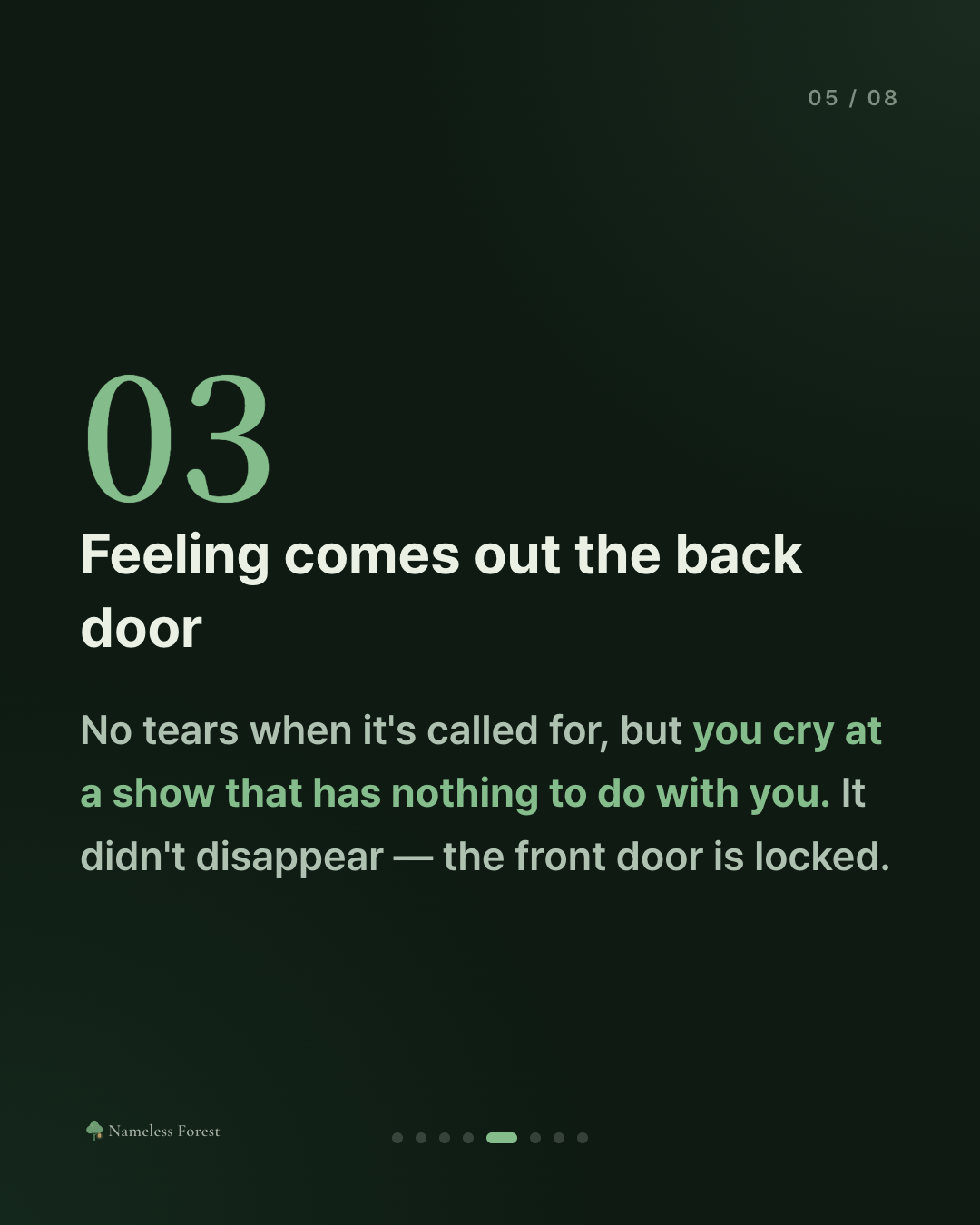
The feeling didn't disappear. The front door is locked, so it comes out the back.
Don't remove it — build one place where you don't use it
The usual advice here is to be more honest. That never worked for me, because the rooms that require the act still require it.
So I changed direction. Not removing the act, but designating one place where I don't run it.
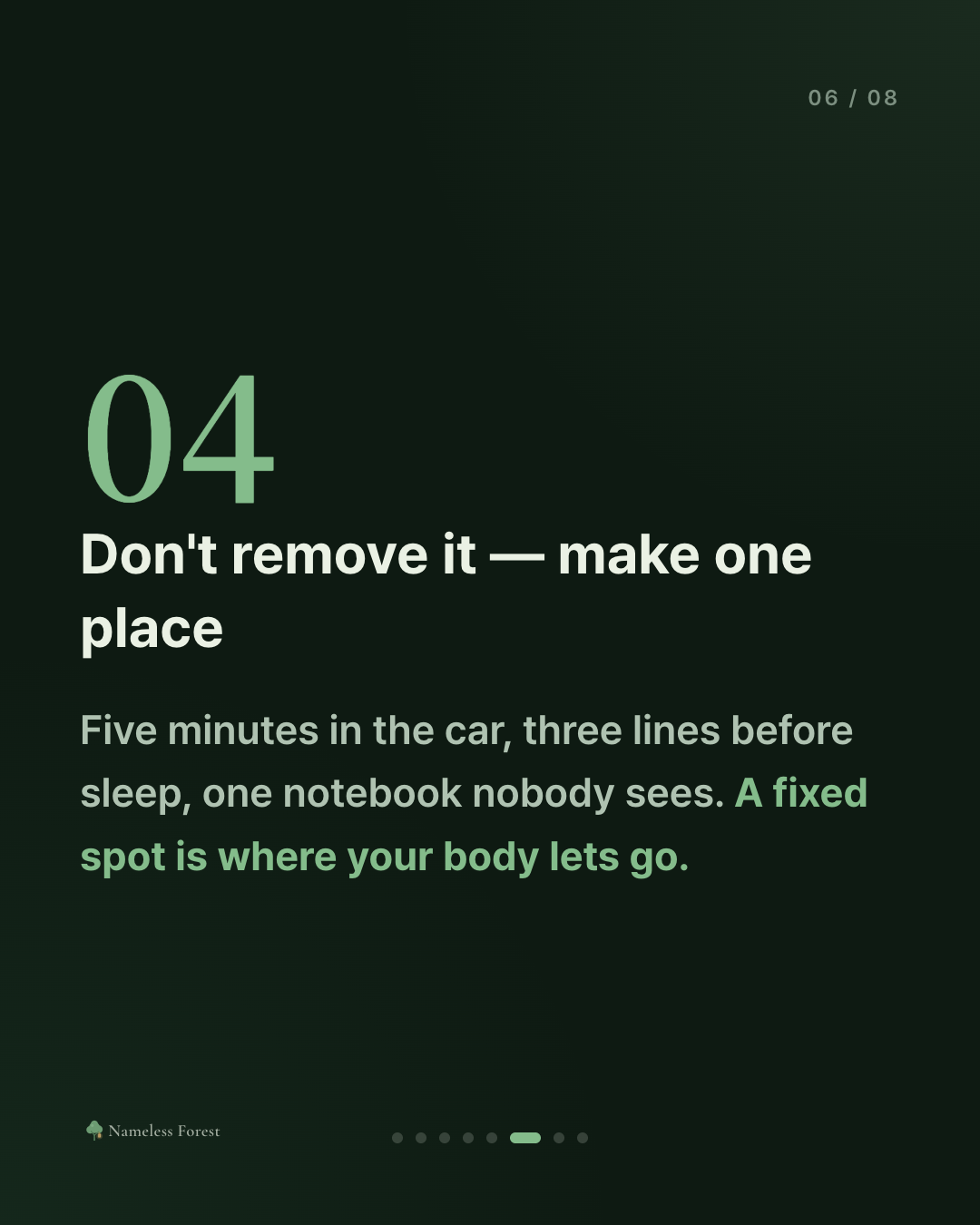
- The five minutes sitting in the car after work
- Three lines in bed before sleep
- One notebook nobody ever sees
The important part is fixing a place or a time. "Be honest whenever you can" turns into never. But when the spot is fixed, your body lets go there, because it knows this is where it isn't needed.
Sort the rooms that need it from the ones that don't
One more thing worth doing. Split a page and list the rooms that need the act, and the ones that don't.
On the left, the genuinely necessary ones. Meetings, clients, people you don't know well yet.
On the right, the ones that never actually required it. Old friends, your own room, family who would understand.
Do this and you usually notice something. You're running it on the right side too.
It's a habit, so it's on without distinction. Just seeing that on paper changes something, because now you know where it could be switched off. You don't have to take all of it off. Taking it off in one place is enough to give you somewhere to breathe.
In short
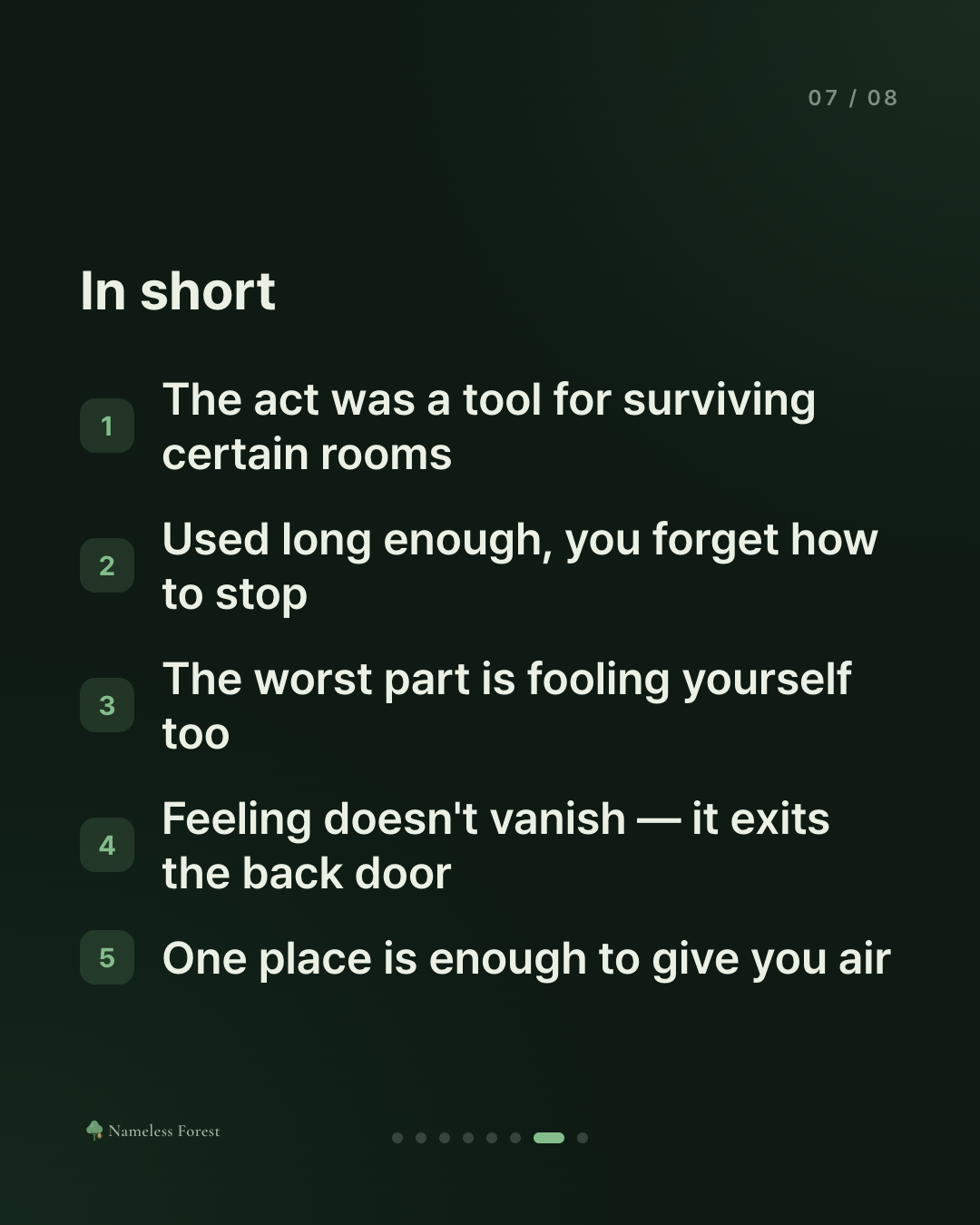
- Acting fine isn't weakness. It's a tool you engineered well to get through certain rooms
- Used long enough, you forget how to switch it off. Unlike acting, there's no stage to leave
- The worst part is fooling yourself. The feeling comes out the back door instead
- Don't try to remove it — designate one place where you don't run it
- Sorting the rooms shows you that you're running it where it was never needed
That said, sometimes this isn't enough
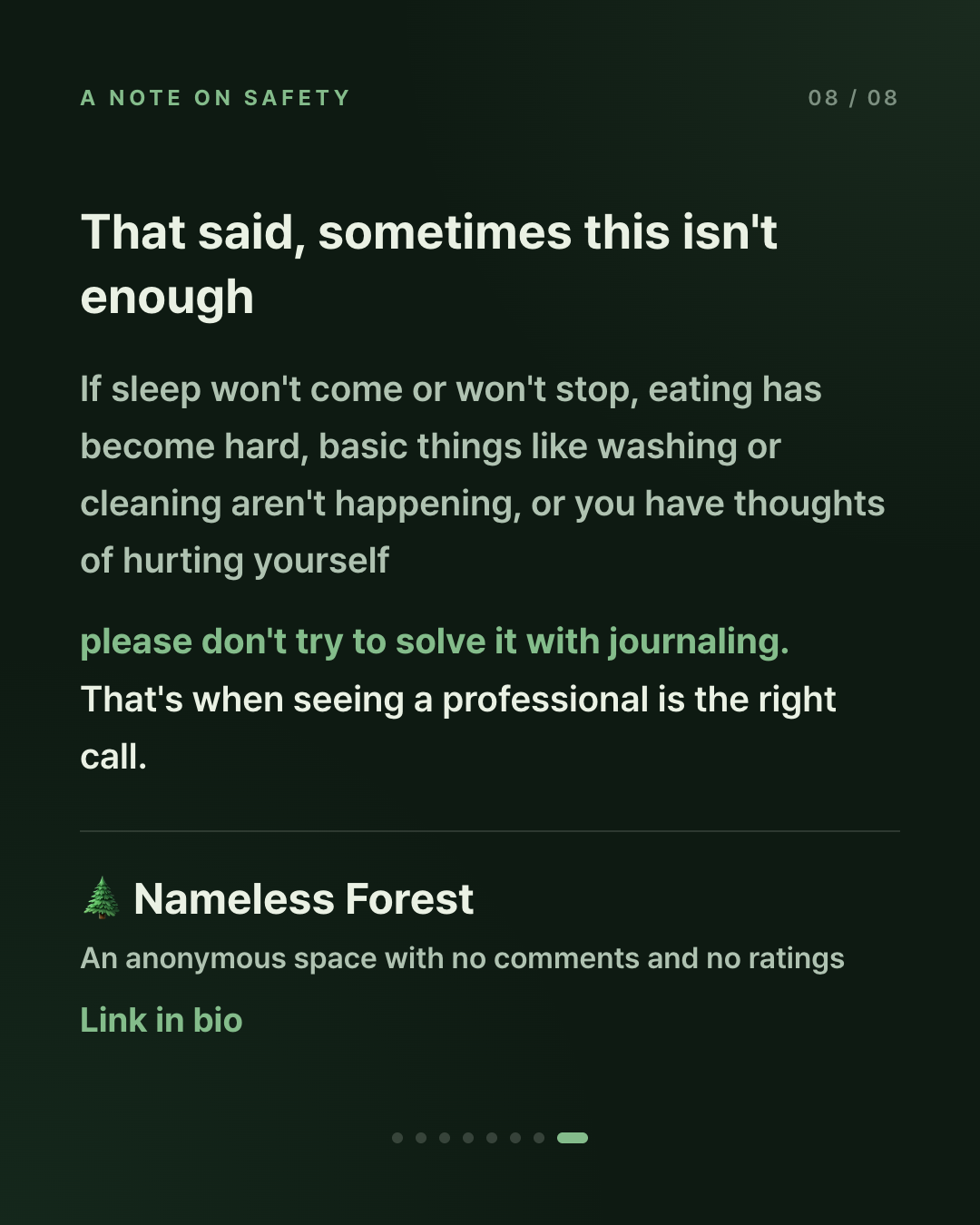
- Sleep won't come, or won't stop
- Eating has become hard
- Basic things like washing or cleaning aren't happening
- You have thoughts of hurting yourself
If you're in that state, please don't try to solve it with journaling. That's when seeing a professional is the right call. Writing is a tool for sorting your mind, not a treatment.
I'm not a mental health professional. I'm just someone who has had no one to tell.
🌲 I'm building an anonymous journaling space called Nameless Forest.
No comments, no ratings — just a place to write things down.
You're welcome to use it as the one place you don't perform.
https://nameless-forest.com/en?utm_source=blognf&utm_campaign=pretending-is-a-habit

Comments 0
Be the first to comment.