
Have you ever watched the notifications pile up and felt lonelier for it?
You read, you tap a reaction now and then, and eventually you put the phone down. You just looked at dozens of messages and it feels like nothing happened.
Today I want to talk about why a crowded place can leave you more alone.
Being around people isn't the same as being connected
Most of what moves through a group chat is information exchange or keeping the mood going. Scheduling, links, something funny, a reaction.
All of it is necessary and none of it is bad. But it has one thing in common: none of it has anything to do with knowing you.
So the volume of conversation can be enormous and connection still won't grow. Loneliness doesn't come from a shortage of words. It comes from a shortage of people who know you.
In a group, you take on a role
Put several people in a room and roles form on their own. The funny one, the one who checks in, the quiet one, the one who organizes.
Roles are comfortable — you don't have to decide what to say every time. But over time a problem appears. The role starts living in your place.
If you're the funny one, saying you're struggling gets hard. It's off-tone. If you're the one who checks in, asking to be checked on gets hard. And so you end up in the room without being in it.
Reactions moving on isn't being ignored
The sharpest moment is a specific one. You finally post something real, a few short reactions go by, and within a minute the topic has moved on.
It feels settled then. Nobody cares.
But usually that's the speed of a group chat. In a structure where several people talk at once, no topic stays put for long — and serious ones least of all. Nobody knows what to say, so it goes quiet, and the quiet is awkward, so someone starts a new subject.
It's closer to more than they could hold than to being ignored. That doesn't make it hurt less, but it changes what it means.
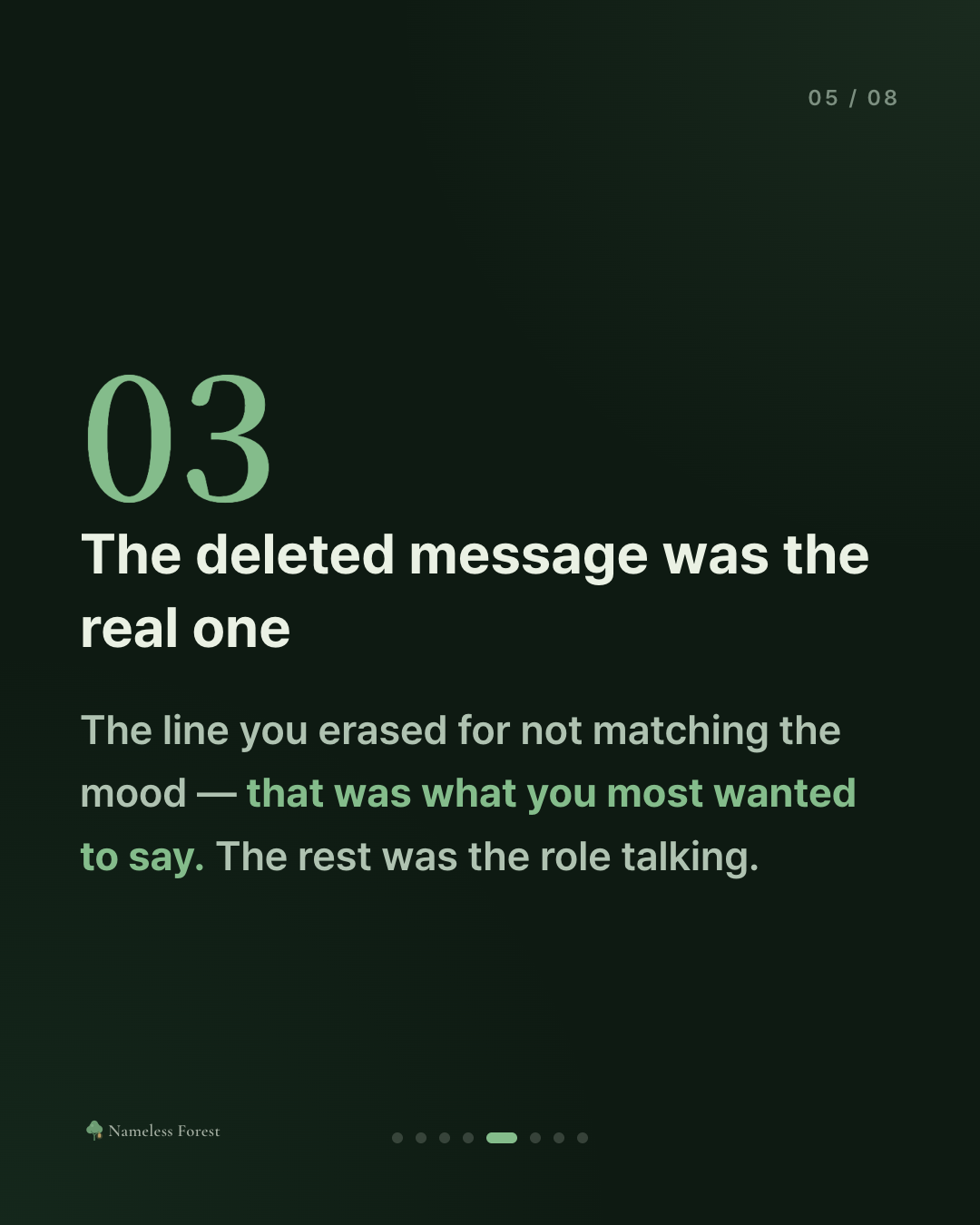
The message you deleted was the real one
Here's the one thing I'd suggest.
You've probably typed something into a group chat and deleted it. Written the whole thing, decided it didn't match the mood, decided it was too heavy, erased it and left a single reaction instead.
That deleted sentence was what you most wanted to say that day. Everything else was the role talking.
So before you erase it, move that sentence somewhere else, exactly as written. A notes app, anywhere. You don't have to send it. It just has to not disappear.
After a month or so, something odd shows up: the things you wanted to say and didn't are mostly the same one thing. That's the thing that matters most to you right now.
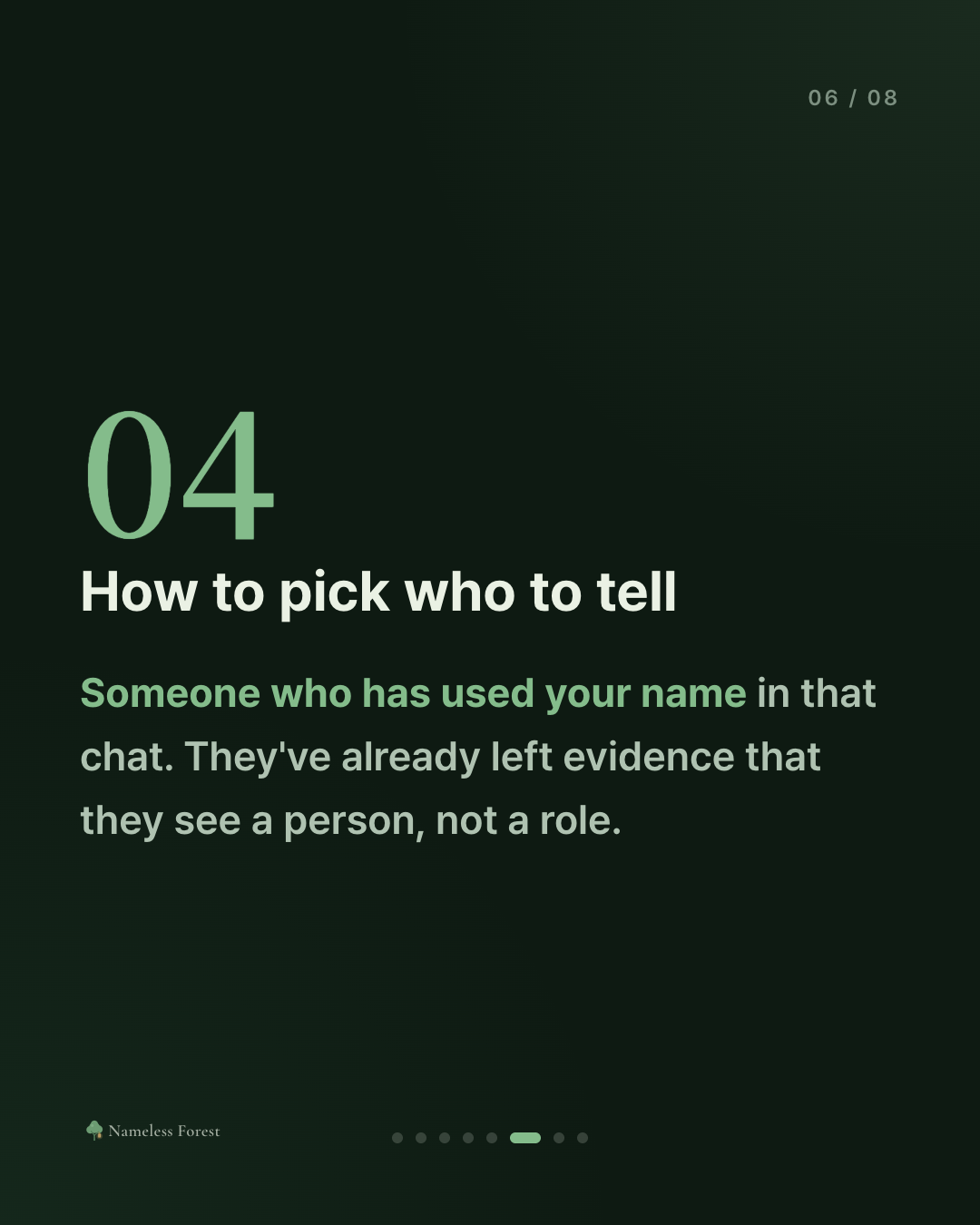
How to pick who to tell
Eventually you'll want to say one of them to an actual person. Here's how to choose them.
Someone who has used your name in that chat.
In a group chat, most people talk into the air. There's no recipient. But occasionally someone says "hey, what about you?" and uses your name.
That person has already left evidence that they see you as a person rather than a role. That's a more accurate filter than picking whoever you're closest to.
In short
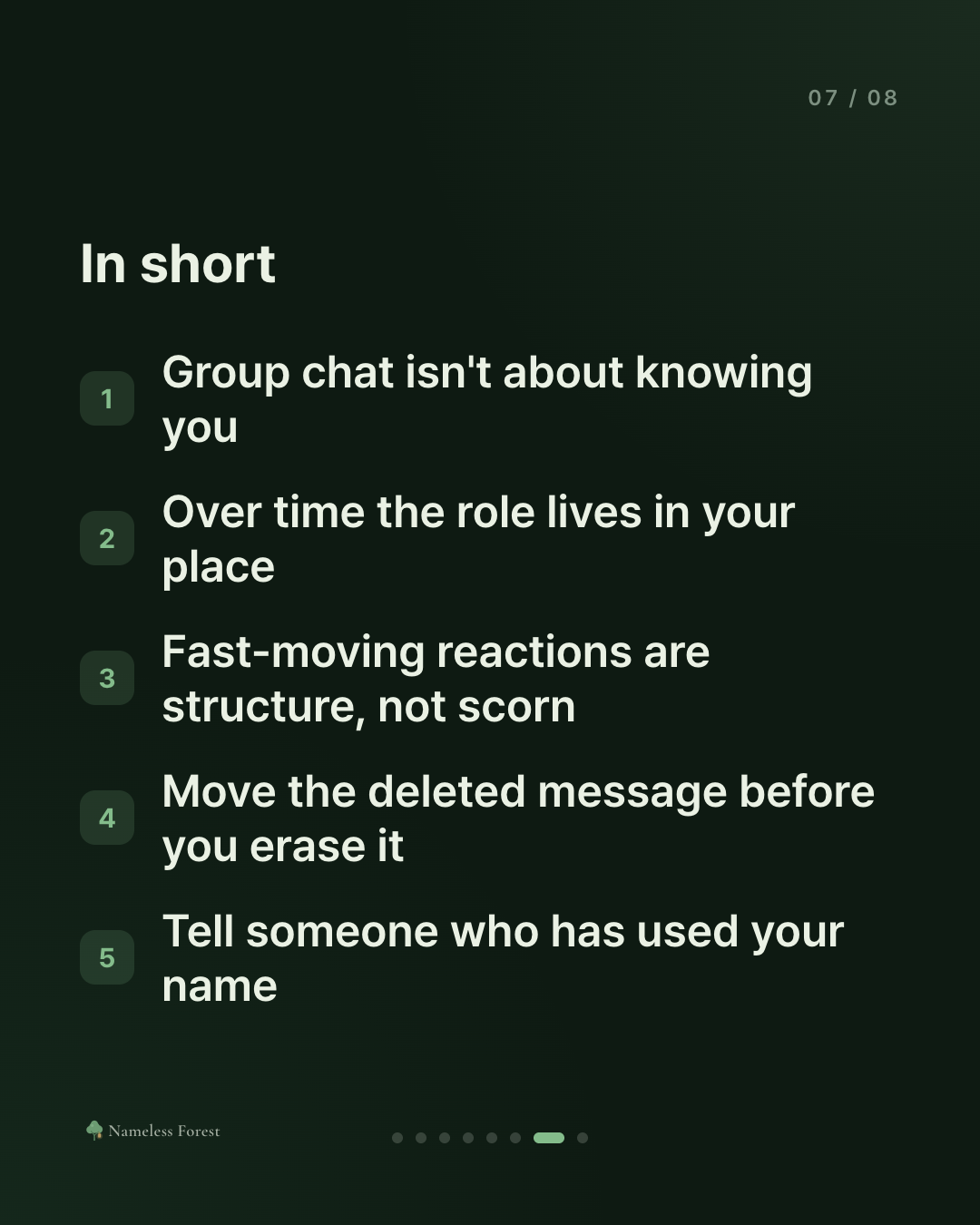
- Group chat is mostly logistics and mood-keeping — none of it is about knowing you
- Groups assign roles, and over time the role starts living in your place
- Fast-moving reactions aren't dismissal, they're the speed of many people talking at once
- The message you deleted was the real one. Move it somewhere before you erase it
- When you're ready to tell a person, pick someone who has used your name
That said, sometimes this isn't enough
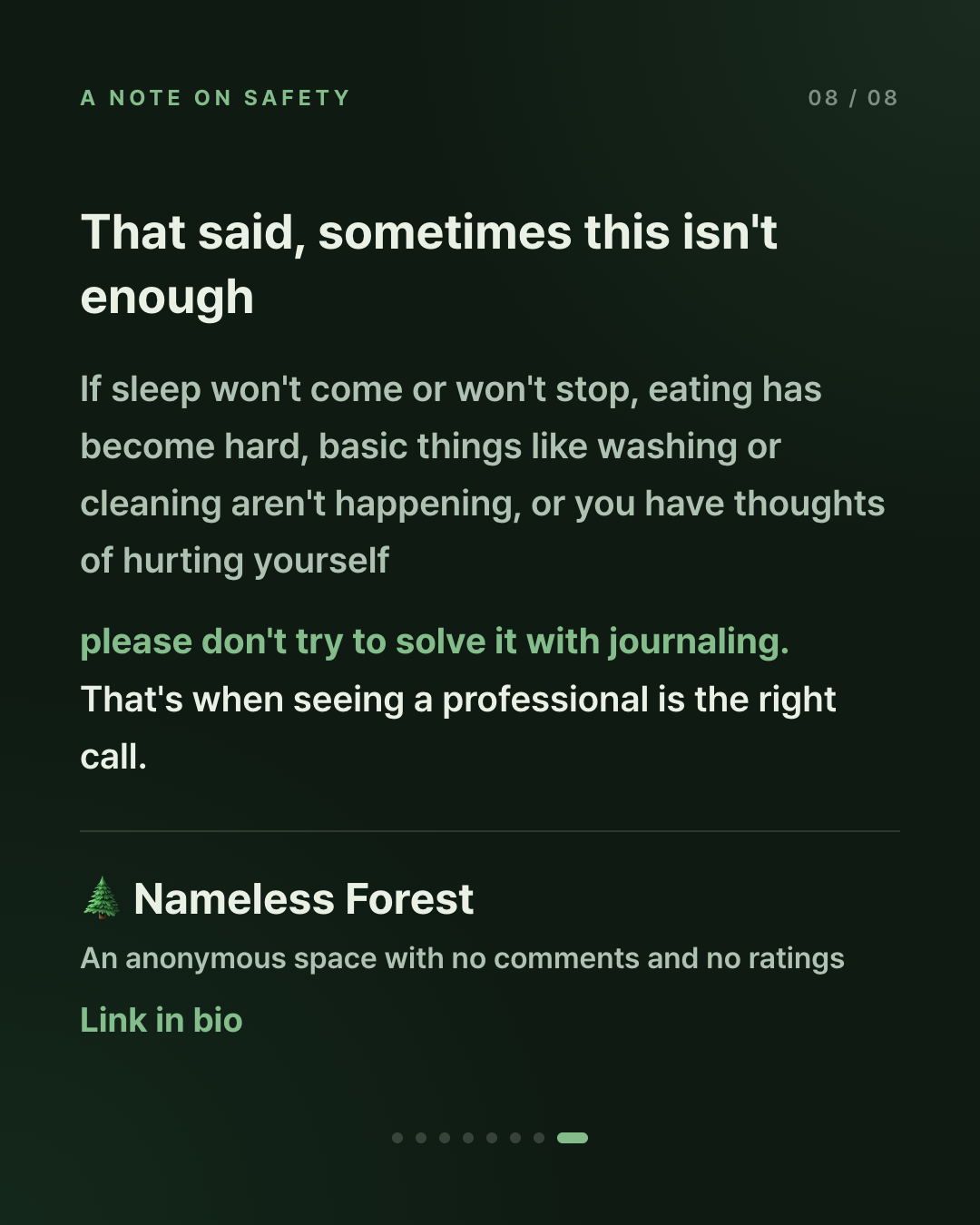
- Sleep won't come, or won't stop
- Eating has become hard
- Basic things like washing or cleaning aren't happening
- You have thoughts of hurting yourself
If you're in that state, please don't try to solve it with journaling. That's when seeing a professional is the right call. Writing is a tool for sorting your mind, not a treatment.
I'm not a mental health professional. I'm just someone who has had no one to tell.
🌲 I'm building an anonymous journaling space called Nameless Forest.
No comments, no ratings — just a place to write things down.
A place where you don't have to read the room.
https://nameless-forest.com/en?utm_source=blognf&utm_campaign=lonely-in-group-chat

Comments 0
Be the first to comment.