
The first thing that stops people who decide to start an emotion journal is *when* to write.
Search it and the answers split. Some say morning, some say right before bed. Both sound reasoned, which makes it worse.
I wrote at night for a while, moved to mornings, then went back to nights. What I found was this: the time of day changes what comes out entirely.
What Comes Out at Night
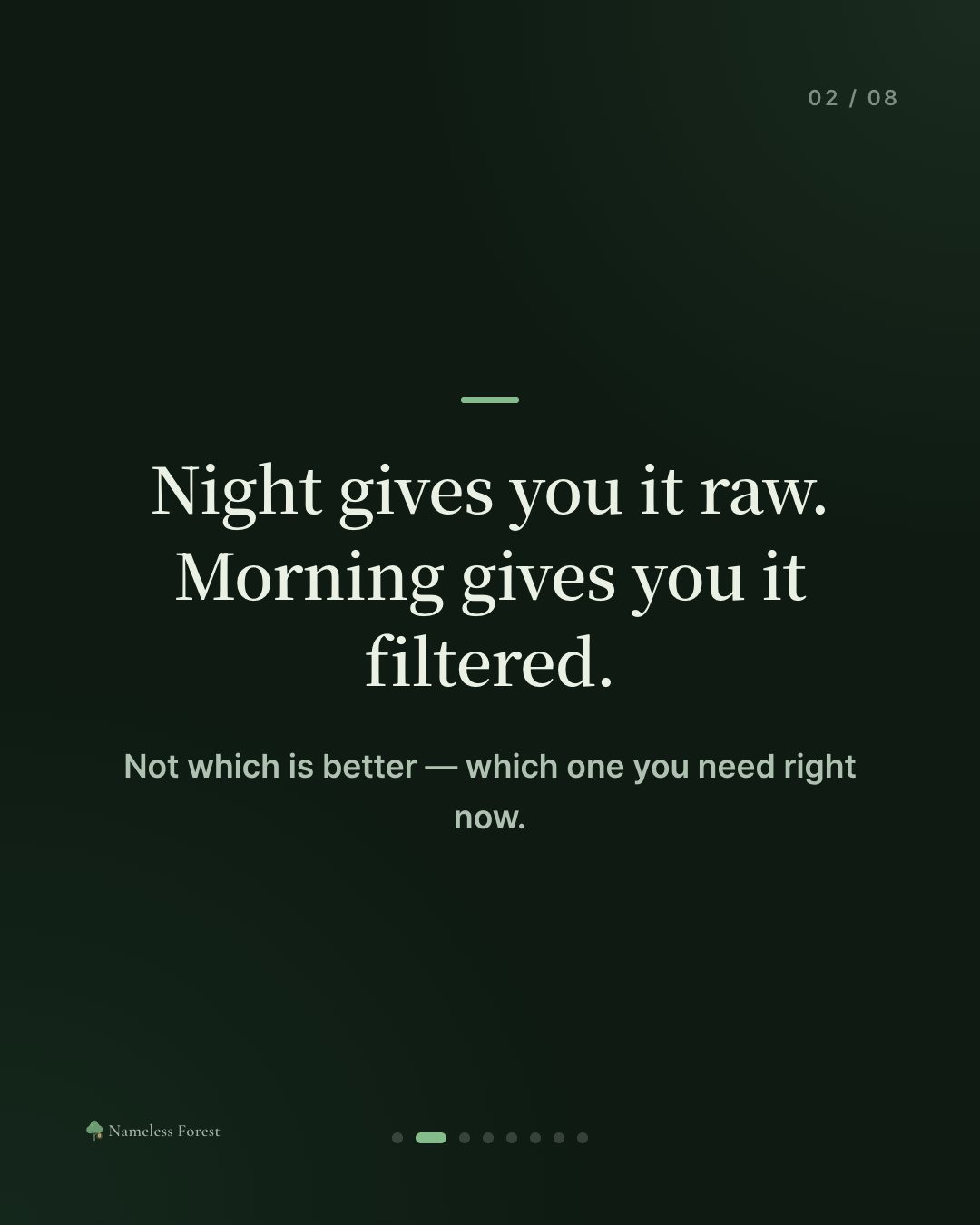
Write at night and the day itself comes out. Nothing has been sorted yet, so the feeling arrives raw.
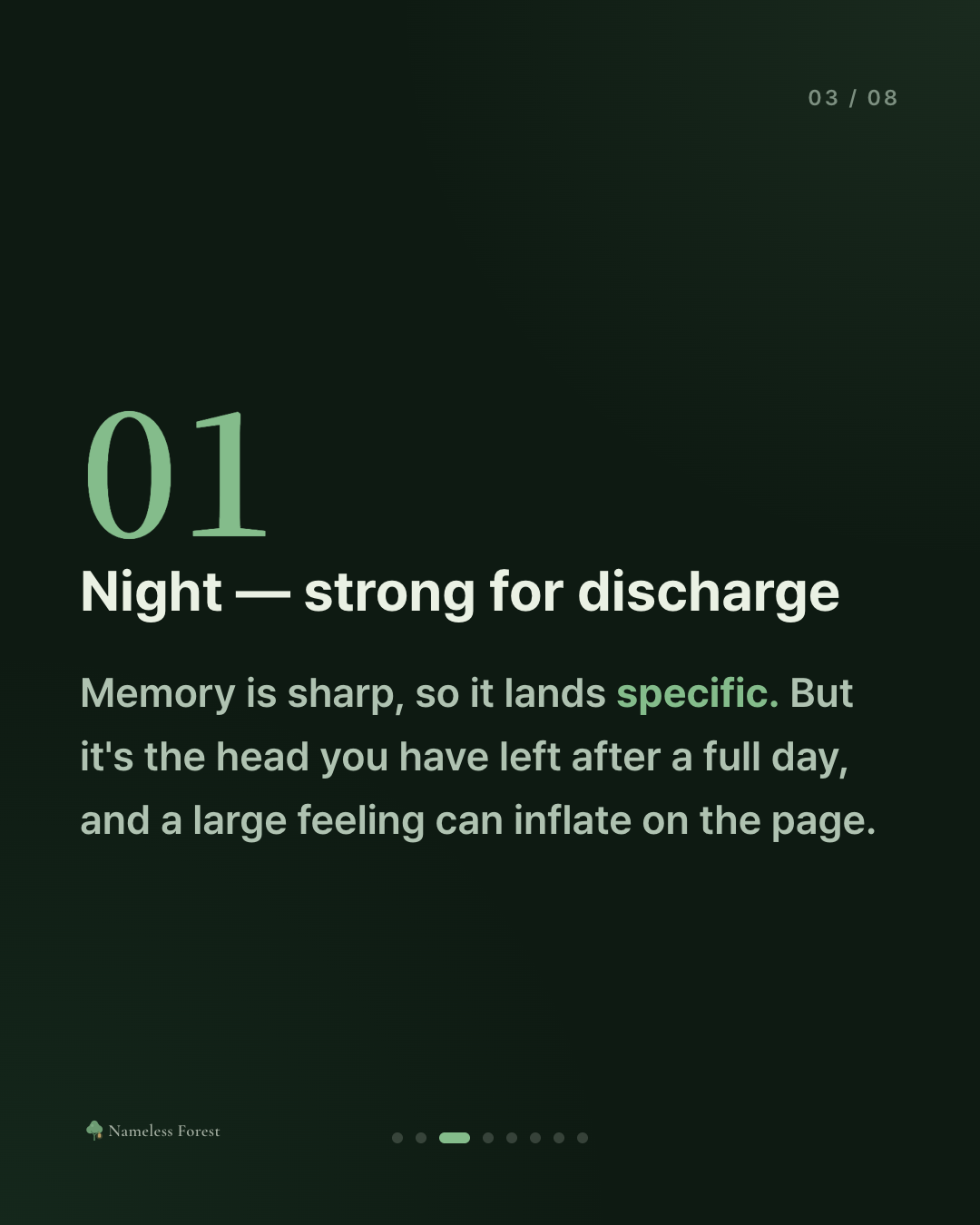
The advantage is obvious. Memory is sharp, so it lands specific. Who said what, and how you felt right then, stays on the page.
The disadvantage comes from the same place. You're writing with what's left of your head after a full day, so sentences get short. And writing while a feeling is large can make it larger. That's why a diary written on an angry night reads as exaggerated the next morning.
What Comes Out in the Morning
Write in the morning and last night arrives filtered. Your brain sorts the day while you sleep.
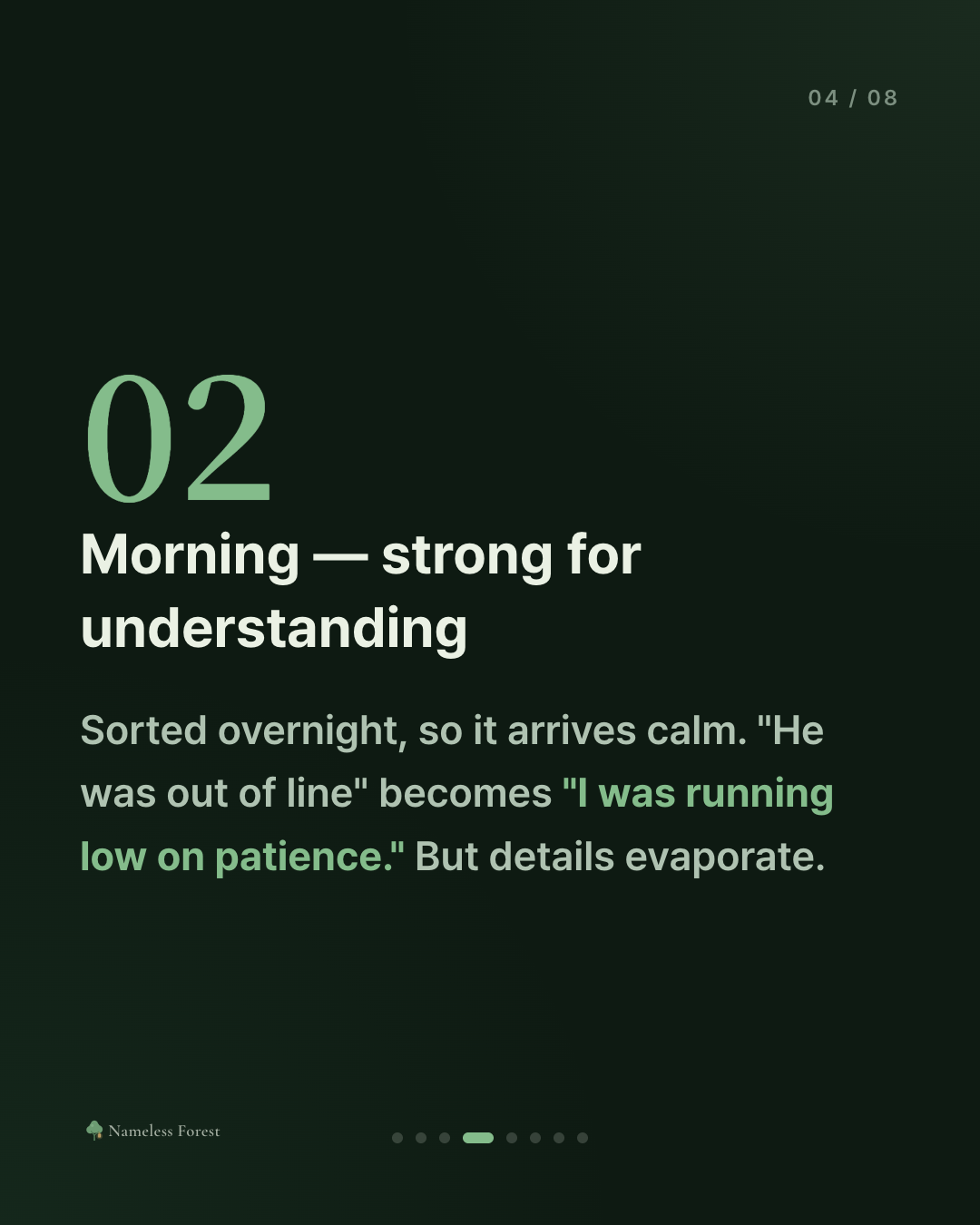
So morning entries are calmer than night ones. The same event shifts: "he was out of line" becomes "I was running low on patience by then."
But you lose something too. Filtered means details evaporate. What exactly stung yesterday goes blurry, and you're left with "something was off."
So Which One
It depends on what you want. Use this.
Your head is crowded and you want it lighter → night. If the goal is discharge, get it out before it's filtered.
You want to understand why you reacted that way → morning. If the goal is understanding, after it cools is more accurate.
You want the habit first → morning. More on that below.
For Building the Habit, Mornings Win
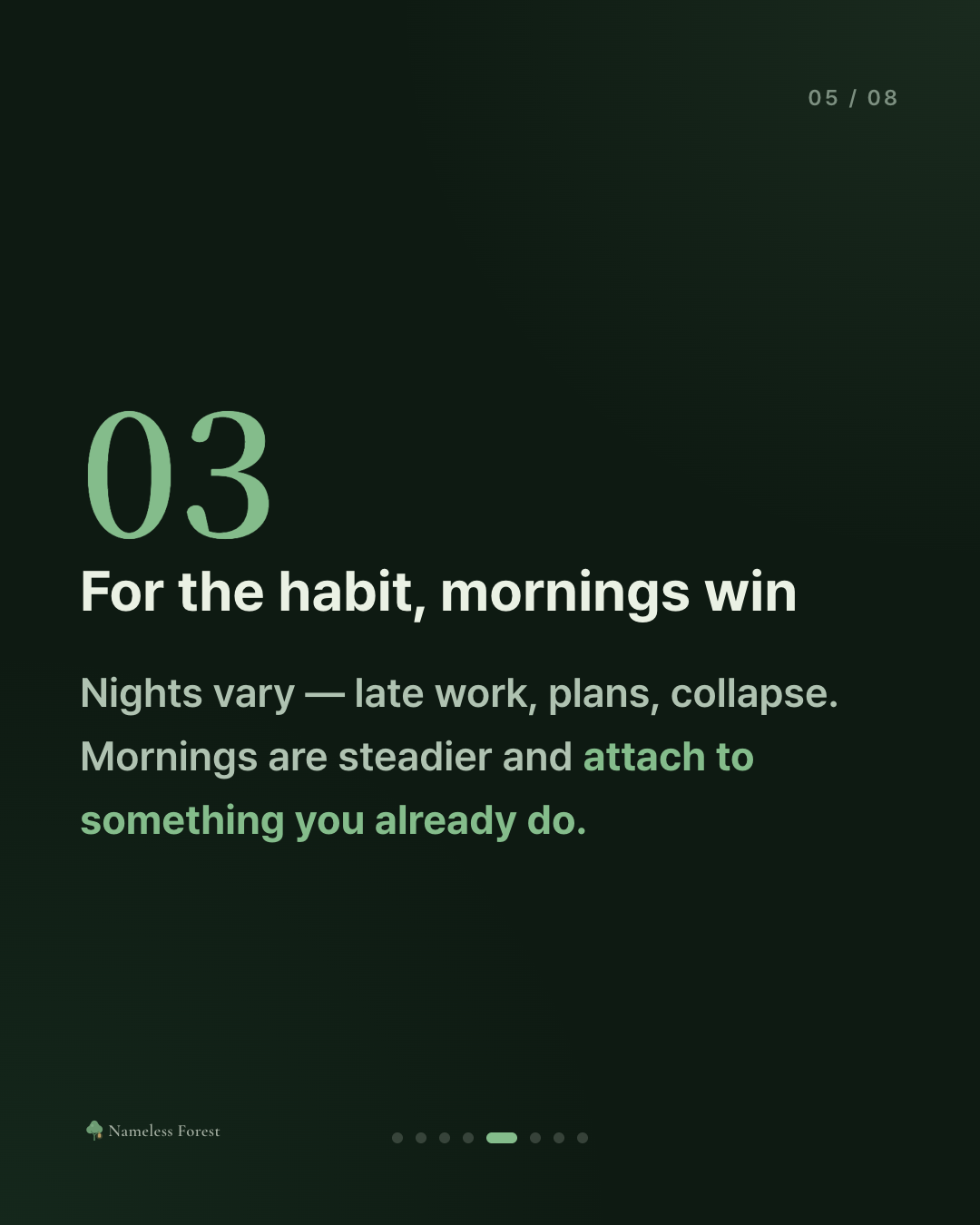
Nights vary. Late work, plans, the nights you just collapse. Which means choosing night builds in days you don't write.
Mornings are steadier. When you get up moves less than when you fall asleep. And it attaches easily to something you already do — while the coffee brews, on the train, while the computer boots.
One reason journals die after three days is that there's no fixed place for them. Put it behind a morning action and the place exists.
If You Write at Night, One Rule
Plenty of people prefer nights anyway. It closes the day.
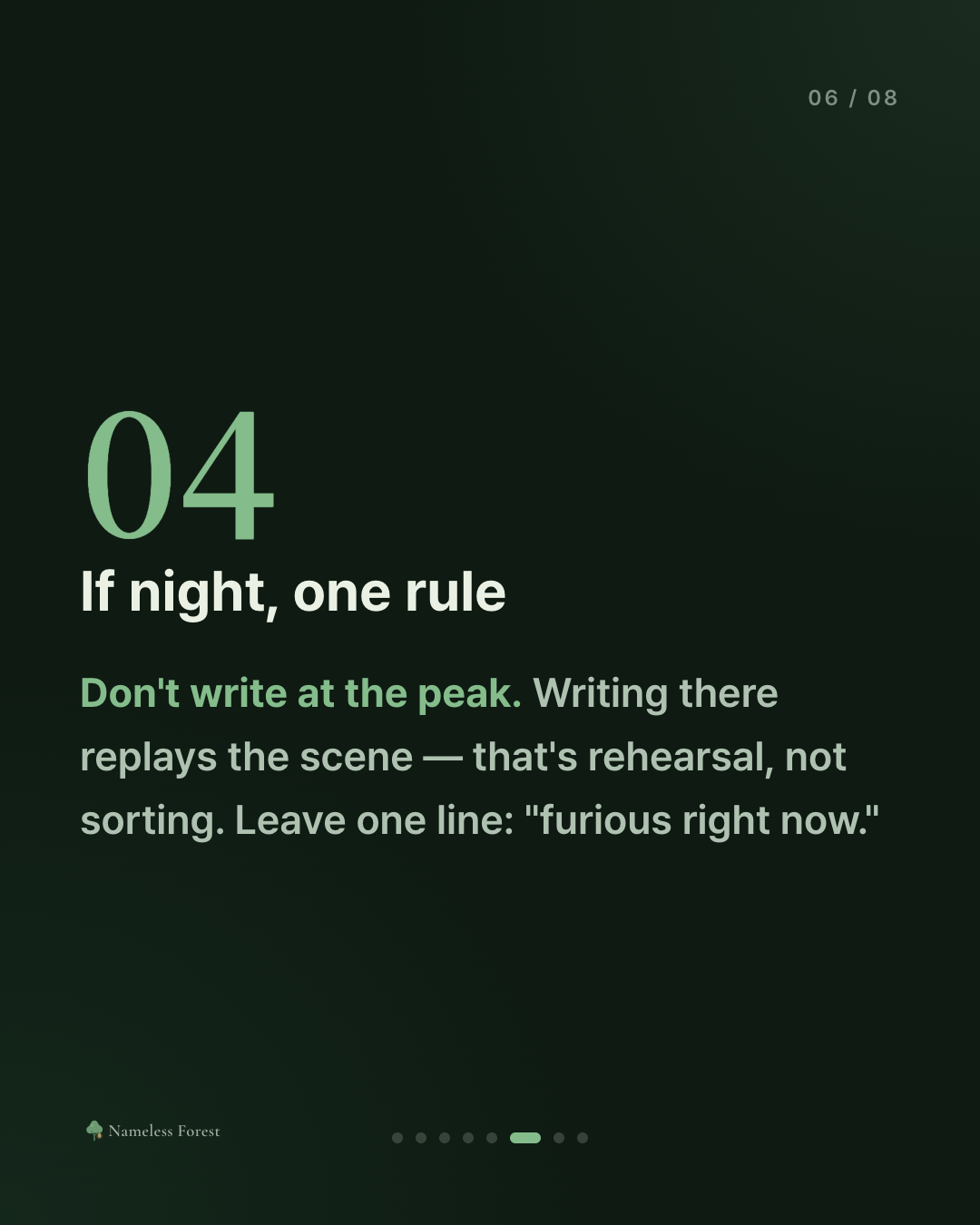
If that's you, keep one rule: don't write at the peak of the feeling.
Writing right after a fight, right after being hurt, makes the writing replay the scene. That's not sorting. That's rehearsal.
Leave one line instead: "furious right now." The detail can wait for tomorrow. You're splitting the record (night) from the sorting (morning).
In Short
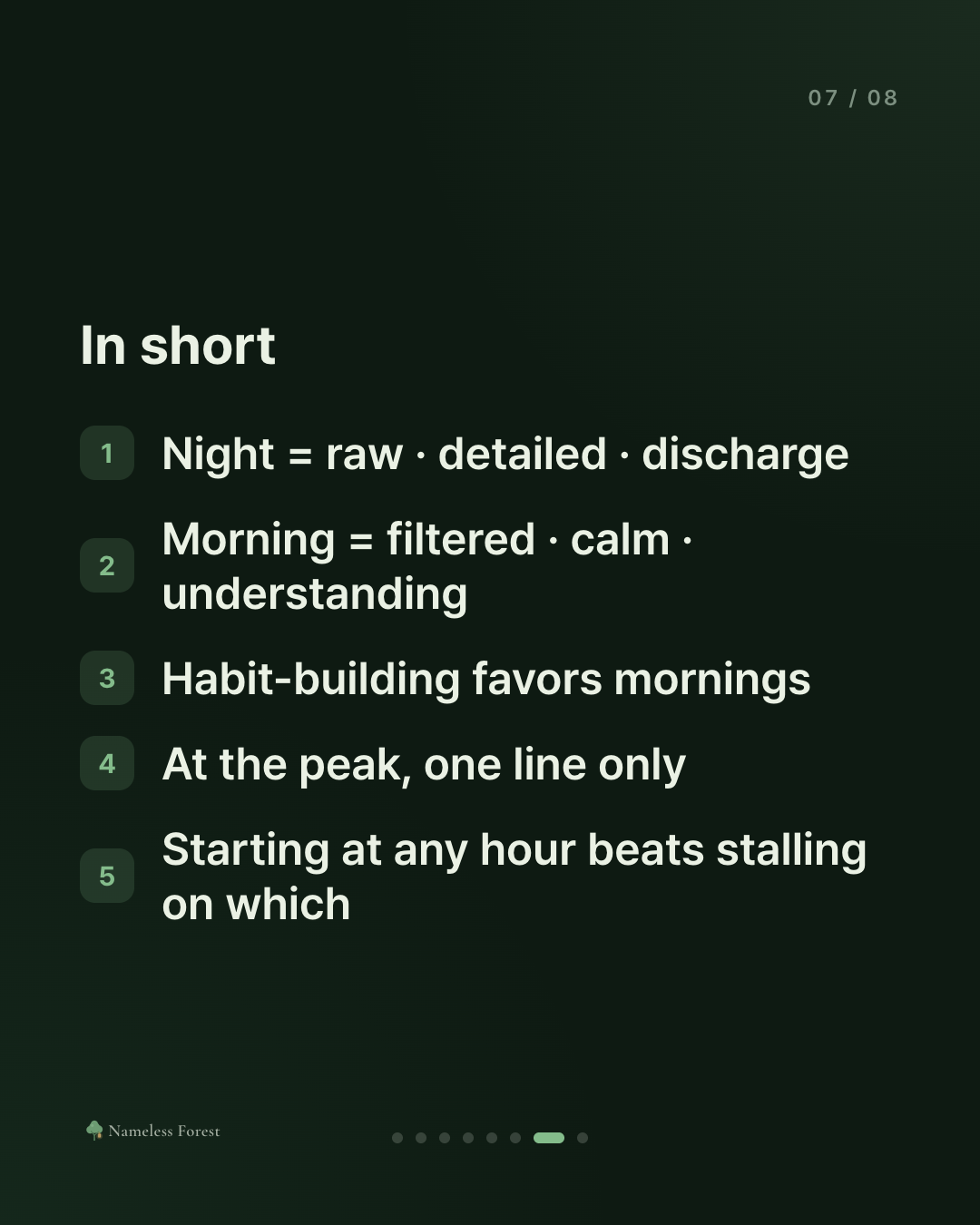
- Night — raw. Details survive; feelings can inflate. Strong for discharge
- Morning — filtered. Calmer, but details evaporate. Strong for understanding
- Habit-building favors mornings — steadier timing, easier to attach
- If night, keep the peak to one line. Detail tomorrow
There's no correct answer. But starting at any hour beats stalling on which hour. A few weeks in, your body tells you.
How I Do It
One line at night, three in the morning.
At night I only write what my body did. Shoulders locked up, kept yawning. No thinking required, so it works even when I'm depleted.
In the morning I read that line and continue. "Oh — that's why I was so short with everyone yesterday" shows up a lot. Night-me records. Morning-me interprets.
But sometimes this isn't enough
- If you can't sleep, or can't stop sleeping
- If eating has become hard
- If basic things — washing, cleaning — feel impossible
- If you've thought about hurting yourself
Please don't try to solve this with writing. That's when seeing a professional is the right call. A record is a tool for sorting your mind, not a treatment. (US: 988 Suicide & Crisis Lifeline.)
I'm not a mental-health professional. Just someone who's had no one to talk to.
🌲 I'm building Nameless Forest — an anonymous space to write things down.
No comments, no ratings. Just a place to set it down.
Open it whenever you want to write, morning or night.
https://nameless-forest.com/en?utm_source=blognf&utm_campaign=morning-or-night

Comments 0
Be the first to comment.